

HUANGSHAN CHAIN TECHNOLOGYPart of SFR Group · Established 2011
Inside HCC, a Motorcycle Chain Manufacturer Built for OEM Supply

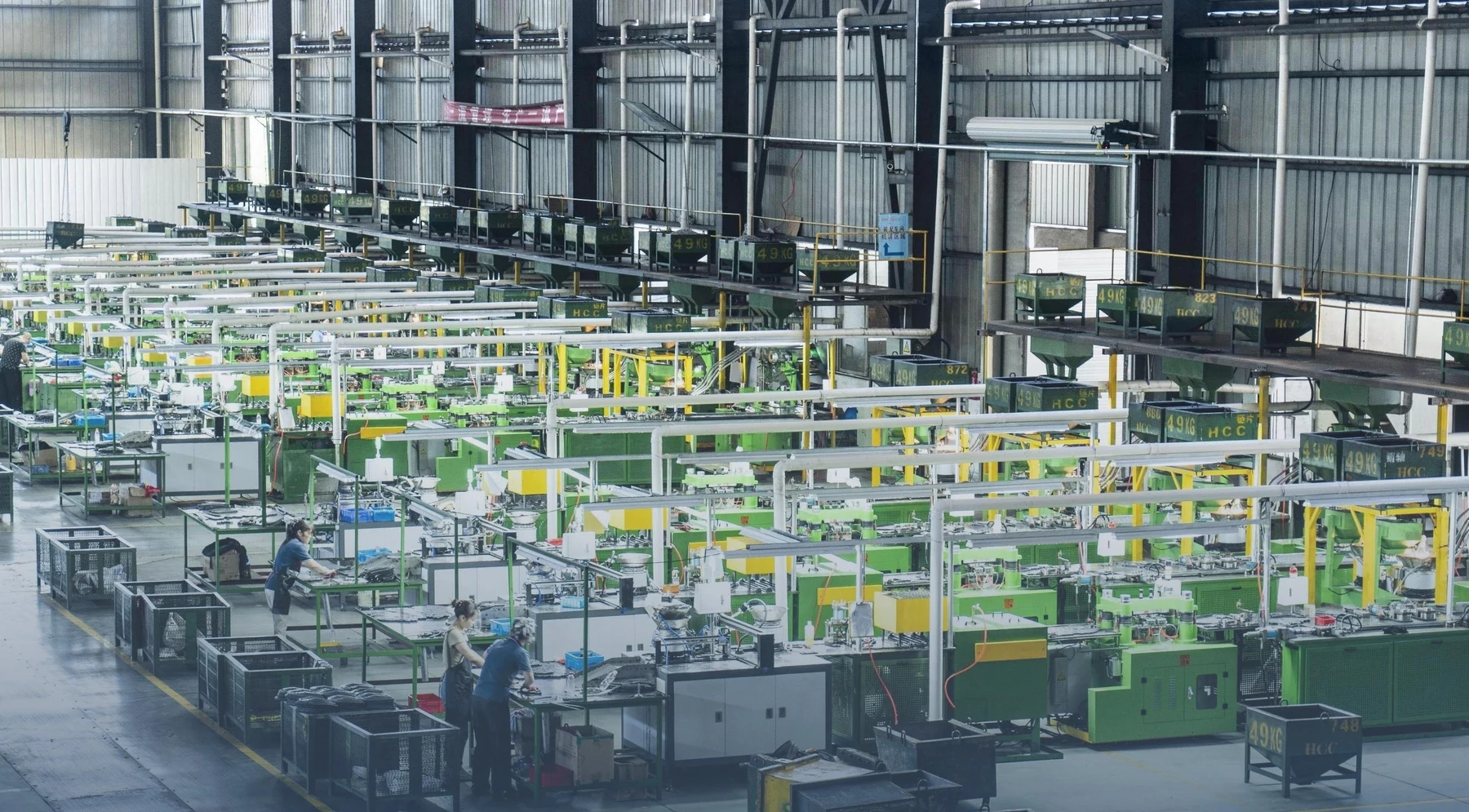
The first useful question in an OEM chain discussion is not how many products a factory can show. It is whether the factory can connect a particular motorcycle requirement to the way the chain is made and checked. HCC CHAIN is a motorcycle chain manufacturer based in Huangshan, China, with component production, heat treatment, automated assembly and inspection facilities. Our operation supports buyers who need to move from a vehicle reference or drawing to a defined supply specification.
For an OEM team or an importer establishing a manufacturing relationship, begin with the chain size, link count, construction, application and expected quantity. The HCC motorcycle range includes 420, 428, 520 and 525 chains, plus O-ring and X-ring options for review. The factory discussion should establish which product meets the actual requirement before production timing is confirmed.
A motorcycle chain manufacturer rooted in Huangshan
HUANGSHAN CHAIN TECHNOLOGY was established in 2011 and is wholly owned by SFR. HCC CHAIN brings product development, manufacturing and inspection into one operation. Its company history and facilities provide the starting evidence for buyers looking beyond an anonymous product listing. Knowing the organisation behind the chain makes it easier to direct technical and commercial questions to the same supply relationship.
The company profile reports more than 20 million pieces of annual production capacity and more than 1.7 million pieces of monthly capacity. It also records 18.87 million pieces delivered in 2025. These are company-level figures, and their value is context: HCC operates at a scale relevant to ongoing manufacturing and distribution programmes. They should not be interpreted as a reserved production slot for a new order.
An OEM programme still needs its own release plan. A repeat chain made to an approved specification and a new construction awaiting review may use the same factory resources but have different readiness. For the buyer, connecting the forecast with approval status is more informative than dividing a headline capacity number by the desired order quantity.
Motorcycle chain manufacturing begins with the component requirement
A finished drive chain depends on the relationships between its plates, pins, bushes and rollers. HCC’s published facilities include high-speed precision presses used in component production. The significance for a buyer is that dimensional questions can be discussed at component level as well as at the assembled-chain level. A photograph of the completed loop cannot provide all of that information.
Define the approved 420 or 428 chain beyond its size code
For 420 and 428 projects, the size designation provides a starting reference but not a complete production agreement. The approved construction, connecting arrangement and application information should remain attached to the order. If the buyer has a drawing or an existing approved part, those references help distinguish the required product from another chain that occupies the same commercial category.
Imagine an OEM purchasing team moving from a sample discussion to an initial order. Engineering has approved one chain, but the purchasing description contains only “428 motorcycle chain.” Before the order is released, the two teams should connect that description to the approved sample or drawing reference. A specification-led manufacturing discussion closes that document gap before the abbreviated description reaches production planning.
Heat treatment needs product-specific acceptance evidence
HCC’s manufacturing information describes automated mesh-belt heat treatment equipment. Heat treatment is part of the factory capability, but equipment presence alone does not state the acceptance requirement for a buyer’s chain. The relevant conversation concerns the specified material and the agreed evidence needed to evaluate the product. An unsupported hardness figure would be less useful than the correct requirement and a traceable inspection result.
If a 520 chain programme requires particular test documentation, identify that requirement while the specification is being reviewed. The buyer should be clear about what is being assessed and which product the evidence must describe. Do not substitute another manufacturer’s published tensile figures or a test result from an unrelated chain merely because the size designation looks familiar.
Automated assembly supports a defined motorcycle chain construction
Our automatic assembly lines bring the components together for motorcycle and industrial chain production. For motorcycle supply, the assembly discussion needs to preserve the selected size, link count and construction. A standard chain and a sealed-chain option are not adequately described by the same abbreviated purchase line. The completed assembly must correspond to the agreed product rather than a broad marketing label.
Buyers considering O-ring or X-ring chains should therefore identify the sealing requirement explicitly. The general distinction between these seal arrangements helps explain their purpose, but it does not establish HCC-specific friction, life or fitment results. Those claims require evidence for the chain actually proposed for your application.
From a 520 drawing to a meaningful inspection discussion
HCC’s inspection facilities include dimensional measurement, material examination and mechanical testing. Each addresses a different question. Dimensional review checks the required geometry; material examination supports understanding of the components; mechanical evaluation addresses specified product behaviour. A buyer gains more from matching these activities to its approval needs than from asking for a generic certificate package without defining what must be confirmed.
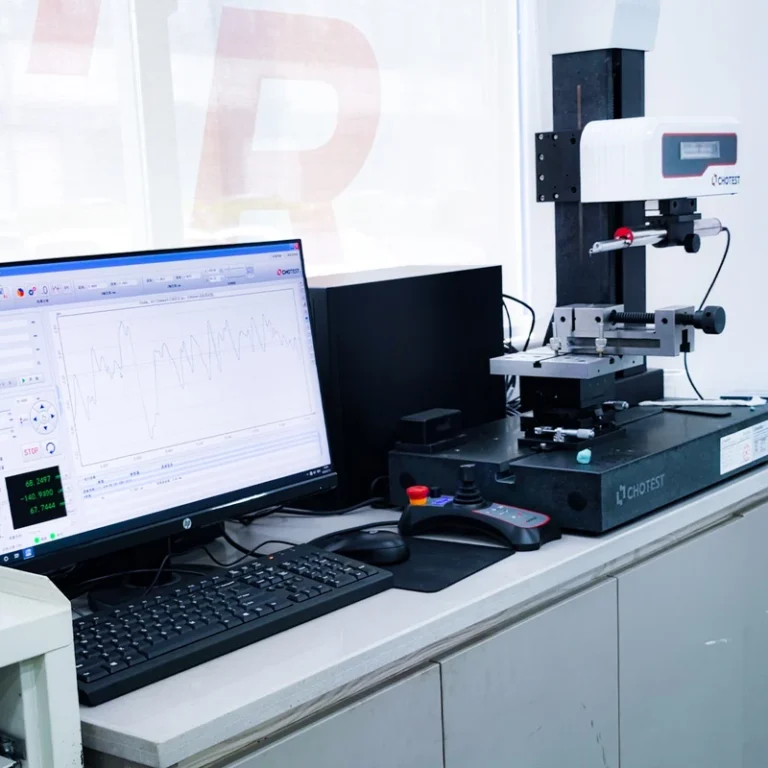
Consider an engineering buyer assessing a 520 chain for a documented motorcycle application. The useful review starts with the intended vehicle, the chain requirement and any drawing or existing part reference. The buyer can then identify which dimensions, construction details and acceptance documents matter. HCC’s facilities provide a basis for that discussion, while the agreed specification determines what the supplied product must meet.
A 525 project deserves the same product-specific treatment. The fact that the factory offers both sizes does not make an approval for one size transferable to the other. If the programme uses multiple sizes, list the approval status and document requirements for each. This keeps a broad supply relationship from obscuring individual product responsibilities.
A useful distinction for OEM teams: factory capability explains what can be reviewed and produced; the approved chain specification defines what your order requires. Both belong in supplier evaluation, but neither replaces the other.
Read IATF 16949 alongside the motorcycle chain order
The HCC company profile records IATF 16949 certification and describes quality management across parts, production, testing and supplier management. Buyers can review our quality facilities and supporting information, then request the current certificate and applicable inspection documents. The certificate’s validity, scope and named organisation should be checked as part of the supplier assessment.
That quality-system evidence is valuable, but it does not by itself prove a specific chain’s working life or confirm its suitability for an unreviewed motorcycle. The chain still needs to match the agreed application and product specification. Keeping these two levels separate allows a buyer to recognise the strength of a documented manufacturing system without drawing conclusions the documents do not support.
For an importer introducing a new chain under an established distribution programme, the same reasoning applies. Decide which information is needed to approve the product and which information is needed to qualify the organisation. Combining those questions in one supplier review is efficient; treating them as identical can leave the actual part insufficiently defined.
Where HCC’s wider chain experience helps an OEM conversation
HCC develops and manufactures motorcycle drive chains, automotive timing chains and industrial transmission chains. Its wider offering also includes chainsaw chains and specialist chain products. This breadth gives the technical conversation a manufacturing context, but the article’s motorcycle chain references remain 420, 428, 520, 525 and the published sealed options. A timing or industrial chain is not proposed as a motorcycle drive replacement.
For a buyer managing several equipment programmes, a wider supplier portfolio can make commercial coordination easier. An industrial-chain enquiry can proceed alongside a motorcycle-chain programme without forcing both into the same specification. The practical benefit comes from maintaining the application boundaries while working with an organisation that understands more than one chain function.
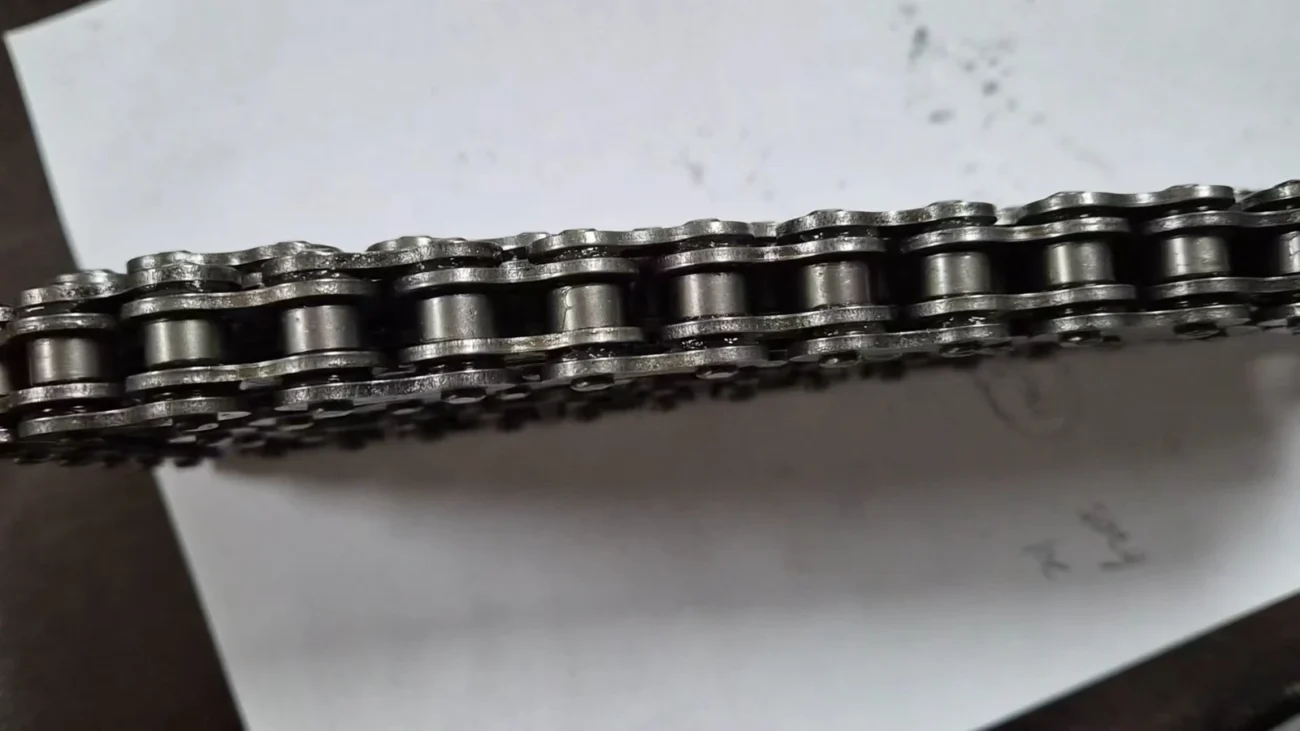
Our OEM and custom discussions can start from drawings, sample details or an existing part reference. Include the operating conditions and expected quantities as well as dimensions. A sample can illustrate the requested construction, but a worn or incomplete sample may leave questions unresolved. The technical review should identify those questions before its appearance is treated as a complete specification.
A distributor applying this factory review to several sizes can use our motorcycle-chain assortment discussion to keep vehicle references visible. Buyers handling forestry consumables as a separate programme can review HCC’s saw-chain manufacturing discussion, where gauge, profile and cutting-system identification change the approval questions.
Turn the approved motorcycle chain into a workable supply programme
Once the chain is defined, the order discussion moves to the quantities, documents, packaging requirements and preferred timing for that product. HCC’s published approach is to review these details before confirming a quotation. There is no universal lead time or minimum quantity stated here because the construction, order size and manufacturing schedule affect the actual arrangement.
For a programme containing 428 and 520 chains, separate the demand forecast by product and approval status. If one chain is already established and the other is still under review, say so. The factory can discuss a more useful plan when the commercial schedule reflects the work still needed for each product. A single total quantity hides that distinction.
The packaging discussion should also identify what the receiver needs to recognise. Size, length, construction and the agreed item reference may all matter when several motorcycle chains share a shipment. Buyers should confirm the packaging and label requirements for their order rather than assuming a particular retail format or private-label arrangement.
Finally, product approval should stay connected to the vehicle’s service requirements. D.I.D’s maintenance guidance illustrates why the condition of the chain and sprockets must be considered together. It is supporting industry context, not a maintenance schedule or acceptance limit for an HCC chain. The motorcycle and supplied-chain instructions govern the actual installation and care.
Choose a motorcycle chain factory you can evaluate in detail
HCC’s case as a manufacturing partner rests on identifiable products, a Huangshan production base, connected processing and assembly facilities, and inspection resources that can be discussed against an order. Those strengths are most useful when the buyer brings a clear application and an approval process that distinguishes factory qualification from part acceptance.
For your next programme, put the vehicle reference and approved chain requirement at the centre of the discussion. Use HCC’s 420, 428, 520, 525 and sealed-chain options to establish the relevant product route, then align the evidence and order plan around it. That gives both engineering and purchasing a concrete basis for evaluating the factory and the chain it is being asked to supply.