

HUANGSHAN CHAIN TECHNOLOGYPart of SFR Group · Established 2011
What HCC Brings to Your Order as a Chainsaw Chain Manufacturer

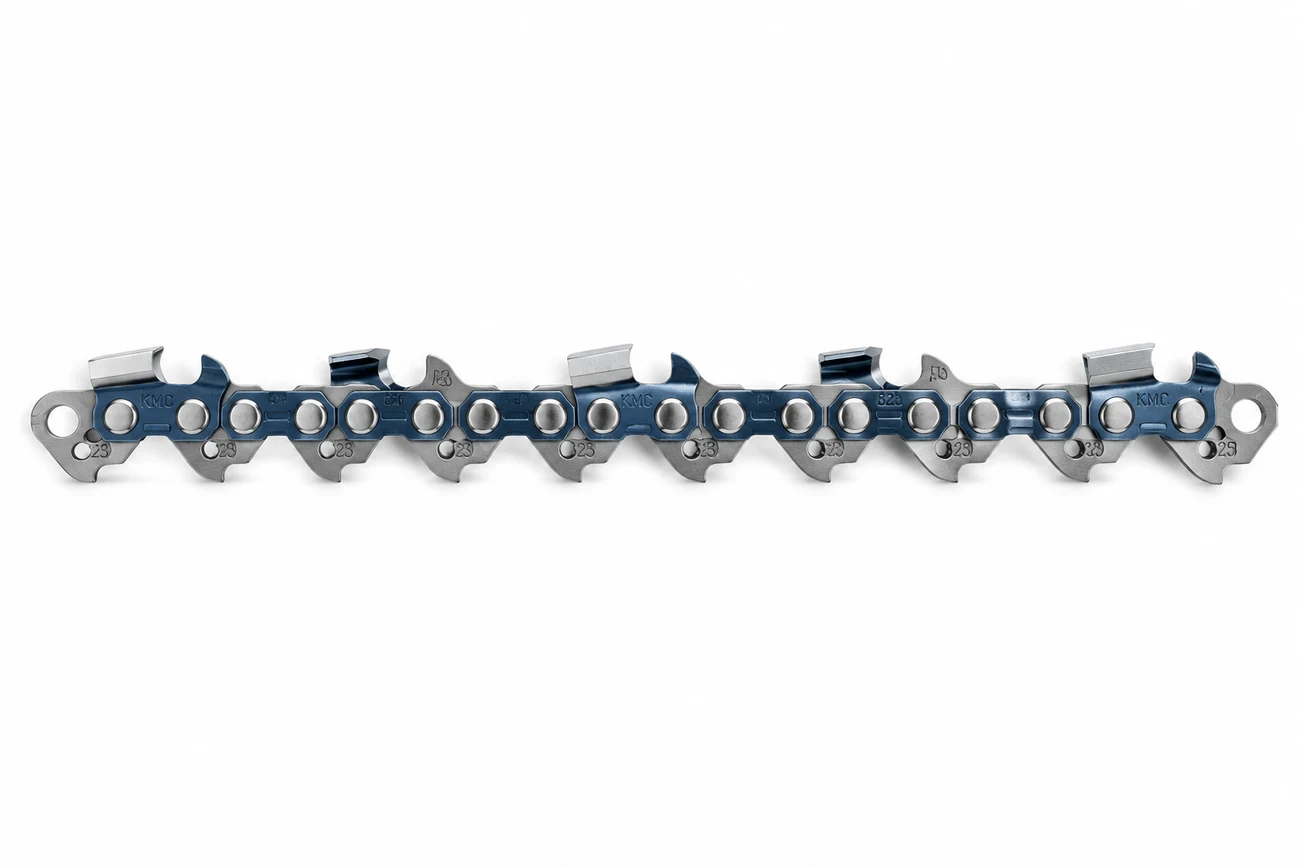
A saw-chain programme becomes easier to manage when the proposed products and the manufacturing discussion start from the same specification. As a chainsaw chain manufacturer and supplier, HCC CHAIN gives international buyers an identifiable company, a published range and access to a discussion about chain inspection and order requirements. That combination is useful for an importer developing repeat supply or an equipment business preparing an OEM enquiry.
The first agreement should identify the cutting application, pitch, gauge, drive-link count and any relevant saw or guide-bar reference. Our saw-chain range covers five families and 14 specifications. It gives buyers real alternatives to review while keeping the final product, supporting documents and commercial arrangements specific to the order.
What a chainsaw chain manufacturer can contribute to your product programme
HCC’s value begins with the connection between a product requirement and the organisation asked to fulfil it. HUANGSHAN CHAIN TECHNOLOGY was established in 2011 and is wholly owned by SFR. Its Huangshan operation combines chain development, manufacturing and inspection. The company profile identifies chainsaw chains and motorcycle chains as important product priorities for international buyers.
For an importer, this creates a more focused conversation than simply choosing a picture and asking for a price. The buyer can identify the required saw-chain references, explain the intended customer applications and discuss the evidence needed before an order is approved. The resulting commercial schedule can then refer to products that both parties have described consistently.
For a brand owner, the same manufacturing relationship can support a drawing- or sample-led enquiry. HCC’s published OEM approach starts with the application and specification, then considers quantity, documents and preferred delivery timing. It is a practical sequence because unresolved product questions are addressed before a programme is treated as ready for production.
The saw-chain range gives the manufacturing discussion a defined starting point
Our catalogue distinguishes 3/8-inch low-profile, .325-inch, 3/8-inch, .404-inch and 1/4-inch families. Within these groups, gauge and profile create separate references. Buyers can use that structure to narrow a requirement before discussing custom details. An existing HCC reference may provide a clearer route than describing a standard product as an entirely new development.
A .325-inch order can contain several different products
HCC publishes .325-inch chains in .050-, .058- and .063-inch gauges, together with a low-profile .043-inch reference. An importer supplying several dealer networks may need more than one of these products. That is a range-planning opportunity, provided the individual specifications remain visible in the approval and ordering documents.
Suppose the importer has confirmed demand for .325-inch .050-inch chains but is considering an additional .058-inch line. The new gauge should enter the review as a separate product requirement, with its own equipment reference and loop details. It should not inherit approval simply because the existing .325-inch product has performed satisfactorily in another application. The manufacturing discussion is more useful when it identifies what is common and what still needs confirmation.
Low-profile saw chains deserve explicit descriptions
The 3/8-inch LP .050-inch and .043-inch references provide two examples of HCC’s low-profile offering. The catalogue also includes a 1/4-inch LP .043-inch product. For buyers building a named range, the low-profile description should be retained alongside pitch and gauge. Removing it for a shorter label can make the item harder to identify correctly.
Pitch and gauge are technical identifiers, not performance tiers. The Oregon terminology reference explains their relationship to the drive and guide bar. HCC’s product selection should be reviewed against the actual cutting system; a nominal dimension does not establish a universal replacement for every machine using a similar description.
The .404-inch harvester reference needs a separate application review
HCC’s .404-inch .080-inch harvester chain sits alongside a .404-inch .063-inch saw-chain reference. Those descriptions identify different products and should remain distinct in an OEM or distribution programme. The equipment application, bar, drive arrangement and required loop need to be clear before either product is treated as approved.
A buyer moving from handheld-saw consumables into forestry equipment parts should begin that expansion as a new application discussion. The Oregon harvester handbook provides general context for the complete cutting system. Its own products and operating specifications do not enlarge HCC’s published offering. The HCC reference under review remains the stated .404-inch .080-inch chain.
Assess HCC’s chain manufacturing facilities against the saw-chain requirement
Our published manufacturing capabilities include high-speed precision presses, mesh-belt heat treatment and automated chain assembly. These facilities describe the wider HCC manufacturing operation. For a buyer assessing a saw-chain programme, the next useful question is how the proposed product is made and checked within the agreed supply scope. It is better to obtain product-specific process information than to infer every production step from a factory photograph.
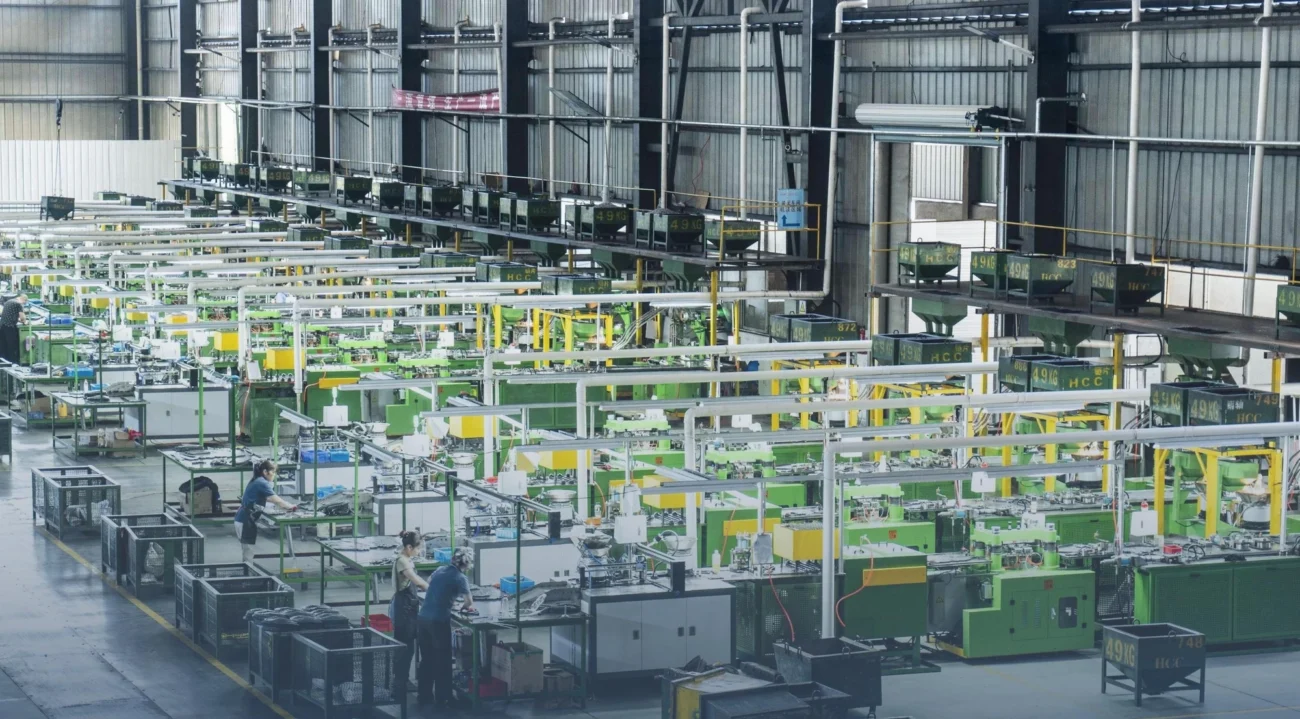
The advantage of an identifiable manufacturing base is that those questions have a concrete setting. A buyer can discuss component requirements, assembly and inspection with a company that publishes its facilities and technical resources. That is meaningful evidence for supplier evaluation, even though it does not substitute for the actual documents required to approve a selected saw chain.
HCC’s company profile reports annual capacity above 20 million pieces and monthly capacity above 1.7 million pieces. Those totals describe the chain business, not a verified saw-chain-only production allocation. A sensible programme discussion therefore includes the proposed saw-chain mix and expected quantities, allowing the supply plan to be reviewed at the product level where the buyer’s commitment will actually be made.
Connect saw-chain inspection evidence to the feature being approved
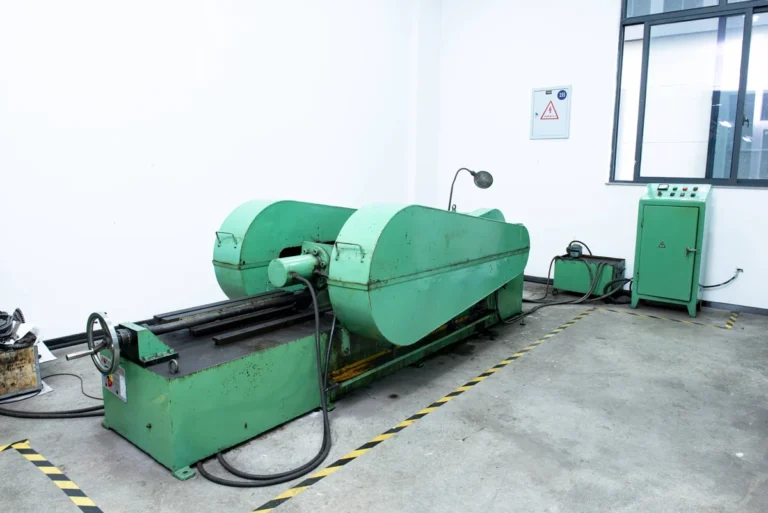
Our quality facilities include dimensional inspection, material examination, laboratory evaluation and mechanical testing. Each can contribute to a different part of supplier assessment. When the buyer asks for evidence, it should be clear whether the question concerns product identity, a material requirement, a dimension or another agreed acceptance criterion.
For example, an order for 3/8-inch LP .043-inch saw chain needs a confirmed product description that preserves the gauge distinction. If the buyer requires supporting measurement records, those records should relate to the proposed product. A general factory presentation does not answer a product-specific dimensional question, but it can establish which inspection resources are available to discuss.
For a .325-inch .058-inch programme, the approval file should distinguish dimensions from any requested cutting evaluation. A dimensional record can identify the chain being assessed; it cannot, by itself, establish a cutting-life claim. If the brand owner wants to compare cutting results, the intended saw, bar, material being cut and evaluation procedure need agreement with the responsible technical team. HCC’s published laboratory resources are a starting point for discussing evidence, while the buyer’s intended claim determines what additional assessment is needed. This keeps a measurable product characteristic separate from a broader promise made to the eventual user.
The company profile records IATF 16949 quality management certification. Buyers should obtain the current certificate and check its scope during supplier qualification. Separately, establish which product records are needed for the saw chain. This distinction allows the quality system to support the evaluation without being presented as an unqualified certification of cutting performance, safety classification or machine compatibility.
If the proposed chain is intended for an application with specific safety or regulatory requirements, identify those requirements before purchase. The public range does not state every cutter configuration or approval for every market. A manufacturing conversation should resolve the relevant documents rather than making a low-kickback or compliance claim solely from the product’s appearance.
Keep the brand owner’s drawing and the purchasing schedule aligned
One common programme situation is a brand owner whose engineering team approves a sample while purchasing works from a shortened description. The two records need to be connected before the order is confirmed. For a .325-inch .050-inch chain, preserve the approved profile and loop requirement as well as the dimensions. Include the agreed reference that identifies the sample or specification under discussion.
A different situation occurs when an importer combines several established saw-chain lines in one repeat order. Here the challenge may be less about a new sample and more about keeping the item descriptions intact. The supplier discussion should distinguish confirmed repeat items from changes to gauge, profile, loop length or packaging identification. Calling the entire shipment a repeat order can hide a change in one line.
HCC’s published OEM process allows buyers to bring drawings, sample details or existing part references, together with quantity and operating requirements. The strength of that approach is its starting point: a real product requirement. The final approval and commercial documents should preserve the same level of clarity, so information is not lost as the conversation moves between teams.
For a mixed saw-chain programme: keep the confirmed product reference, pitch, gauge, profile where stated and drive-link count together. Record any unresolved point against that item instead of treating the entire range as equally ready for release.
Plan international saw-chain supply around confirmed products
HCC reports that 90% of its production serves international markets. The company also reports deliveries of 18.87 million pieces in 2025 across its business. These figures are useful context for an importer considering an ongoing relationship, but the actionable plan still needs the destination market, selected saw-chain products, quantities and preferred delivery requirements.
Packaging belongs in that product-specific discussion. A distributor handling both 3/8-inch LP gauges may need the agreed identification to remain clear at receipt and resale. A brand owner may have a different packing requirement for an approved .325-inch programme. HCC reviews packaging needs during OEM discussions; the actual format and commercial terms should be confirmed, not inferred from a catalogue photograph.
Keeping those details connected also helps a buyer decide how to introduce a range. An initial programme can focus on the specifications with complete application records while additional products remain under review. The wider HCC portfolio remains available to explore, but the first commitment is based on products the buyer can identify, evaluate and support.
Our saw-chain pitch and gauge discussion helps organise those initial product distinctions. If your business also evaluates motorcycle chains, the separate motorcycle manufacturing overview follows component production and assembly without transferring saw-chain approval assumptions to a different drive system.
Make the saw-chain approval specific enough to support the next order
HCC offers a combination of a published saw-chain range, a documented manufacturing base and inspection resources that buyers can assess. The most useful next step is to turn the selected specification into a clear approval record: identify the chain, its intended cutting system and the evidence required for that programme.
When those details are settled, quantities and supply arrangements can be discussed on a firmer basis. The aim is a product relationship that remains understandable on the second and third order, not just an attractive first quotation. A defined saw-chain requirement gives HCC and the buyer a practical foundation for developing that relationship.