

HUANGSHAN CHAIN TECHNOLOGYPart of SFR Group · Established 2011
A Motorcycle Chain Supplier for a Better Distributor Range

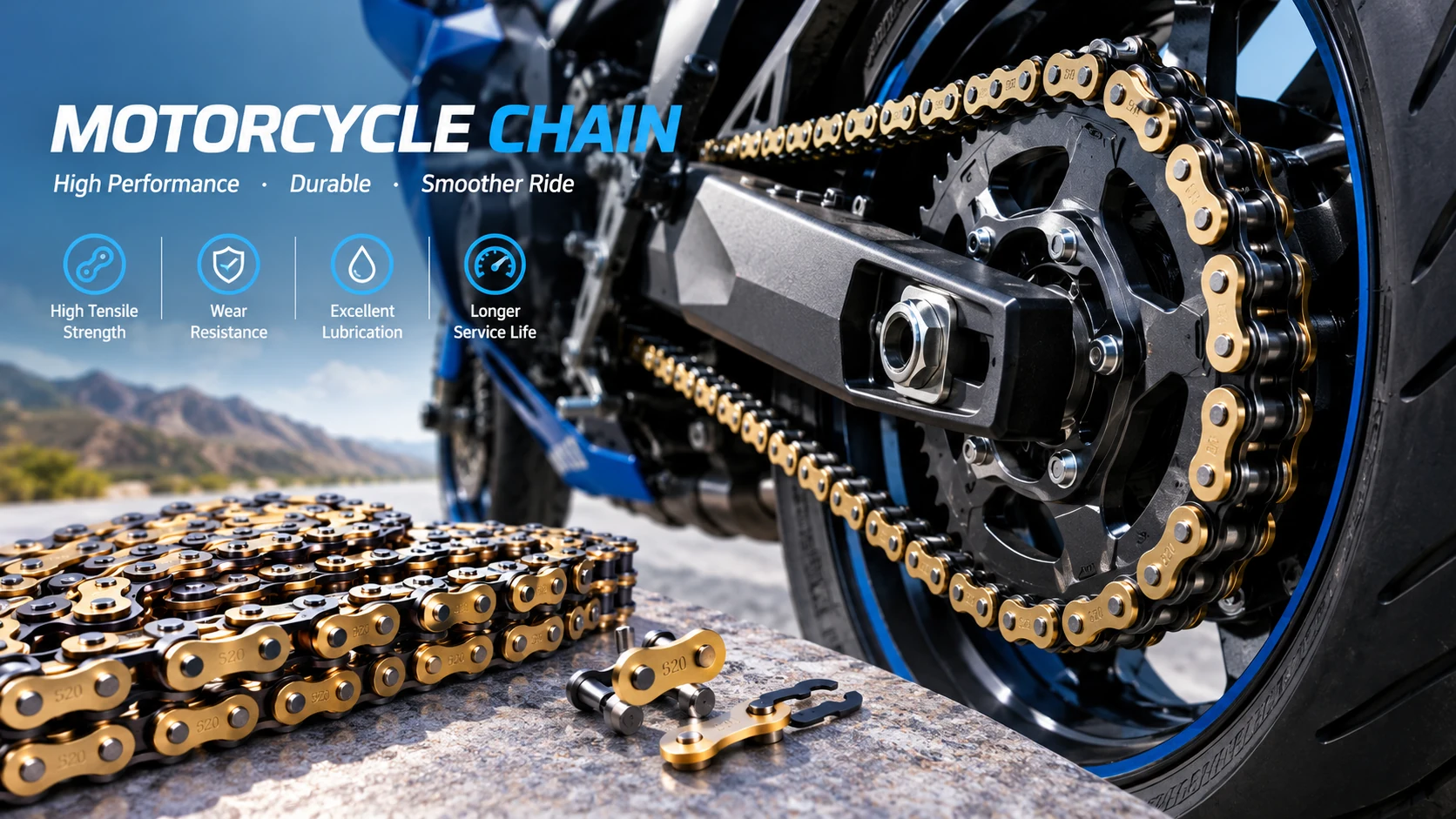
Your dealers may ask for “a better chain range,” but that request can mean more sizes, sealed alternatives or fewer fitment mistakes. HCC CHAIN is a motorcycle chain supplier with manufacturing capabilities and published 420, 428, 520 and 525 options. For an importer or distributor, the useful starting point is a range organised around known motorcycle requirements, rather than a long list of chains that look different but have no clear place in the catalogue.
Before choosing the assortment, confirm the vehicle references, chain sizes, required link counts and construction for the applications you actually sell. Our motorcycle drive-chain selection provides those initial size families, with O-ring and X-ring options available for further review. Availability of a particular size and construction combination must be confirmed for the order.
A motorcycle chain supplier should understand your dealer mix
A distributor serving repair workshops faces a different problem from a brand owner preparing an original-equipment programme. Workshops may need accurate replacements for several vehicle models, while the brand owner may have a fixed drawing and an expected production schedule. HCC supports both kinds of discussion, but the information that defines the range should reflect the buyer’s business.
For a repair-market importer, the most useful evidence is often the list of motorcycles already supported by dealers. Link each application to its approved chain size and length. If the existing supplier uses an internal part number, retain it alongside the vehicle reference until the specification has been reviewed. A new supplier should not have to infer the application from a product nickname used only inside one warehouse.
For an OEM buyer, the starting point is more likely to be the approved specification, drawing revision and anticipated quantities. The chain may belong to one of the same size families, yet the documentation required before supply can be different. HCC’s product development, manufacturing and inspection operation provides a basis for discussing those requirements together. A replacement-market description should not silently become the approval document for an OEM part.
Keep 420 and 428 motorcycle chains on separate order lines
HCC publishes both 420 and 428 motorcycle chains. The size designations are not interchangeable labels for a small motorcycle chain. Even if a buyer’s customer groups the vehicles into one market segment, the purchasing description must retain the correct chain specification. A dealer should not be expected to discover the difference after opening the package.
A realistic stocking situation is a distributor receiving orders from workshops that use local motorcycle names inconsistently. Some requests include an engine size but omit the model year or drive configuration. Instead of assigning a chain solely from that description, the distributor can collect the existing part reference and required chain details, then align them with the HCC product line. This reduces ambiguity without inventing universal fitment lists.
Give 520 and 525 chains their own application records
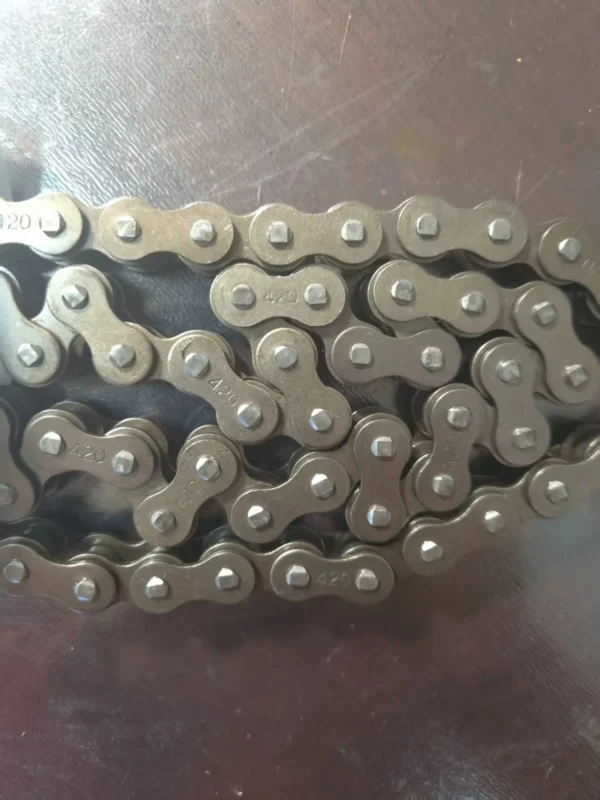
The same discipline applies to HCC’s 520 and 525 products. A buyer may want to combine them within a performance or larger-motorcycle assortment, but that commercial grouping does not make the chains substitutes. Preserve the specified size, construction, connecting arrangement and vehicle reference for each line. If the customer requests a conversion, it needs a separate engineering assessment.
A second stocking situation is an importer adding a small number of 520 products to an existing 428 business. The temptation is to copy the successful 428 ordering description and change the size number. That misses the new applications, lengths and associated sprocket references. The distributor should first establish which vehicles the dealers intend to support, then build a limited, traceable 520 assortment around those requirements.
Organise HCC motorcycle chains by the decision your customer makes
A useful product range is easy to explain. Customers first need the correct fit, then a suitable construction for the intended use. HCC’s standard drive-chain products and sealed-chain options allow that discussion to develop in stages. The size family describes one part of the selection; the seal arrangement adds another. Neither should disappear inside a vague “premium” label.
| HCC product reference | How to organise the distributor record | What still needs confirmation |
|---|---|---|
| 420 motorcycle chain | Separate the approved vehicle applications and ordered lengths. | Link count, construction and connecting requirements. |
| 428 motorcycle chain | Keep its own fitment references rather than merging it with 420. | Vehicle specification and any associated sprocket reference. |
| 520 motorcycle chain | Build entries around known drive configurations. | Required construction, length and suitability for the vehicle. |
| 525 motorcycle chain | Maintain distinct stock identification and application notes. | The exact part requirement; do not assume interchange with 520. |
| O-ring / X-ring options | Record seal construction as well as the size designation. | The available combination and its approved fitment. |
This is an assortment-planning table, not a dimensional interchange chart. It makes the information needed for a quotation visible without pretending that the public catalogue answers every application question. Buyers can use it to prepare a clearer initial schedule and then add the confirmed details from the supplier’s product review.
O-ring and X-ring choices need a clear promise to the dealer
A sealed-chain offering can give dealers a meaningful construction choice when the application permits it. O-ring and X-ring designs use seals around the chain joints to help retain internal lubrication and limit contamination. The D.I.D explanation of sealed chains is a useful general reference for that distinction; its comparative performance claims concern its own products.
For HCC products, the distributor should explain the confirmed chain construction without adding an unsupported service-life multiplier or a maintenance-free promise. A customer still needs the correct size, sufficient clearance and the prescribed care for the motorcycle and chain. Seal shape alone does not establish which product is suitable for every vehicle in a dealer’s territory.
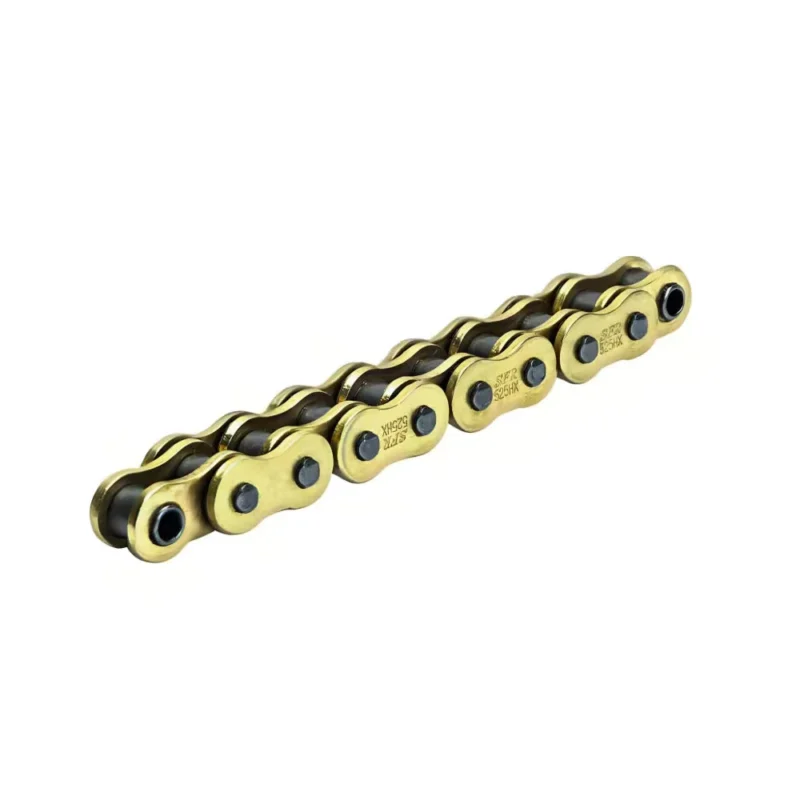
If your catalogue uses good, better and premium price tiers, give each tier an evidence-based description. Identify the actual construction and the applications approved for it. Avoid suggesting that a more expensive item automatically corrects a wrong chain size, worn sprockets or an unsuitable installation. A well-defined range is more credible than a broad promise that every rider will obtain the same improvement.
Manufacturing support behind HCC’s motorcycle chain supply
HCC is a manufacturer as well as a supplier. Its Huangshan operation brings precision component production, heat treatment, automated assembly and inspection into the same business. For a distributor, that means product questions can be framed around the chain being supplied, rather than only around a resale description. Our published manufacturing capabilities show the facilities behind that discussion.
The company was established in 2011 and is wholly owned by SFR. Its company profile reports more than 20 million pieces of annual capacity and 90% of production serving international markets. These figures provide context for a long-term supplier assessment. Your own supply plan should still be built from the agreed product mix, order quantities and confirmed production timing.
Our inspection resources include dimensional measurement, material examination and mechanical testing. When introducing a 520 line or a sealed-chain alternative, the buyer can identify the product checks and documents needed for approval. The current IATF 16949 certificate and relevant inspection records should be reviewed for their scope, rather than treating a company certificate as a performance rating for every chain.
Prevent size and length confusion before motorcycle chains reach the shelf
Chain packaging is part of the distributor’s product information system. If a purchase contains multiple 428 lengths, the agreed item identification should distinguish those lengths clearly. If it contains standard and sealed constructions, the receiving team needs a reliable way to keep them separate. Discuss the required label information and packaging arrangement with HCC before the commercial specification is closed.
This does not require the supplier to invent your stock system. Provide the item codes you already use, along with the confirmed technical descriptions, and discuss how they should appear in the agreed order documents. A buyer that supplies only an internal number creates unnecessary dependence on one person’s memory. A readable chain size, link count and construction description makes the order easier to check.
For a mixed shipment, consider whether your warehouse receives the products as individual sale units or as stock intended for a further packing operation. That choice affects the information your team needs at receipt. No fixed packaging style or private-label service should be assumed from the catalogue alone; HCC’s OEM discussions include reviewing packaging requirements alongside the product specification.
Use motorcycle sprocket enquiries to improve the chain assortment
Dealer questions about sprockets can reveal gaps in chain fitment information. HCC’s range includes motorcycle rear sprockets, carrier assemblies and model-specific references, including an XR125L 428 rear sprocket. When a dealer orders a chain and sprocket together, preserve the approved pairing and the vehicle details. Do not reduce the two items to a generic kit description unless that kit has actually been defined.
The practical reason is visible in D.I.D’s discussion of drive-system condition: chain wear, sprocket wear and alignment affect the system together. For your HCC assortment, the relevant purchasing lesson is to identify associated components and follow the applicable manufacturer requirements. That is different from promising that any new sprocket will extend every chain’s service life by a fixed amount.
When demand justifies it, the HCC sprocket range can support a more complete discussion with dealers. Keep the expansion selective. A smaller number of well-defined pairings is easier to support than a wide assortment whose mounting patterns or tooth counts remain uncertain.
Choose the first motorcycle chain range from known applications
For a first HCC order, select the motorcycle applications your dealers can identify confidently. List the required 420, 428, 520 or 525 sizes, the link counts and any sealed construction that needs review. Separate confirmed repeat items from new products that still require approval, so the supply discussion reflects the actual readiness of each line.
A distributor’s reputation depends on what happens after the chain leaves the warehouse. HCC’s product breadth and manufacturing resources are useful when they help you supply an identifiable, appropriate part. Build the range around that result: clear fitment, understandable construction choices and an order description that remains accurate from the factory discussion to the dealer’s shelf.
If your assortment also requires factory qualification, our motorcycle chain manufacturing overview connects component production with inspection. For orders extending into rear sprockets and other machinery parts, the wider HCC chain and sprocket offering explains where coordinated supply is useful and where specifications must remain separate.