

HUANGSHAN CHAIN TECHNOLOGYPart of SFR Group · Established 2011
Choosing HCC as Your Chainsaw Chain Supplier Starts with Fit

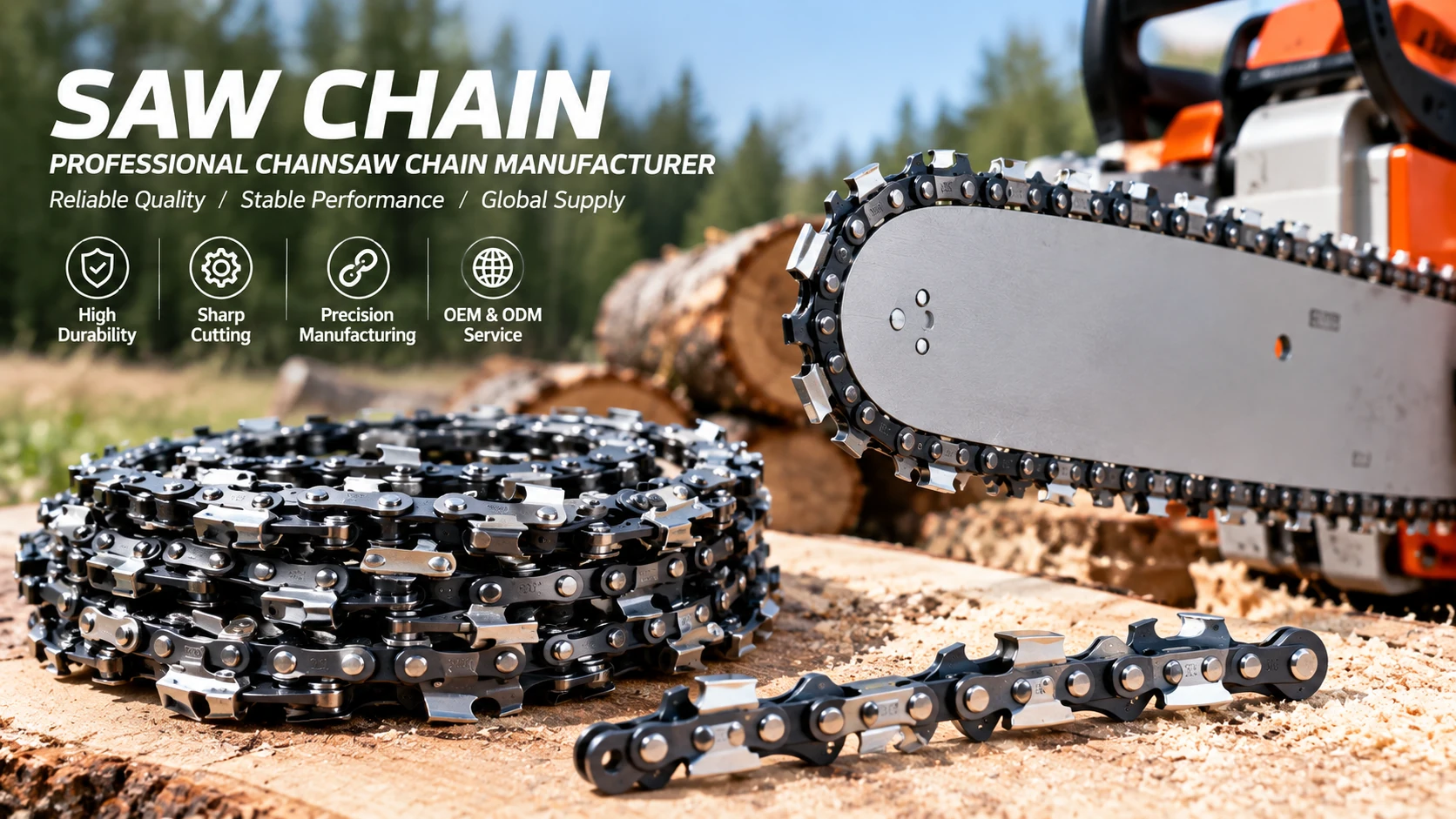
Two saw-chain boxes can carry the same pitch and still contain chains that belong in different orders. For a dealer or importer, that distinction matters before price or quantity is discussed. HCC CHAIN is a chainsaw chain supplier with a published range covering low-profile saw chains, several standard pitch-and-gauge combinations and a .404-inch harvester option. We review the cutting-system details so the supply discussion begins with an identifiable product.
Confirm the pitch, gauge, drive-link count and saw or guide-bar reference first. Then compare those details with the HCC saw-chain selection. This approach is relevant to distributors building a replacement range, buyers arranging repeat supply and equipment businesses reviewing an OEM requirement. It avoids making a fitment decision from bar length or the appearance of the cutter alone.
Give your chainsaw chain supplier the complete cutting-system reference
Pitch, gauge and drive-link count describe different aspects of a saw chain. Pitch relates to the chain’s repeating spacing; gauge identifies the drive-link thickness that fits the bar groove; drive-link count defines the loop configuration required by the particular setup. None of those details should be dropped simply because a customer recognises the saw brand.
The Oregon saw-chain terminology guide explains the pitch and gauge relationship to the drive system. It also distinguishes cutters, drive links, rivets and tie straps. These are general identification principles. Oregon’s own product numbers and performance descriptions are not HCC specifications or evidence of cross-brand interchangeability.
For HCC supply, send the original part or bar reference when available, together with the confirmed dimensions and required quantity. If those records disagree, resolve the discrepancy before treating either as definitive. A worn chain or a replacement guide bar may complicate identification; the agreed cutting setup is the relevant target, not an assumption about how the machine originally left the factory.
Bar length is useful background, but it is not a substitute for the complete chain reference. The approved loop must correspond to the drive and guide-bar combination actually installed. A dealer collecting information from the end user should record the bar marking and existing chain identification separately, then reconcile them with the equipment documentation. If the customer has changed the bar, that detail belongs in the enquiry. This gives HCC a defined replacement requirement to review instead of a request based on the saw’s outward appearance.
Why 3/8-inch low-profile chains need their own stock entries
HCC lists 3/8-inch low-profile chain in both .050-inch and .043-inch gauges. These are separate product references. An importer may receive a dealer request that says only “3/8 LP,” but that leaves the gauge and loop requirement unresolved. Keeping both specifications visible protects the distinction all the way from the supplier discussion to the dealer’s sale.
Consider a dealer group supporting two sets of saws that both use low-profile chains. One order schedule omits gauge because the sales staff regard the chains as one family. The supplier may understand the family, yet it still needs the missing specification to identify the product. HCC’s two published gauge options make a better question possible: which bar groove and approved chain configuration does each customer actually need?
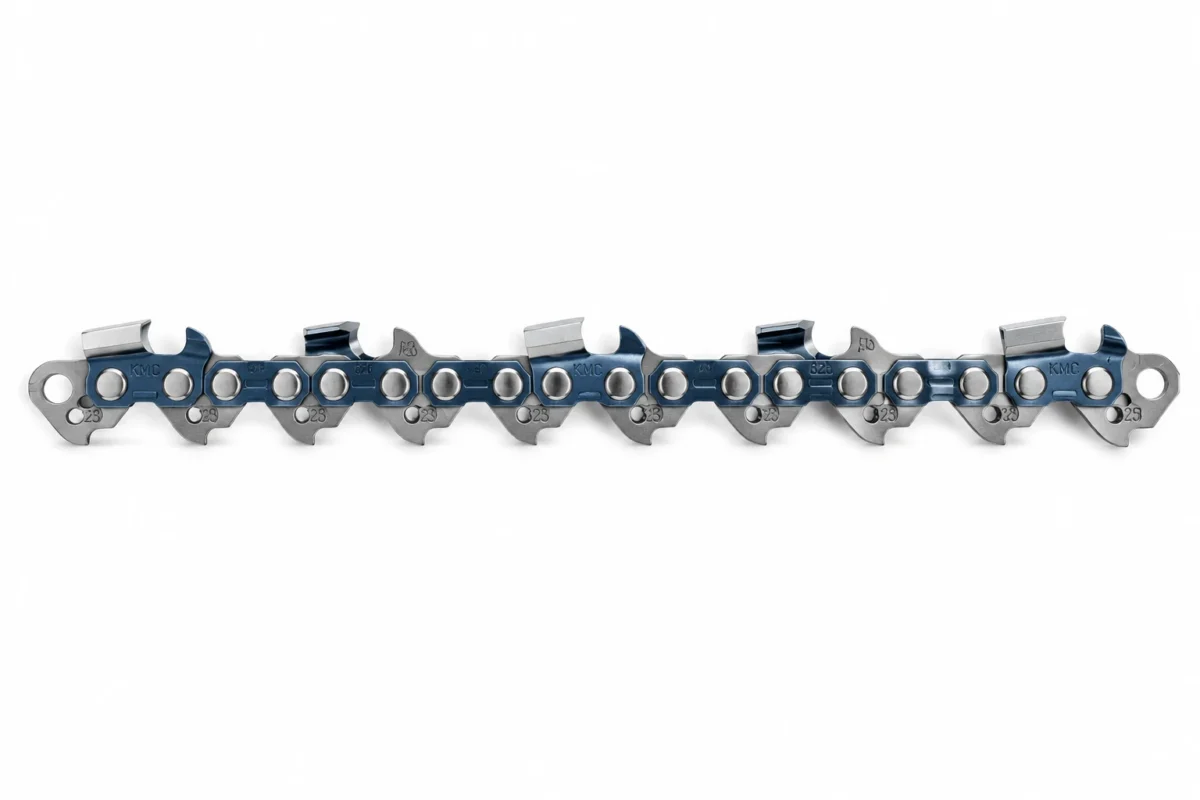
Separate .325-inch saw chains by gauge and profile
The HCC .325-inch group includes .050-, .058- and .063-inch gauge products, alongside a .325-inch low-profile .043-inch option. A buyer who consolidates these under one shortened item description removes distinctions that matter to the cutting system. The profile description must remain attached to the relevant product rather than being inferred from pitch alone.
This is particularly useful for a distributor expanding an existing range. The first .325-inch product may have one established customer application, while the added gauges serve different confirmed setups. The distributor can introduce the additional products without rewriting every item as if it were interchangeable. HCC’s published range provides the alternatives; the actual application records determine which alternative belongs in the order.
HCC chainsaw chain supply across five published families
The saw-chain range is organised into five families and 14 specifications. That breadth supports a focused sourcing discussion across different cutting requirements. It does not mean that every family should be included in a new distributor order. Start with the specifications for the saws and bars your customers already use, then consider additions where there is an identified application.
| Published HCC family | Gauge options shown | Distinction to preserve in the order |
|---|---|---|
| 3/8-inch LP | .050 inch; .043 inch | Keep the low-profile description and gauge together. |
| .325 inch | .050 inch; .058 inch; .063 inch; LP .043 inch | The LP reference is a separate construction description. |
| 3/8 inch | .050 inch; .058 inch; .063 inch | Do not merge the family with 3/8-inch LP. |
| .404 inch | .063-inch saw chain; .080-inch harvester chain | Retain the application distinction as well as gauge. |
| 1/4 inch | .043 inch; .050 inch; LP .043 inch | Confirm the full reference, including profile where stated. |
This table reflects HCC’s published offering. It is not a machine compatibility chart and does not identify a cutter style, approved bar length or safety classification for every product. Those details should be confirmed for the proposed supply where relevant. A precise table is useful because it makes the known choices visible without filling the remaining gaps with assumptions.
When a dealer requests a different cutter arrangement for an established pitch and gauge, keep that request separate from a routine repeat order. The same dimensional identifiers do not fully describe cutting behaviour or the equipment’s approved chain configuration. HCC can review the proposed requirement against its offering, while the buyer retains responsibility for defining the intended machine and relevant acceptance conditions. This is particularly important when a reseller serves both occasional saw users and professional operators: the customer description may change, but the need for accurate product identification does not.
The 1/4-inch family illustrates why the full description matters
Our 1/4-inch range includes .043-inch and .050-inch products as well as a low-profile .043-inch reference. Even within that small group, shortening the description can erase a relevant difference. A buyer should preserve the supplier’s complete confirmed item identification and the equipment reference it supports.
Imagine a distributor adding replacement consumables for a new dealer channel. A photograph and the words “quarter-inch chain” may be enough to start a conversation, but they are not enough to close the order. The distributor can use the HCC range to identify the likely family, then resolve gauge, profile and loop details before committing the final quantities.
Keep .404-inch harvester chain separate from handheld saw selections
HCC publishes a .404-inch .080-inch harvester chain and a .404-inch .063-inch saw chain. The shared pitch does not remove the gauge or application distinction. For a forestry buyer, the equipment head, bar and drive arrangement should remain part of the specification review. The product should not be selected simply because the word “heavy-duty” appears in a purchasing request.
The Oregon mechanical timber harvesting handbook provides wider industry context for harvester cutting systems. Its proprietary products, operating limits and recommended pairings belong to Oregon’s own range. For HCC, use the published .404-inch .080-inch reference as the starting point and obtain confirmation against the actual equipment requirement.
A distributor serving both handheld-saw users and forestry equipment operators can source related consumables while keeping their records distinct. Separate product names, equipment references and the agreed packaging identification are more useful than placing all .404-inch chains in one stock bin. That organisation helps receiving staff and sales teams preserve the same application boundary that engineering reviewed.
What HCC contributes beyond a saw-chain size list
HCC is based in Huangshan and combines chain manufacturing, product development and inspection within an SFR-owned company established in 2011. Its company profile describes both motorcycle and chainsaw chains as priorities for international buyers. That gives a distributor an identifiable organisation behind the product conversation rather than an unexplained catalogue entry.
Our published facilities include dimensional measurement, material examination and mechanical testing. Buyers can discuss which inspection documents are relevant to the proposed saw chain and the intended approval process. A picture of test equipment is evidence of a facility; it is not a measured cutting-life result for the particular chain. Keeping that distinction clear helps the buyer ask for the information that actually matters.

The company profile reports that 90% of production serves international markets. For an importer, this is relevant background when considering an ongoing supply relationship. The destination, order quantity, product mix and preferred schedule should still be discussed explicitly. Neither a global business focus nor a broad catalogue establishes a fixed delivery promise for every saw-chain order.
Make repeated saw-chain orders easier to identify
A successful repeat order begins with the confirmed specification from the previous approval, not with an abbreviated description reconstructed from memory. Retain pitch, gauge, profile where applicable, drive-link count and the relevant equipment or bar reference. If any of those details changes, identify the change rather than describing the new purchase as identical.
Packaging requirements can reinforce that identification. For a shipment containing 3/8-inch LP .043-inch and .050-inch chains, agree how the distinction should appear on the order documents and packaging. If the products will be repacked by your business, specify the information your receiving team needs. HCC’s published OEM process allows packaging requirements to be discussed; the final format is an order-specific agreement.
Do not assume that a photograph of coiled chain establishes the available reel length, loop configuration or retail package. The public product references establish the chain families and stated specifications. The sale format, quantities and any packaging details should be confirmed in the quotation. This keeps a helpful product image from becoming an unintended supply promise.
Send HCC the saw-chain distinction that is still unresolved
If your team already has complete specifications, the next conversation can concentrate on quantity, documents and timing. If it has only a pitch or a saw description, identify the missing information directly. The HCC range gives you concrete options to review, from 3/8-inch low-profile chains through .325-inch and 1/4-inch products to the published harvester reference.
For the factory and documentation side of that conversation, see how HCC approaches a saw-chain supply programme. Importers also handling motorcycle or machinery components can compare HCC’s combined chain and sprocket range without merging those separate application requirements.
A good supplier relationship makes product identification easier as orders develop. Begin with the cutting setup your customer needs, keep every meaningful specification in the order description and use HCC’s product and manufacturing resources to resolve the remaining questions. That is a stronger basis for repeat saw-chain supply than a large assortment built around incomplete labels.