

HUANGSHAN CHAIN TECHNOLOGYPart of SFR Group · Established 2011
Work with a 428 Motorcycle Chain Supplier on Connected Drive Requirements

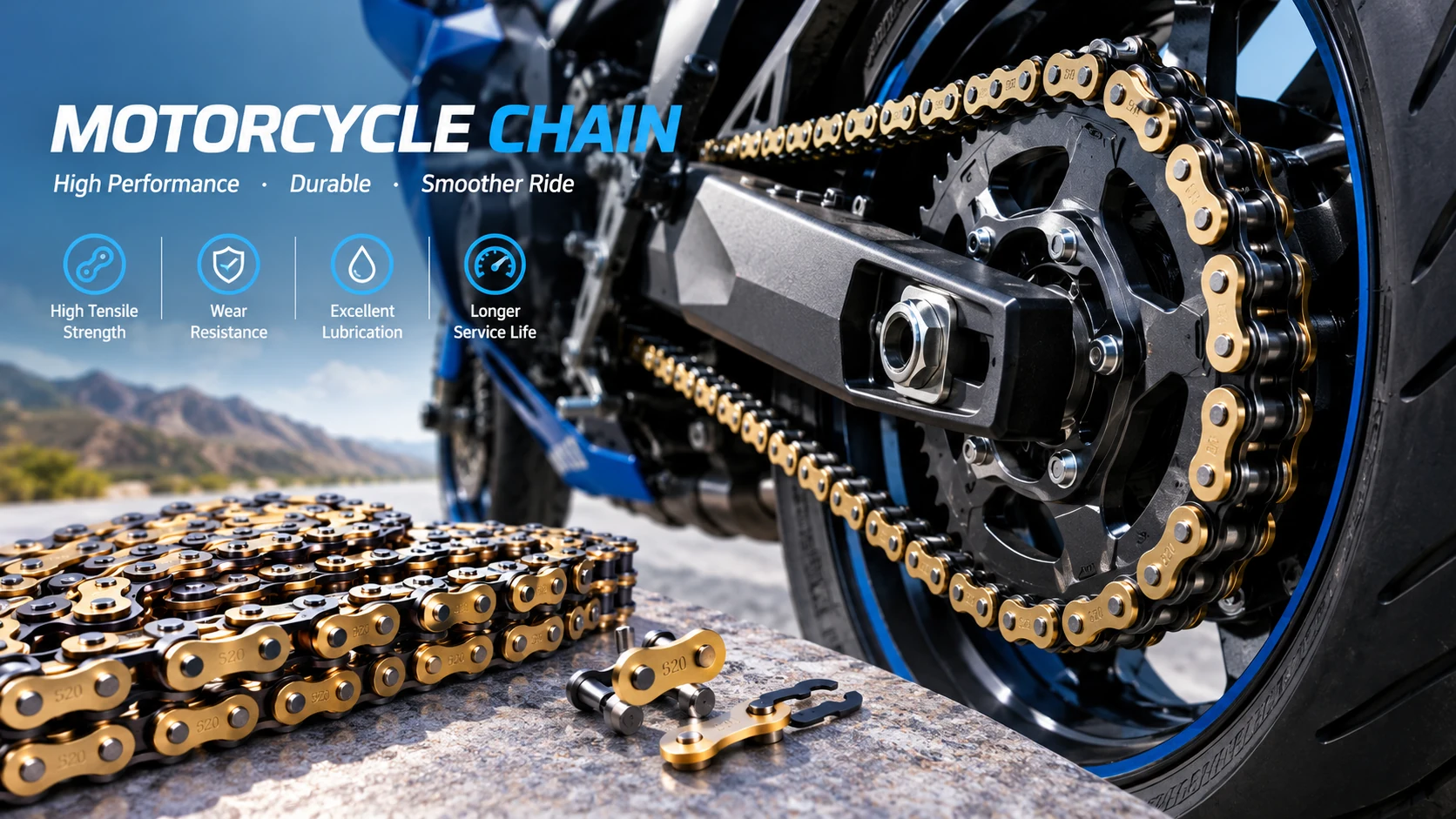
Three rear sprockets can all be described as XR125L 428 parts and still represent three different purchasing decisions. HCC CHAIN lists 50T, 52T and 53T options alongside its 428 motorcycle chain. For a distributor building a replacement range, the chain size is only the beginning: the vehicle reference, tooth count, mounting details and finished chain requirement must stay connected.
A useful 428 motorcycle chain supplier can review that connected requirement without collapsing it into a generic chain order. Begin with HCC’s 428 motorcycle-chain offering and model-specific sprocket range. Establish whether the buyer wants a like-for-like replacement or is proposing a changed drive arrangement before choosing the supplied components.
A 428 motorcycle chain supplier should resolve the dealer’s incomplete drive description
At a parts counter, “428 for an XR125L” may sound precise enough to place an order. It identifies a useful starting point, but it does not establish the complete motorcycle variant, selected sprocket or finished chain configuration. The supplier should receive the approved vehicle or part reference and the required chain details rather than be asked to infer them from a model name alone.
Imagine a distributor whose two branches use the same local stock name for different rear-sprocket tooth counts. Both branches report demand for a 428 chain, but their associated replacement orders may not be identical. Recover the actual requirements from the branches and keep them identifiable in the enquiry. A combined purchase can still contain separately defined items.
XR125L 428 sprockets with 50T, 52T and 53T need distinct records
HCC’s published XR125L options give a concrete example of why tooth count belongs in the item description. A 50T product should not become a 52T or 53T product because a warehouse label retains only the model and chain size. Preserve the selected tooth count and confirm the complete mounting and application information for the proposed part.
Changing tooth count can affect the drive arrangement, so do not treat the alternatives as interchangeable replacement choices without application review. This guide does not recommend a gearing change or calculate the resulting chain length. Those decisions require the actual motorcycle requirements and qualified assessment of the complete system.
For the purchasing team, a tooth-count change should therefore trigger a question rather than an automatic substitution. Confirm whether the customer is requesting the previously approved replacement or a newly reviewed arrangement, and retain that answer with the specific XR125L order.
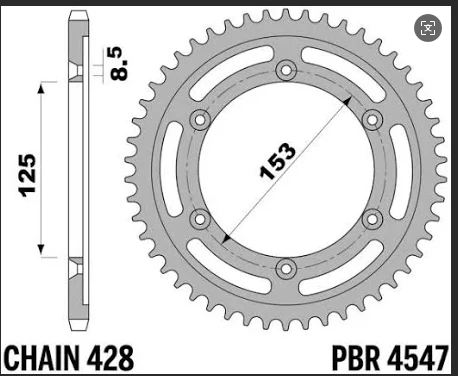
Build the 428 motorcycle-chain range around finished configurations
HCC’s 428 chain is a real product reference within a range that also includes 420, 520 and 525. For distributor use, the finished 428 item needs more information than that family label. Confirm the construction, required length or link count, joining arrangement and approved application before assigning a stock number.
It is helpful to separate the information that identifies the chain from the information that identifies the intended drive. The former describes the supplied component. The latter connects it to the vehicle and sprockets. Both are necessary when the distributor wants to present a coordinated replacement offer, and neither should be silently inferred from the other.
A 428 link count should follow the approved drive, not the removed chain’s appearance
An old chain may have been modified or may no longer represent the intended replacement. Use the approved application information to establish the required finished length or link count. If the customer cannot provide it, identify the uncertainty and arrange a proper technical review rather than turning a rough observation into an order specification.
The supplier also needs to know what finished form is expected. Confirm the actual supplied chain configuration and joining component with HCC. A repeat order should refer back to that approved item, not merely to a carton described as 428. This avoids making the workshop discover a difference only after the shipment arrives.
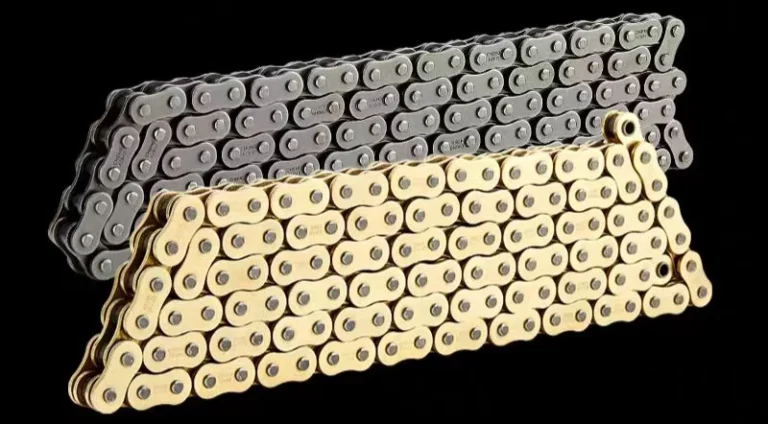
The 428 connecting component must belong to the chosen chain construction
A connecting component is not a generic accessory selected solely by a familiar size marking. Confirm the component and joining method specified for the actual HCC chain. Keep its identification with the chain when supplies are divided between branches or issued individually to workshops.
Installation and adjustment should follow the relevant motorcycle and chain instructions and be carried out by qualified personnel. The distributor’s product record should support that work by identifying what was supplied. It should not replace the installation instructions with an improvised procedure or an assumed universal setting.
A coordinated chain-and-sprocket order is not automatically a complete kit
HCC offers motorcycle chains, rear sprockets and related carrier or mounting products. That breadth creates a useful opportunity to discuss connected drive components with one supplier. It does not establish that every quotation includes a complete kit, bearings, fasteners, carrier or other associated parts.
A second distributor scenario begins with a workshop sending a photograph of an entire rear-wheel assembly. The workshop asks for the same set, while the purchasing team intends to order only the chain and rear sprocket. Resolve that difference explicitly. The quotation and approved order should identify each included item and any component that remains outside the supply scope.
| Order line | Information that should remain visible | Assumption to avoid |
|---|---|---|
| 428 motorcycle chain | Confirmed construction, finished length and joining arrangement | Every 428 item is the same finished replacement |
| XR125L rear sprocket | Selected 50T, 52T or 53T reference and mounting details | The model name establishes tooth count |
| Carrier or mounting component | Exact part identity and included contents | A sprocket quotation includes the complete wheel assembly |
The carrier-assembly discussion explains why the assembly boundary matters. A distributor can coordinate those items commercially while keeping separate technical identities. This is particularly valuable when one component is revised but the other approved components remain unchanged.
Keep sprocket material and 428 chain construction as separate choices
HCC lists CNC 1045 steel and 7075-T6 aluminium sprocket offerings as well as model-specific products. Material is a meaningful part of a sprocket specification, but the buyer should confirm which material and manufacturing route apply to the actual selected reference. The broader material range does not prove that every XR125L tooth-count option is available in every material.
JT Sprockets’ product information provides professional background on how sprocket ranges distinguish materials and applications. Its own product claims and manufacturing details are not evidence for HCC parts. Use HCC’s confirmed product definition for the order and use general industry information only to understand the questions that need answering.
The chain construction needs the same discipline. HCC presents O-ring and X-ring options within its motorcycle portfolio, but a buyer should not automatically apply a sealed-chain label to every 428 enquiry. Confirm the proposed construction and its suitability for the actual motorcycle requirement before describing it in the dealer catalogue.
If the dealer is adding a sealed alternative to an existing 428 line, treat it as a new product decision rather than a name change. The complete dimensions, joining arrangement and application information need review. A construction preference does not remove the need to confirm the chain’s physical fit within the drive.
Make each XR125L 428 variant understandable beyond the original buyer
A distributor can test the clarity of its range by giving the proposed descriptions to someone who was not involved in the original enquiry. Ask that person to distinguish the XR125L 50T, 52T and 53T items and identify which finished 428 chain record belongs to each approved offer. If the answer depends on remembering an informal conversation, the product information needs work before the range expands.
This exercise often reveals two different problems. One is an incomplete sprocket description, where a tooth count or mounting reference has disappeared. The other is an incomplete chain description, where the size remains but the finished configuration has been lost. Correct the missing field in the relevant component record rather than adding a long, vague description to the entire package.
For an importer selling through independent dealers, keep the confirmed cross-reference under control when descriptions are translated or shortened for local use. The customer-facing name may change, but it should still point to the same approved 428 chain and selected sprocket. A local-language label should not turn three tooth-count options into one undifferentiated replacement. This is how a carefully defined HCC assortment can remain understandable beyond the original purchasing team.
Use HCC’s production resources to support an identifiable 428 programme
HCC’s manufacturing facilities include precision forming, heat treatment and automated assembly. Its inspection resources include measurement, material examination and mechanical testing. For an importer, those resources provide a basis for discussing evidence for a defined product rather than purchasing an anonymous chain.
The useful follow-up is specific: which confirmed 428 configuration is being supplied, and what information supports its agreed requirements? A general factory photograph does not establish a particular chain’s dimensions or application approval. Connect the manufacturing discussion to the actual order and confirm the documentation that can accompany it.
For a branch network, agree how the 428 chain and each sprocket variant will be identified through receiving and redistribution. The selected tooth count should not disappear when an outer shipping carton is opened. Equally, the chain’s approved finished configuration should not be replaced by a vague label that only the original salesperson understands.
Order quantities and delivery arrangements should follow the confirmed assortment. HCC’s overall manufacturing scale is company background, not evidence that every chain length or XR125L tooth count is stocked for immediate dispatch. A focused list of defined items gives purchasing and the supplier a clearer basis for discussing the actual order.
When the dealer later asks to add a different HCC chain size, keep that expansion separate from the 428 programme. A 420 or 520 item is not an alternative simply because the existing 428 line is temporarily unavailable. The broader motorcycle-chain assortment guide shows how related lines can share a supplier relationship without losing their individual fitment records.
Before releasing a repeat shipment, compare the order against the approved chain-and-sprocket combination rather than only the customer name. The important changes may be small in the purchasing document: a different tooth count, finished chain requirement or supplied component. Making those differences visible is what turns HCC’s 428 range into a dependable commercial programme for a dealer network, rather than a collection of similar-looking parts.