

HUANGSHAN CHAIN TECHNOLOGYPart of SFR Group · Established 2011
A Sprocket Carrier Assembly Supplier for Model-Specific Rear Drives

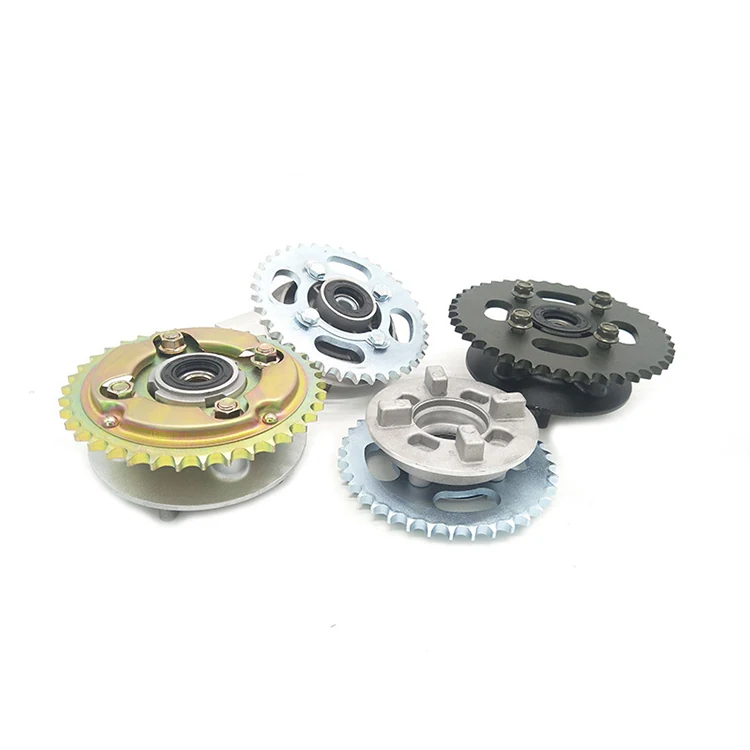
The rear sprocket has the right tooth count, but the assembly still does not match the wheel. This is the kind of problem a sprocket carrier assembly supplier must help the buyer define before an order is placed. HCC CHAIN lists motorcycle sprocket carrier assemblies and mounting brackets alongside steel, aluminium and model-specific sprockets, allowing the rear-drive interface to be discussed as more than a toothed plate.
Use the HCC sprocket and carrier range with the vehicle identity, original part reference and relevant dimensions. First confirm the assembly scope and mating interfaces. The catalogue term carrier assembly does not by itself establish every included bearing, spacer, fastener or fitment, so those details need explicit agreement.
A sprocket carrier assembly supplier needs to know which assembly you are buying
The buyer may require a carrier-related component, a mounting bracket or a defined assembly that includes additional parts. These are different supply scopes. Start by identifying the item shown in the machine or vehicle documentation and state which surrounding components remain outside the order.
HCC’s carrier assembly and mounting bracket listings provide genuine starting points. They do not make every rear-wheel component part of the supplied product. Ask for confirmation of the contents and relevant drawing before comparing quotations or presenting the item to a dealer as a complete replacement assembly.
Consider an importer who receives a photograph of an assembled rear wheel and a request for “the sprocket holder.” The photograph helps locate the problem area, but it does not clearly define the requested component. The importer should identify the actual part boundary and the approved application before asking HCC to quote an assembly.
The carrier’s bearing interface should be confirmed, not assumed from the sprocket
A carrier-related part may have interfaces that are not visible in a front view of the sprocket. Where a bearing interface is relevant to the assembly, provide the applicable dimensions and original part information. Do not infer those details from the tooth count or the chain size printed in a sales description.
Confirm whether bearings or associated parts are included in the requested supply. If they are outside the scope, the buyer still needs to understand the mating requirements. A component that supports the sprocket must be reviewed against the intended rear-drive assembly, not merely against the appearance of the toothed component.
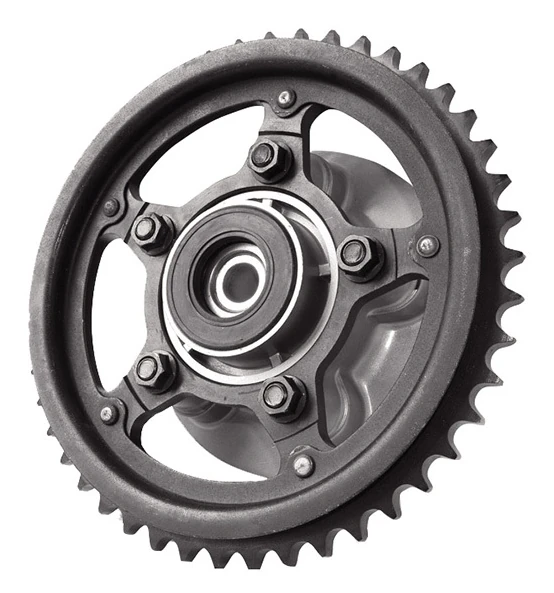
Carrier and sprocket mounting geometry must describe the same rear drive
The sprocket’s mounting pattern and its relationship to the carrier are part of the fitment decision. A matching tooth count does not establish the centre opening, mounting positions or working location of the sprocket. The buyer should provide the approved dimensions or drawing for the intended assembly.
HCC lists CNC 1045 steel and 7075-T6 aluminium rear sprockets as well as model-specific products. Those choices can be discussed alongside the carrier, but their material descriptions do not determine carrier compatibility. A rear-drive programme should retain a separate identity for the sprocket and for the component that locates it.
Treat the sprocket mounting bracket as its own defined component
HCC’s mounting bracket listing highlights another possible supply boundary. The buyer should identify what the bracket is intended to locate or support and how it interfaces with the other parts. A bracket name is not enough to establish every dimension or the complete assembled contents.
For a drawing-led replacement, show the relevant mounting faces and dimensions. If a sample is used, identify whether it is an approved current part or a worn component supplied for reference. Resolve any discrepancy between the sample and drawing before asking the manufacturer to reproduce the part.
The carrier position and chain line need an application review
The rear-drive assembly must position the sprocket correctly in relation to the chain and the rest of the drive. The relevant geometry should come from the approved application, not a visual estimate that the sprocket sits close enough to the original position.
If the buyer changes the carrier or mounting arrangement, assess whether the existing sprocket and chain relationship remains valid. Qualified personnel should review the vehicle-specific fitment and installation requirements. This article does not provide a procedure for modifying a rear wheel or altering a motorcycle drive system.
Use XR125L and TITAN150 references without turning them into universal carrier claims
HCC publishes XR125L 428 rear sprockets with 50T, 52T and 53T options and a TITAN150 520 45T sprocket. These references help define particular sprocket enquiries. They do not prove that one carrier assembly fits every product sharing the same tooth count, motorcycle displacement or chain specification.
A second distributor scenario involves a 45T sprocket request that is assumed to match a carrier already in stock. The buyer should compare the actual mounting and assembly requirements before confirming the order. Equal tooth count describes one feature of the sprocket, not the whole rear-drive interface.
Keep the motorcycle variant with the carrier part reference
A commercial motorcycle name may not resolve every production or market variation. Retain the available original part reference and relevant vehicle information in the fitment record. Where the information is incomplete, keep compatibility unconfirmed until the proposed HCC component has been reviewed against the actual requirement.
HCC’s WAVE125 and BROS sprocket examples show why model-specific descriptions belong in the range. The buyer should not broaden those descriptions into carrier compatibility claims without evidence. A clear product record is more useful to a dealer than a long application list built from assumptions.
JT’s sprocket range separates carrier products from steel and aluminium sprockets. That is useful industry context for recognising the component boundary. JT’s own carrier applications and performance claims are not HCC fitment data.
Coordinate carrier, sprocket and chain enquiries without merging their specifications
HCC’s broader portfolio allows a buyer to discuss the carrier-related part, sprocket and motorcycle chain within one supplier relationship. The commercial coordination can be valuable, especially for an importer building a defined replacement range. Each component should still retain its own approved reference and scope.
For a 428 programme, the chain construction and length need their own review alongside the selected sprocket and carrier interface. For a 520 programme, the same principle applies to the actual vehicle requirement. A shared chain number is not an automatic approval of every possible sprocket and carrier combination.
Our motorcycle-chain range guide explains how size and construction are separated in a distributor’s records. The mixed chain and sprocket article develops the benefit of coordinated supply without treating components as interchangeable.
When comparing offers, check that they cover the same assembly. One quotation may include only the carrier body while another includes additional components. Another may refer to a different sprocket material or mounting configuration. A price comparison is meaningful only after those scope differences are visible.
For dealer-facing descriptions, make the supplied contents clear. Do not use a photograph of a complete rear-drive arrangement to imply that every visible part is included. If the image is illustrative, the written product scope should still identify exactly what the buyer receives.

Ask HCC for evidence tied to the carrier interfaces you need to approve
For a distributor’s application file, keep the carrier-related part reference separate from the sprocket reference even when both are sold together. The relationship between them should be explicit. If the sprocket tooth count changes later, the file can show which other interfaces remain unchanged and which require review. This is more reliable than treating the whole rear drive as one photograph with several interchangeable labels.
A useful receiving comparison can distinguish supplied contents, mechanical identity and appearance. First establish that the shipment contains the agreed carrier-related components. Then compare the identified part with the approved drawing or reference. Finally, review any agreed finish requirements. These are different checks, and a good-looking assembly should not conceal missing components or an unresolved mounting difference.
If the buyer has only an incomplete sample, state what is missing. A carrier body without its associated parts may not explain the complete assembly envelope. Provide the original part information and relevant vehicle documentation where available, and keep any unresolved interface visible in the enquiry. The supplier should not have to infer whether an absent spacer or fitting is outside the order or simply missing from the sample.
For HCC’s mounting bracket and carrier assembly options, this component-boundary work is particularly valuable. It turns a vague request for a sprocket holder into a part that can be compared, documented and reordered without depending on a dealer’s informal naming convention.
HCC’s inspection capabilities provide a basis for discussing dimensional evidence. For a carrier-related component, identify the interfaces and drawing features that matter to fitment. A generic factory-quality statement does not replace the part-specific review.
The company profile gives buyers context about HCC’s manufacturing organisation. Use that context alongside the proposed product definition rather than as a substitute for it. Company scale does not prove a particular carrier’s compatibility or confirm every component that may be supplied with it.
If a sample is reviewed, record whether the buyer has confirmed dimensions, appearance, supplied contents or actual application fit. These are different decisions. Any vehicle installation or operational assessment should be performed by qualified personnel using the applicable equipment instructions.
Where a finish or material variant is proposed, keep the mechanical identity clear. An appearance change should not obscure a mounting change, and a familiar colour should not be used to identify the correct carrier. The drawing and approved part reference should remain the basis for the order.
For shipment, describe which surfaces or assembled components need protection and how the receiving team will identify variants. Confirm the packing arrangement with HCC for the actual supplied scope. A carrier body and an assembly with additional parts may have different handling requirements, so avoid assuming one universal package.
The order is ready for a useful supplier review when the rear-drive relationship is clear: the carrier-related component, the sprocket mounting interface, the chain requirement and the actual supplied contents are all identified. HCC’s range makes it possible to discuss those connected parts together. The buyer’s fitment record ensures that a correct tooth count is only one part of a correctly defined rear-drive assembly.