

HUANGSHAN CHAIN TECHNOLOGYPart of SFR Group · Established 2011
S38-K S38-F Agricultural Chain Supplier: Keep the Suffix on Every Stock Decision

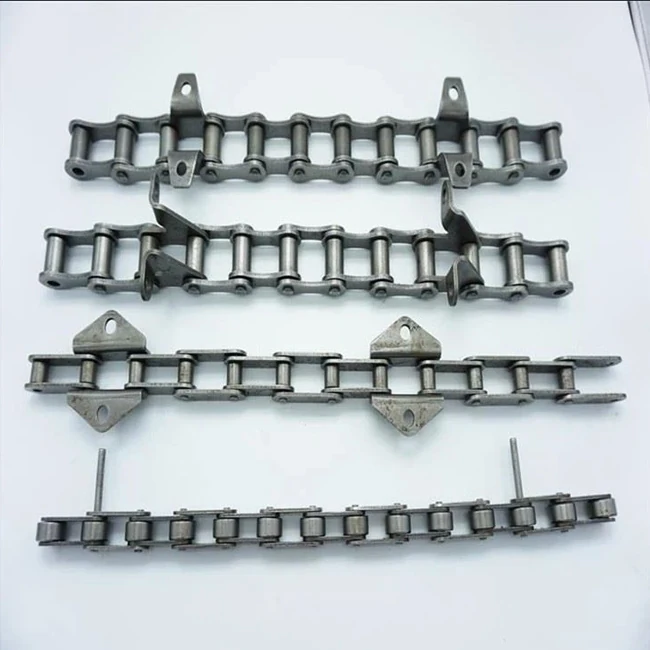
A stock label shortened to S38 can conceal the detail that distinguishes two agricultural-chain requests. Dealers working with an S38-K S38-F agricultural chain supplier should preserve the required version before discussing quantity or price. HCC CHAIN lists S38-K and S38-F agricultural chain as related catalogue configurations. Start with the complete designation, actual link and attachment arrangement, required length and equipment reference. Do not choose between the two by the appearance of an unmarked shelf sample.
The HCC listing is useful for distributors organising replacement enquiries across more than one agricultural configuration. It keeps K and F in the product identification and asks for dimensions and fitment to be confirmed. That is the boundary for stocking decisions: the two references can belong in one supplier programme while remaining separate technical items. A combined buying discussion should not turn them into one interchangeable chain.
S38-K and S38-F need separate identities before they need separate shelf positions
A warehouse location cannot correct an ambiguous item record. Preserve the full S38-K or S38-F designation in the stock system, then associate it with the approved drawing or assembly reference. If the buyer has not established the required version, leave the enquiry unresolved rather than assigning whichever suffix already exists in inventory. The stock record should describe the supplied part, not make an engineering decision for the workshop.
The S38-K or S38-F technical identity must survive the sales description
The technical identity includes the required version and its approved link or attachment arrangement. Pitch, width and roller dimensions also need their own confirmed reference. Keep that identity visible when the commercial description is shortened for an invoice or shelf label. An internal abbreviation should still point unambiguously to the complete item record, rather than replacing the suffix with a general agricultural-chain name.
An agricultural stock description should state what the delivered assembly includes
The sales description should distinguish complete chain assemblies from shorter lengths or separately supplied components. Identify the agreed length and any fitted attachment scope for the selected S38 configuration. If the supplier is delivering a reviewed variation, give it a unique assembly reference. Otherwise two different items can receive the same commercial label even though the workshop needs different interfaces.
Consider a dealer counter receiving a faded package label that shows only S38. The customer’s machine may previously have used either listed configuration or a modified assembly. This hypothetical request is an identification problem, not an opportunity to sell the closest-looking stocked chain. The counter staff should collect the equipment and original component reference and recover the required suffix before releasing a replacement.
For a confirmed customer item, storing the approved reference makes repeat sales simpler. Staff can distinguish a repeat order from a new application without reinterpreting the photograph every time. Where the customer changes equipment, keep the previous stock identity and create a separate enquiry for the new installation. Familiarity with one S38 assembly is not evidence that another machine takes the same part.
A stock-system alias can help staff find the item without weakening its identity. For instance, a customer’s own spare-part code can point to the approved S38 assembly record. Keep the alias as an additional identifier and retain the selected K or F designation underneath it. If the customer later changes the carrier or chain length, review the relationship before continuing to use that alias. Otherwise a familiar customer code can direct the next order to an earlier assembly that no longer describes the installed requirement.
A supplier’s S38-K S38-F agricultural range does not define universal suffix dimensions
HCC’s listing names both configurations but leaves pitch, width, roller and link or attachment arrangement for confirmation. Do not fill those gaps by borrowing a dimension table from another manufacturer. The letters should remain part of HCC’s catalogue identity until the offered configuration and drawing are agreed. A suffix is not a substitute for a dimensional reference.
Other technical catalogues describe attachment styles using letters for their own ranges. Renold’s standard attachment explanation, for example, shows how fittings adapt a chain to a carried component. That general principle is useful, but it does not decode HCC S38-K or S38-F. Cross-catalogue naming should not be used to assert a bracket shape, hole pattern or mounting direction that the HCC order has not confirmed.
S38 link and attachment orientation should stay visible in the item reference
The installed link and attachment layout affects the way the chain engages carriers and passes through its guides. Preserve the orientation in the approved assembly reference rather than relying on a stock photograph viewed from an unknown side. If an enquiry includes a sample, identify its original position and the direction that matters to the machine. A reversed image is particularly poor evidence for a directional assembly.
For receiving, use the same orientation reference that controlled the order. The warehouse team should not need to guess whether a delivered S38 attachment is on the expected side. When two configurations are packed in one shipment, the agreed item identity should follow each assembly. Separate versions remain necessary even when the commercial packaging looks similar.
S38 length and finish changes should create a controlled stock variation
HCC asks for required length and finish or material to be specified. If the same approved S38 configuration is supplied in different lengths, identify those lengths on separate order lines or controlled item variants. If a finish is changed for a particular requirement, confirm it explicitly. The appearance of the catalogue image cannot establish a coating thickness, corrosion test result or fixed material grade.
Do not let an apparently minor variation disappear during reordering. A workshop expecting a finished loop should not receive a loose length because both descriptions retained the same S38 suffix. The joining scope and assembly form belong to the supply record. Where the equipment requires an approved connection method, preserve that requirement rather than substituting a convenient component from a general spare-parts bin.
When a supplier proposes a revision, identify which S38 stock variant it affects. A revised attachment drawing may belong to one customer’s item while another customer’s approved arrangement remains unchanged. Retain the accepted drawing status with the item and avoid replacing all S38 records with one new photograph. The warehouse should be able to explain which assembly revision was delivered to each workshop if a mounting difference is reported later.
Position S38 beside S55 and CA555 C6EJ without making an equivalence list
Agricultural-parts distributors may also source HCC’s S55 chain with attachments and CA555 C6EJ agricultural chain. These are useful separate entries in a catalogue organised around actual machinery requests. They should not become suggested replacements for S38 simply because the buyer asks for agricultural chain.

For S55, the attachment shape, hole pattern, repeat and orientation are essential order details. For CA555 C6EJ, retain the complete configuration and its own attachment and finished-length requirements. Those differences help staff direct enquiries to the correct technical review. They do not establish shared sprockets or carriers, and they do not justify a substitutions table without approved dimensional evidence.
The K1 and K2 conveyor attachment range should also remain distinct in a mixed industrial-and-agricultural catalogue. It requires a base-chain designation and an attachment drawing. A similar letter in a conveyor reference does not make it the meaning of S38-K. Organise the catalogue by complete product identity and intended equipment review, rather than by letters that happen to look alike.
If a customer needs an attachment arrangement that has not been confirmed within the S38 offering, use HCC’s custom chain drawing-review route. Record the non-standard feature and its required interface. The resulting assembly should have an approved reference that distinguishes it from the ordinary stock item. A custom change should not silently inherit a shelf code that still describes an older configuration.
Use an S38 stock label that the workshop can reconcile with its order
A useful label preserves the identity the receiving workshop expects. It can state the selected S38-K or S38-F configuration, approved assembly or drawing reference, supplied length and item quantity. Include an orientation or matched-set reference where the agreed assembly requires it. Branding and language can vary, but the technical designation should remain recognisable.
Example label structure, with values to be confirmed:
Selected configuration: S38-K or S38-F
Approved assembly: buyer’s accepted drawing reference
Supplied form and length: the agreed order value
Item quantity: the confirmed package quantity
This specimen illustrates the information relationship; it is not a fixed HCC package specification. Agree the actual marking with the supplier and make sure the carton label and individual assembly identification are consistent. If several lengths travel together, retaining only a total shipment quantity is insufficient for the workshop to identify the part it has received.
Imagine a distributor preparing one shipment for two repair shops. One has an approved S38-K assembly and the other an approved S38-F item, with different required lengths. This is a hypothetical warehouse situation. The dispatcher should reconcile each package with its technical line before combining the commercial shipment. A carton marked only S38 may reach the right destination while still leaving the wrong chain at the repair bench.
At receipt, check the complete reference, length and visible attachment arrangement against the agreed documents. Where dimensional inspection is required, specify which chain and attachment features it covers. Appearance alone should not be treated as proof of material, fitment or load capability. An item with an unresolved suffix or orientation should remain identifiable as unresolved until the discrepancy is corrected.
A returned chain should retain that same identity while the discrepancy is investigated. Record whether the workshop reports the wrong suffix, an incorrect length or a mounting difference. Those are distinct problems and should not be compressed into a general S38 return reason. Compare the returned assembly with its original order line before putting it back into stock; an unmarked return can otherwise restart the identification problem at the next sale.
Reorder the approved S38 configuration, then review the demand forecast
For repeat purchasing, separate technical identity from quantity planning. First establish which approved S38 item each customer needs, then consolidate quantities for that specific reference. The HCC discussion of seasonal agricultural-chain supply planning is relevant to the wider programme. This S38 order still needs its individual version, dimensions and assembly scope confirmed.
Ask the supplier to identify which manufacturing and inspection documents apply to the selected S38 configuration. A useful response should resolve the offered link layout and order requirements rather than make a general quality claim. If the buyer needs a material record or an equipment-specific acceptance check, state that requirement for the actual item. Do not assume that a document supplied with another agricultural chain covers both S38 versions.
Agree how the S38 attachments or projecting features will be protected during transport, how multiple variants will be separated, and what quantities and delivery terms apply to the selected order. The range listing is evidence of an offering, not of current stocked lengths or a promised dispatch date. A seasonal forecast can guide the discussion, but the accepted supply terms should identify the exact configurations it covers.
A dealer catalogue works well when the shortened display name still leads to a precise technical record. Keep the K or F suffix visible, retain the accepted length and attachment identity, and leave uncertain equipment requests in the identification workflow. The next sale can then repeat an approved S38 assembly instead of repeating an unresolved guess that happened to fit on the shelf label.