

HUANGSHAN CHAIN TECHNOLOGYPart of SFR Group · Established 2011
An Agricultural Chain Supplier for Seasonal Machinery Parts Planning

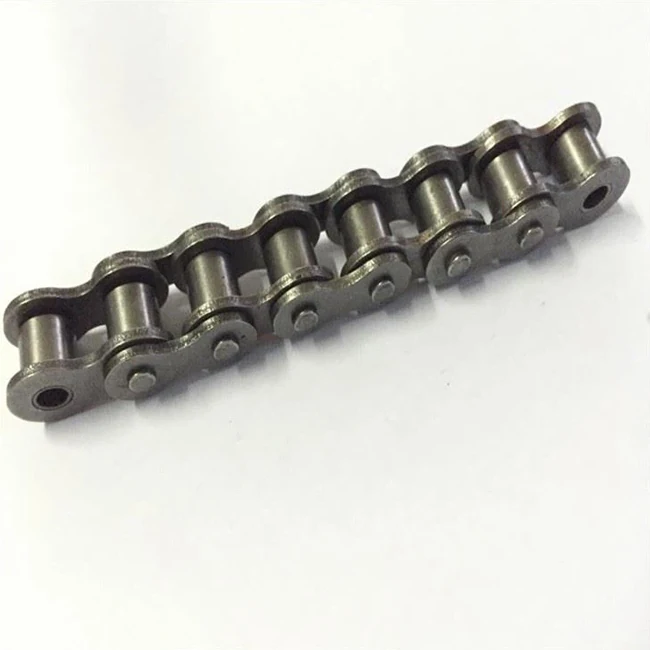
Seasonal machinery parts become difficult to replenish when the order describes the chain but omits the attachment that makes it useful. An agricultural chain supplier should help the dealer preserve both identities. HCC CHAIN lists S55 zinc-plated attachment chain, CA555 C6EJ and S38-K / S38-F products, giving farm-machinery distributors concrete references around which to organise a replacement range.
Begin with the HCC agricultural and attachment-chain products, then connect each required item to its machine and approved attachment arrangement. Before discussing seasonal quantities, confirm the chain reference, attachment geometry, spacing and supply configuration. A familiar family name is not enough to identify every chain used around a farm.
Build the agricultural-chain order from machine records, not last year’s carton labels
A dealer preparing for a busy service period may have several useful sources of demand information: previous orders, workshop requests and the installed machinery supported by its customers. Those records should be reconciled at the part level. An old label that says only “agricultural chain” cannot reliably identify the attachment and configuration needed for the next replacement.
HCC’s named S55, CA555 C6EJ and S38 references make a more precise discussion possible. The dealer can group enquiries by actual product rather than by a broad machinery category. This helps distinguish a repeat approved item from an unfamiliar chain that still needs dimensional or application review before it belongs in a seasonal assortment.
Imagine a farm-machinery dealer receiving two chains removed from machines with similar duties. One has a different attachment arrangement despite a superficially similar base chain. Ordering both under a single stock description risks sending the wrong part to the workshop. Keep the machine identity and attachment details with each sample until the correct references have been established.
S55 zinc-plated attachment chain needs more than a finish description
HCC identifies an S55 agricultural chain with zinc plating and attachments. The finish is a useful published detail, but it does not define the whole replacement. The buyer still needs the applicable dimensions, attachment form and arrangement, plus the machine requirement that the chain is intended to satisfy.
Do not select a chain solely because its surface resembles the removed component. Plating is not a universal guarantee against every corrosive or abrasive environment, and appearance cannot establish the geometry of an attachment. The supplier discussion should preserve the S55 reference while making the actual mechanical requirement clear.
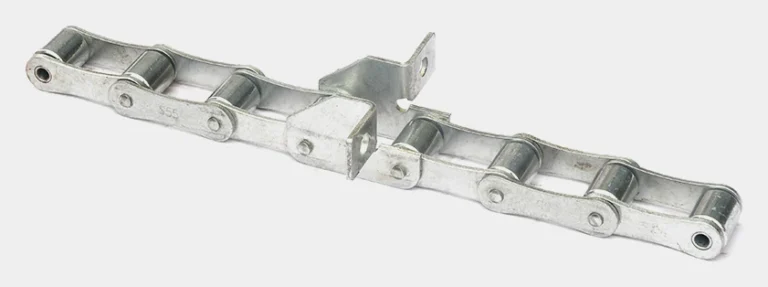
An agricultural chain supplier needs the attachment pattern as well as the length
The attachment determines how the chain connects with the working part of the machine. Its position, orientation and spacing can matter as much as the base-chain designation. A total length alone may leave the supplier unable to determine where the attachments must fall along the chain or how the assembly should relate to the machine.
For a replacement, record the approved arrangement from reliable machine information. If a worn sample is used to illustrate it, make clear which features are being identified and which dimensions need confirmation. For a new assembly, provide a drawing that shows the attachment pattern rather than asking the supplier to infer it from a single close-up photograph.
Keep C6EJ attached to the CA555 purchasing reference
HCC lists CA555 C6EJ as a named agricultural-chain product. Dropping the attachment-related portion of that description can remove information that distinguishes the requested configuration. Carry the complete reference into the quotation, order and receiving record, then verify the specific arrangement against the application’s requirements.
A dealer might receive a repeat request described simply as “the CA555 chain from last season.” Recover the previous approved configuration before assuming the order is identical. The required length or attachment sequence may have changed, or the workshop may be servicing a different machine. A repeat commercial relationship does not make an abbreviated technical description complete.
S38-K and S38-F should remain distinguishable in the parts store
HCC presents S38-K / S38-F agricultural chains together, but the variant descriptions should remain visible in the buyer’s records. Confirm the applicable geometry and arrangement for each requirement rather than treating the shared S38 name as proof of interchangeability. The receiving team needs enough information to distinguish the approved items.
If a dealer has only one variant approved, adding another should be a separate decision. Review the machine application and technical definition before expanding the stock list. That creates a controlled assortment rather than a collection of similar chains whose intended uses are understood only by one experienced member of staff.
Separate dependable repeat items from unresolved agricultural-chain enquiries
A seasonal order can contain both established references and new requests. The two should not be handled as if they have the same readiness. For approved S55, CA555 C6EJ or S38 configurations, the buyer can discuss replenishment quantities against the existing definition. For unresolved items, first establish the missing attachment or application information.
| Dealer’s request | Useful starting evidence | Decision before ordering |
|---|---|---|
| Repeat S55 attachment chain | Approved reference and previous configuration | Confirm length, attachment arrangement and finish remain unchanged |
| New CA555 C6EJ enquiry | Machine details, drawing or identified sample | Resolve the complete chain and attachment requirement |
| Additional S38 variant | Required K or F reference and application information | Keep the new variant separate until reviewed |
| Unlisted attachment geometry | Dimensioned drawing and operating context | Review a custom route rather than assume a catalogue substitute |
This separation helps the supplier respond more clearly. HCC can review the confirmed product lines while identifying the information required for new ones. The dealer, meanwhile, avoids promising a delivery date for a configuration that has not yet been technically defined. No fixed seasonal stock or dispatch guarantee is implied by the public catalogue.
For a second buyer scenario, consider a distributor whose workshops use different local names for the same mechanism. A shared photograph may help communication, but the final order should use the agreed chain and attachment identity. Store the local name as a search aid in the dealer’s own system, not as the only technical description sent to the supplier.
Match the agricultural chain to the working conditions around the machine
Agricultural machinery can expose chains to contamination, changing loads and periods of storage. Describe the actual service conditions rather than asking for a vaguely “stronger” replacement. The relevant information may include the machine function, operating speed, loading pattern, exposure and available maintenance arrangement. The equipment’s approved specification remains the starting point.
HCC’s wider range includes K1 / K2 attachment conveyor chains and non-standard chains. Those products can be relevant when a buyer’s requirement goes beyond a named agricultural reference, but they should not be substituted simply because they carry attachments. The attachment geometry, base chain and application duty all need to be reviewed together.
Tsubaki’s attachment-chain information illustrates the general distinction between a base chain and an assembled attachment configuration. It is useful background for describing a requirement. Tsubaki’s stated application limits and product performance are not HCC ratings and should not be copied into an HCC purchase specification.
Where the chain performs a conveying task, also consider the support and return path. A photograph of the working upper run may omit the clearance that matters on the return. Provide enough machine information for the technical review, and leave installation or adjustment work to qualified personnel following the equipment instructions.
Use HCC’s manufacturing resources to support a defined agricultural-chain range
HCC’s production capabilities and inspection resources provide a manufacturing basis for its chain portfolio. For an agricultural-chain programme, relate those capabilities to the selected product and attachment arrangement. Ask what information is needed to review the dimensions and agreed acceptance requirements.
The benefit for a distributor is a more coherent supply discussion across several real product families. S55, CA555 C6EJ and S38 requirements can be considered within one relationship while retaining separate technical identities. HCC’s company profile provides the background of the manufacturing organisation behind that relationship.
Inspection should focus on the features that determine the agricultural assembly’s fit: the chain configuration, attachment geometry and arrangement, and any other agreed requirements. Do not request a generic certificate as a substitute for identifying those features. Where test evidence is required, confirm the applicable method and product identity instead of assuming an unpublished load rating.
For storage and distribution, discuss how attachments will be protected and how each configuration will be identified. A dealer handling several variants may need to distinguish them before unpacking the complete chain. The packing arrangement should be agreed for the actual order and transport route; no particular carton size or preservation method should be assumed.
Prepare the agricultural-chain range before the urgent workshop call
There is value in recording why an item was not added to the initial range. A CA555 C6EJ enquiry with unresolved attachment spacing should remain a technical enquiry, while a fully identified S55 repeat item can move into replenishment planning. The distinction helps the dealer avoid presenting every requested item as established stock or promising an application that has not been reviewed.
For quantities, use the dealer’s own service and sales records rather than assuming that one agricultural-chain family will have the same demand across all markets. HCC can discuss supply against the requested mix, but the distributor knows which machines its workshops actually support. Separating genuine repeat demand from speculative additions produces a more useful order than distributing the budget evenly across every catalogue reference.
After receiving a new approved variant, retain its identification when it moves from central storage to a local workshop. The seasonal plan only works if the final recipient can distinguish the chain and attachment configuration as clearly as the original purchaser could.
The practical advantage of early preparation is having the technical decisions available when demand becomes urgent. A dealer that has already identified its S55, CA555 C6EJ and S38 references can ask a clearer replenishment question than one still trying to interpret an old sample. Early identification does not guarantee availability, but it removes avoidable ambiguity from the supply conversation.
Our industrial chain application guide helps distinguish power transmission, conveying and lifting when a machinery enquiry crosses product families. Keep that functional distinction alongside the agricultural part record rather than describing every moving chain as the same type of spare.
Before committing to the seasonal assortment, review the unresolved lines separately. Confirm which attachment patterns are approved, which machine references are supported and which items need a custom discussion. HCC’s published agricultural range gives the dealer a solid starting selection. A precise machine-to-chain record turns that selection into a range that workshops can identify and reorder without relying on guesswork.