

HUANGSHAN CHAIN TECHNOLOGYPart of SFR Group · Established 2011
An OEM Chain Supplier for Coordinated Product and Supply Requirements


One purchasing programme can contain a motorcycle drive chain, a saw chain and an industrial attachment chain, yet each line needs a different definition. HCC CHAIN is an OEM chain supplier with a broad published portfolio and a manufacturing base in Huangshan, China. For importers, equipment brands and distributors, the advantage is a coordinated supply conversation that does not erase the technical identity of each product.
Begin with HCC’s chain and sprocket range and separate the programme by application. Confirm the product specification, approval status, quantity and required supply scope for each line. OEM supply should mean a clearly defined relationship between the buyer’s requirement and the supplied product, not an assumption that every chain can carry the same approval or packaging promise.
An OEM chain supplier can coordinate unlike products without calling them equivalent
Consider an importer preparing one programme for several dealer channels. The motorcycle team wants 428 and 520 drive chains, the forestry team asks for 3/8-inch low-profile saw chain, and the industrial team needs an attachment configuration. Combining the commercial discussion can be efficient, but the technical information cannot be reduced to a single chain size field.
HCC’s published range supports that broader conversation. It includes 420, 428, 520 and 525 motorcycle chains; O-ring and X-ring options; saw-chain families; 25H and 2 × 3 timing references; industrial roller, agricultural, conveyor, leaf and specialist chains; and motorcycle sprockets. The useful next step is to identify which of those real families belongs in the buyer’s programme.
Define the motorcycle-chain line by size, construction and application
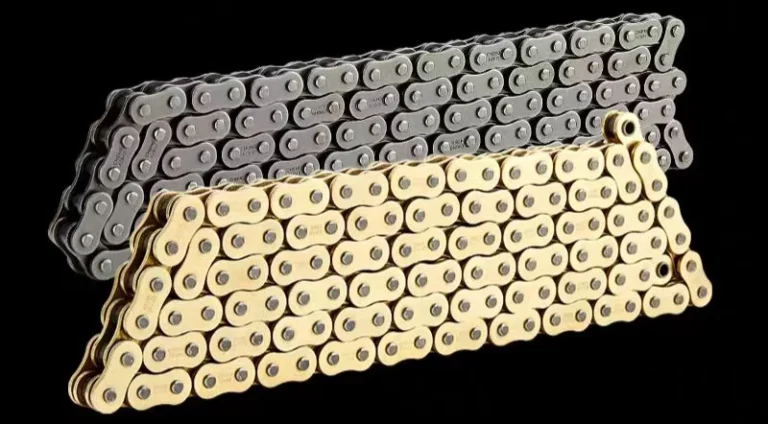
For a motorcycle line, the size reference is only one part of the order. The buyer also needs the selected construction, length or link count, joining arrangement and approved vehicle requirement. HCC’s sealed-chain options should be confirmed for the actual requested size rather than assumed available in every possible combination.
The associated sprocket requirement is another line, not a detail to leave implied. HCC lists CNC 1045 steel, 7075-T6 aluminium and model-specific products such as XR125L 428 and TITAN150 520 45T. If the programme covers both chains and sprockets, keep their fitment relationship visible while retaining a separate identity for each component.
A saw-chain line needs pitch, gauge and cutting-system identity
For the forestry side of the programme, a pitch alone is not enough. HCC lists 3/8-inch low-profile chain in .043- and .050-inch gauges, among other saw-chain options. Preserve the gauge, profile and required configuration rather than importing the motorcycle team’s simplified size description into the saw-chain order.
Oregon’s saw-chain terminology provides general background on the identifiers used in cutting systems. Its product-specific performance or safety claims are not HCC claims. The buyer’s application should be reviewed against the actual HCC product and the relevant equipment information.
Industrial OEM chains need the machine function and interfaces
A roller chain transmitting motion and an attachment chain carrying fixtures need different inputs. HCC’s 08A / 40, 08B and 16A / 80 references can begin a transmission-chain discussion. K1 / K2, C2052 or C2042 products may belong in a conveyor discussion. A leaf-chain requirement should remain tied to its equipment’s approved specification.
For the importer, this means different technical fields within one commercial programme. The goal is not to force every product into one form, but to make each line understandable to the people approving and receiving it. HCC’s range breadth is valuable precisely because those distinct requirements can be discussed with one manufacturing organisation.
Keep OEM chain approval separate from the request to place an order
A purchasing deadline can arrive before every product line is technically ready. The importer should distinguish approved repeat items, items under sample review and new requirements that remain incomplete. The word OEM does not remove those differences, and an available catalogue image does not establish that the buyer’s particular application has been approved.
For an established 428 line, the programme may already have a complete part record. A new .325-inch saw-chain requirement may still need gauge and configuration confirmation. A custom attachment chain may need a drawing review. Putting all three into one shipment plan does not make them equally ready for production.
Three statuses are useful in a mixed programme: approved repeat, defined candidate awaiting review, and unresolved requirement. Keep the status beside the product reference so a commercial schedule does not silently become an engineering approval.
An OEM chain sample should answer a named approval question
Before requesting or reviewing a sample, decide what it is intended to establish. The buyer may be checking dimensions, appearance, a packaging concept or application performance. Those activities have different evidence requirements. A sample accepted for one purpose should not be recorded as universal approval of the product.
A second buyer scenario involves a distributor whose technical team approves a sample while purchasing retains only the original enquiry description. The next order may then omit the very details that were settled during review. Transfer the approved reference and relevant documents into the purchasing record so the manufacturing decision survives the internal handoff.
If a material or configuration change is proposed later, identify it explicitly. Do not use an old approval to cover a new product merely because the commercial name is similar. HCC can review the defined alternative, while the buyer’s responsible technical team decides whether it satisfies the application.
For timing and lifting-related chains, the equipment-specific approval boundary is especially important. HCC’s 25H, 2 × 3 and leaf-chain listings are product starting points, not blanket approvals for every engine or lifting machine. Qualified equipment personnel should govern those decisions and the associated installation or service work.
What HCC brings to an OEM chain supply relationship
HCC’s company profile describes a business established in 2011, based in Huangshan and wholly owned by SFR. It publishes overall production and international supply information. These facts give buyers company context for evaluating a broader chain programme, rather than only a product photograph and a price.
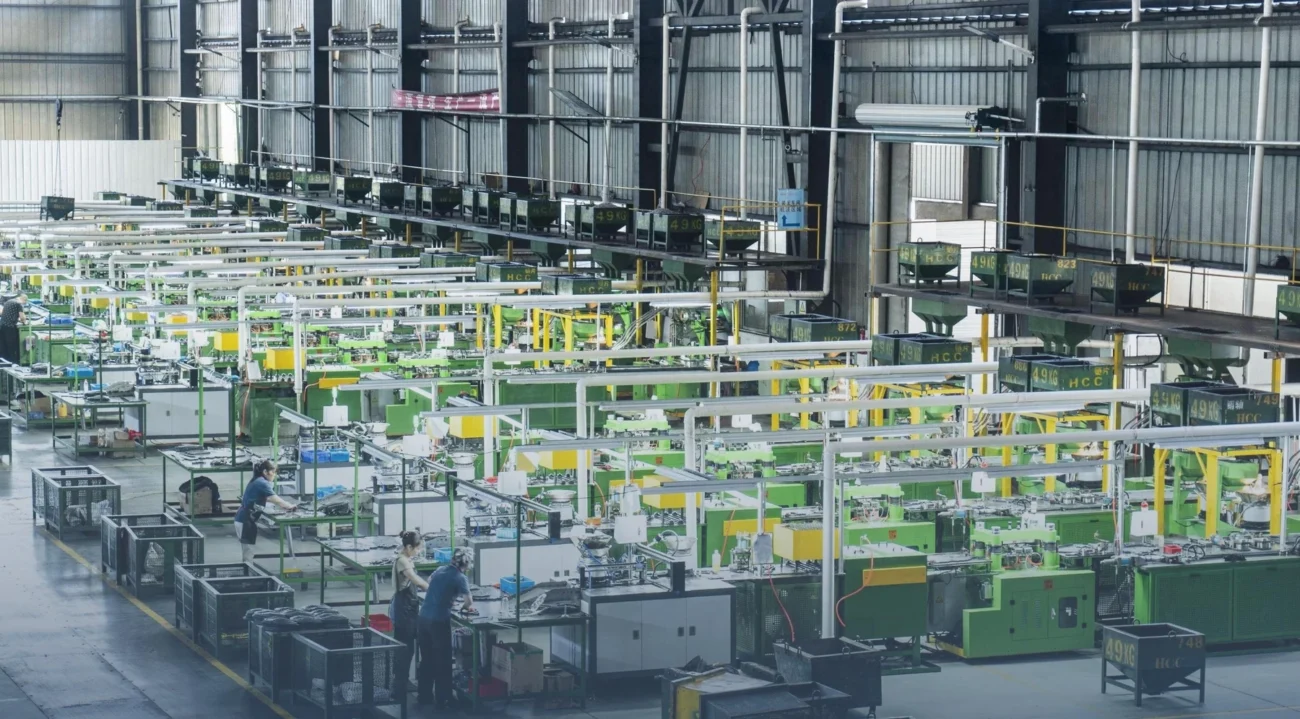
The manufacturing capabilities include precision forming, heat treatment and automated assembly. The inspection resources include measurement, material examination and mechanical testing. Together, they create a manufacturing-led basis for discussing product definition and evidence.
For an OEM buyer, the benefit is the ability to connect questions about the product to a visible production organisation. A 520 chain enquiry, an industrial roller-chain specification and an agricultural attachment requirement can each be reviewed in their own technical context. The company relationship can be shared even though the acceptance criteria differ.
Keep the published company figures in their proper role. They describe overall scale, not stock by model or a guaranteed lead time for every custom chain. Confirm the schedule and available supply arrangement for the actual approved mix. A new drawing-led item may require a different review path from a repeat catalogue configuration.
Branding, packaging and documentation requirements should also be stated rather than assumed. If the programme needs a particular label or customer-facing pack, explain the requirement and ask HCC to confirm what can be supplied. Do not advertise a private-label service or a standard retail package until the actual arrangement has been agreed.
For component identification, the most useful label preserves the approved product reference and variant. A motorcycle chain may need size and construction distinguished; a saw chain needs pitch and gauge; an attachment chain needs its assembly identity. One generic label format should not obscure those differences.
Release the OEM chain programme line by line, then coordinate the shipment
A mixed programme also benefits from separate quantity units. A request for motorcycle chains in defined finished configurations is not necessarily described in the same way as an industrial-chain supply request. State the intended supply format for each line and confirm it with HCC. A combined commercial total should not hide whether the buyer expects finished assemblies, particular lengths or another agreed arrangement.
Keep product-specific documents with the corresponding order line. The saw-chain file should preserve pitch and gauge, the motorcycle file should retain its approved construction and fitment, and the attachment-chain file should point to the current drawing. A single general factory document cannot replace all three. The programme is coordinated when those different requirements remain easy to retrieve, not when they have been compressed into one generic description.
For the importer, this creates a clearer conversation with downstream dealers. A dealer asking about a 428 replacement should receive the approved 428 information, not a broad claim about the entire HCC portfolio. A forestry dealer should see the actual saw-chain identifiers. The company can be presented consistently while the product promise remains specific to each line.
That distinction is central to a credible OEM relationship: a shared manufacturer identity supports the range, while the approved specification supports each individual purchasing decision.
The final programme should make each line’s technical and commercial status clear. Confirm the approved product definition, quantity, required documents and agreed packing arrangement. Then coordinate delivery against those defined lines. This sequence prevents an unresolved product from being hidden inside an otherwise ready mixed order.
For an importer splitting the shipment across dealer channels, plan how identification will be retained after receiving. A central warehouse may understand the programme, while a local dealer sees only a smaller package. The product identity should remain clear at that final handoff, without adding a compatibility claim broader than the approved application.
When several products are sourced together, a change to one should not automatically reopen or alter the others. If a saw-chain gauge changes, identify that line. If a sprocket tooth count changes, review the related drive requirement. Keep the programme organised around actual component decisions rather than a single undifferentiated chain order.
Our mixed chain and sprocket guide develops the same portfolio advantage from a product-family perspective. For a buyer focused on the factory behind an approved motorcycle line, the HCC manufacturing evaluation provides a more detailed production discussion.
The practical test of an OEM chain supplier is whether the buyer can turn its real requirements into identifiable, reviewable products. HCC offers the range and manufacturing context for that conversation. A well-run programme preserves the differences between 428 chain, 3/8-inch low-profile saw chain and an industrial attachment assembly while coordinating their commercial supply. That clarity makes the relationship useful long after the first mixed shipment.