

HUANGSHAN CHAIN TECHNOLOGYPart of SFR Group · Established 2011
An O-ring Motorcycle Chain Supplier for a Clearly Defined Dealer Range

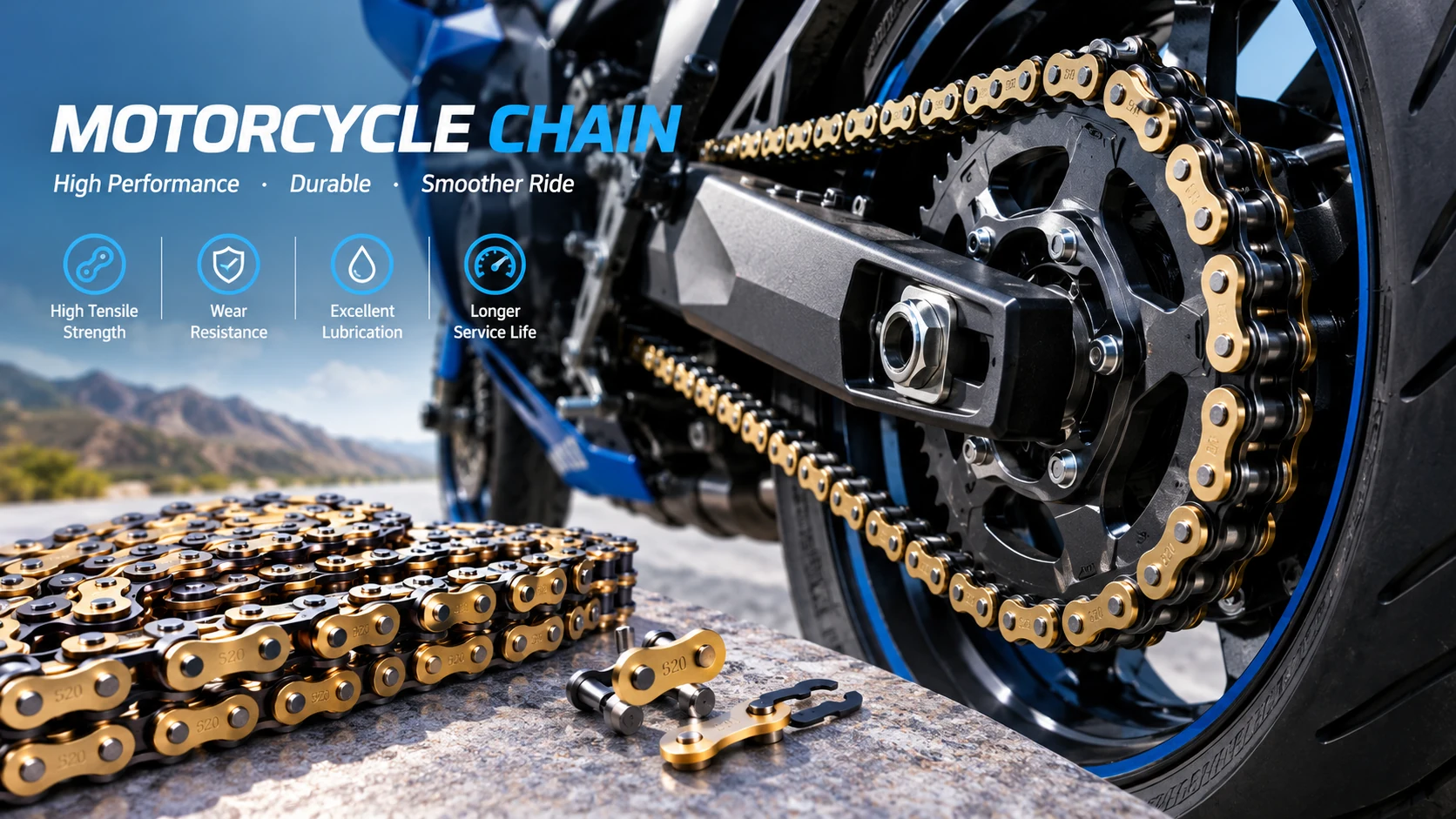
A dealer asking for an O-ring chain is describing a construction choice, not yet a complete motorcycle replacement. HCC CHAIN offers O-ring and X-ring options within its motorcycle-chain portfolio, alongside 420, 428, 520 and 525 references. As an O-ring motorcycle chain supplier, the useful role is to help the buyer turn that broad request into a confirmed chain configuration and application.
Begin with HCC’s motorcycle-chain range. Confirm the required size, available sealed construction, length or link count, joining arrangement and vehicle fitment. The catalogue does not establish every size-and-seal combination, so confirm the actual O-ring product before putting it into a distributor’s assortment.
An O-ring motorcycle chain supplier should explain what the seal identifies
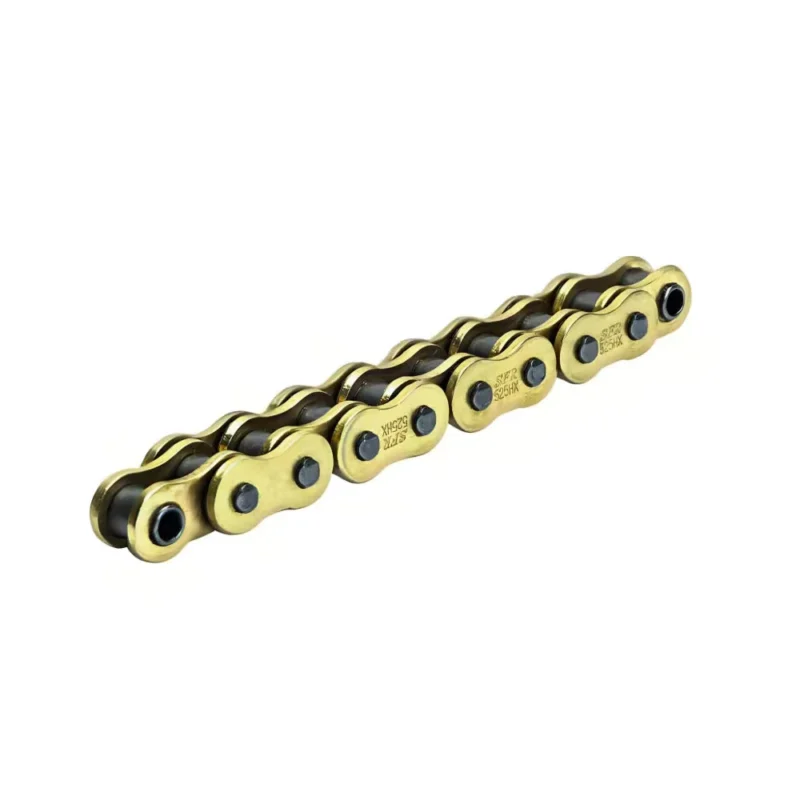
O-ring chains use seals at the joints to help retain internal lubricant and limit contamination entering the sealed area. That construction is a useful product distinction, but it does not identify the chain’s size, overall dimensions or approved motorcycle application. A dealer needs those details as well as the seal description.
D.I.D’s explanation of sealed-chain types provides general background on the role of O-ring and X-ring seals. Its brand-specific life, friction and performance statements are not test results for HCC. An HCC product should be described using its own confirmed construction and evidence.
Keep O-ring construction separate from the 420, 428, 520 or 525 size field
HCC’s published size references and its sealed-chain options answer different questions. A buyer should not combine them automatically into an assumed list of available products. Establish the requested size first, then confirm whether the relevant O-ring configuration is offered and suitable for the intended requirement.
For a dealer catalogue, use separate fields for size and construction. This makes it easier to distinguish a standard chain from an approved sealed alternative without implying that all chains carrying the same size code have identical dimensions or application ratings. The actual product reference should remain the authority.
Build the O-ring chain assortment around confirmed dealer applications
Imagine a distributor adding a sealed-chain line to a range that has mainly supplied standard motorcycle chains. The first step is not to order one O-ring item for every size shown in the catalogue. Identify the dealer applications that justify the addition and obtain the information needed to review each proposed product.
HCC’s 420, 428, 520 and 525 range provides a useful starting structure. The distributor can select a focused group of documented requirements, confirm the available constructions and build its stock records around approved items. That is more useful than launching a broad sealed-chain range whose fitment information is incomplete.
A 520 O-ring enquiry should retain its actual motorcycle requirement
If a dealer requests a 520 O-ring chain, retain the vehicle information, required length or link count and approved joining arrangement. Confirm the proposed HCC construction rather than assuming that a 520 label answers every question. The seal type does not replace the need for product-specific fitment review.
HCC also lists a TITAN150 520 45T sprocket, but that reference is not a universal pairing for every 520 chain. If the programme includes sprockets, record the actual approved chain-and-sprocket combination. The matching decision belongs to the application, not to the shared number alone.
A 428 dealer line should not inherit sealed-chain claims from another size
For a distributor already handling HCC’s 428 chain, a proposed O-ring addition needs its own confirmed product definition. Do not transfer availability, dimensions or performance claims from a different size or another manufacturer’s chain. The new line should be identified by the actual HCC product being reviewed.
The same care applies to the associated XR125L 428 sprocket options. HCC lists 50T, 52T and 53T choices, but the selected tooth count and complete drive arrangement still need application review. Adding a sealed chain should not obscure a simultaneous gearing or fitment change.
Sealed motorcycle chains need clearance and joining details checked together
A chain’s fit includes more than pitch and engagement with the sprocket. The complete chain envelope, surrounding components and joining arrangement can matter. Use the motorcycle’s approved requirements and the proposed product information rather than assuming a sealed chain is a universal replacement for a non-sealed one.
A second dealer situation begins when a customer asks for an O-ring upgrade but provides only the existing chain size. The dealer should recover the motorcycle information and confirm the proposed product’s fitment. A desirable construction feature does not authorise a dimensional or application mismatch.
The connecting component should be specified for the selected chain and joining method. Do not use a loose link from another chain simply because it appears to fit. The relevant manufacturer and vehicle instructions should govern installation, and qualified personnel should carry out the work using the required tools and procedures.
Our motorcycle-chain distributor guide explains how to keep these identification fields separate. A clear record allows the dealer to answer whether an item is the approved replacement rather than relying on a broad label such as premium sealed chain.
Where the buyer is proposing a change to the drive, distinguish it from a like-for-like replacement. The review may need to consider the chain, sprockets and available adjustment together. This article does not provide a conversion procedure or approve a chain solely because its seal construction is attractive to the customer.
Give the dealer a usable O-ring product description, not just a premium label
The retail description should tell a workshop what distinguishes the actual chain being supplied. For a confirmed O-ring item, that includes the sealed construction and the approved size and finished configuration. It should also tell the dealer where to find the applicable care information. These are useful benefits of a well-organised supply programme: less interpretation at the counter and a clearer connection between the purchased item and the motorcycle requirement.
Consider a distributor supplying both workshops and independent parts shops. A workshop may order by an established part number, while a shop may repeat a customer’s description of the seal type. Linking both enquiries to the same approved O-ring record prevents the sales channel from changing the technical identity of the product. The distributor can still offer different commercial quantities, provided the chain and supplied joining components remain correctly identified.
For a shipment containing 428 standard chains and a separately approved 520 O-ring item, the receiving distinction should survive removal from the outer carton. Ask how the agreed chain identification will be retained when items are divided between branches. The objective is not a particular packaging design; it is preventing an unmarked sealed chain from being treated as an unspecified motorcycle replacement after delivery.
HCC’s combination of motorcycle chains and matching-category sprockets can support this coordinated approach. A dealer may discuss the chain and the relevant sprocket requirement with one manufacturing-backed business, while still approving each component for its own application. That is a more defensible commercial advantage than promising an unverified mileage improvement. It connects the product range to a real distributor problem without treating every chain and sprocket as interchangeable.
If the distributor later broadens the O-ring range, carry forward the information format, not the previous item’s approval. A new size or finished length deserves its own product decision. Consistent records make expansion easier precisely because the differences remain visible, rather than being hidden under one sealed-chain label.
An O-ring chain is not a maintenance-free motorcycle drive
The internal seal function does not remove the need for appropriate external care, inspection and adjustment. A dealer’s product description should not promise that an O-ring chain requires no maintenance. The actual chain and motorcycle instructions should govern the service requirements.
D.I.D’s maintenance guidance highlights the importance of seal-compatible cleaning and lubrication. That is useful general context for explaining why harsh or unsuitable treatment should not be assumed acceptable. D.I.D’s numerical intervals and replacement thresholds should not be copied as universal HCC requirements.
For the distributor, obtain the applicable product information before preparing maintenance claims for the range. A clear statement that the selected chain requires the appropriate care is more accurate than an unsupported promise of a fixed life or a universal maintenance interval. The dealer should also preserve the distinction between chain care and diagnosis of a worn or misaligned drive.
If the existing motorcycle drive has an unresolved problem, a new O-ring chain should not be promoted as a guaranteed cure. Qualified personnel should assess the sprockets, alignment and other relevant conditions using the vehicle instructions. The purchasing decision should follow that assessment rather than replace it.
HCC’s manufacturing base supports a defined O-ring chain programme
The O-ring programme can be discussed with the organisation shown in HCC’s factory presentation, where component production and chain assembly form part of the published operation. The separate measurement and testing presentation helps the importer frame a more specific question: what evidence relates to the sealed-chain item being proposed for this dealer range?
For an O-ring programme, relate the requested evidence to the actual product configuration. The buyer should identify the chain reference and requirements being approved, not ask for a general factory statement as a substitute. An inspection capability does not independently establish a particular service life or comparative friction advantage.
The HCC company profile describes a Huangshan manufacturer established in 2011 and wholly owned by SFR. That background supports a manufacturing-led supplier discussion. Confirm availability, quantity and delivery arrangements for the specific sealed-chain items rather than interpreting overall capacity as stock by size.
For packing and identification, preserve the distinction between the confirmed O-ring item and other standard or sealed chains in the shipment. A distributor handling 428, 520 and 525 products needs each line clearly associated with its approved record. Confirm the actual packing and labelling arrangement with HCC rather than assuming one retail format.
A concise dealer record can retain five connected facts: approved application, chain size, confirmed construction, required length or link count, and joining arrangement. Add the actual product reference that ties those facts together. The record should not use seal type as a shortcut that hides any of the other four.
When an X-ring alternative is discussed, treat it as another proposed construction rather than an automatic upgrade. HCC lists both seal types, but the suitable choice depends on the actual product and application. Keep comparisons grounded in confirmed information rather than another brand’s performance chart.
The O-ring assortment is ready to grow when its first items are easy for dealers to identify and explain accurately. HCC offers a real motorcycle-chain range and manufacturing resources behind it. Start with confirmed applications, preserve the selected construction and avoid expanding the product promise beyond the evidence. That gives the distributor a sealed-chain line built on usable part information, not simply a persuasive seal name.