

HUANGSHAN CHAIN TECHNOLOGYPart of SFR Group · Established 2011
Work with a Motorcycle Sprocket Supplier Across Steel, Aluminium and Model-Specific Parts

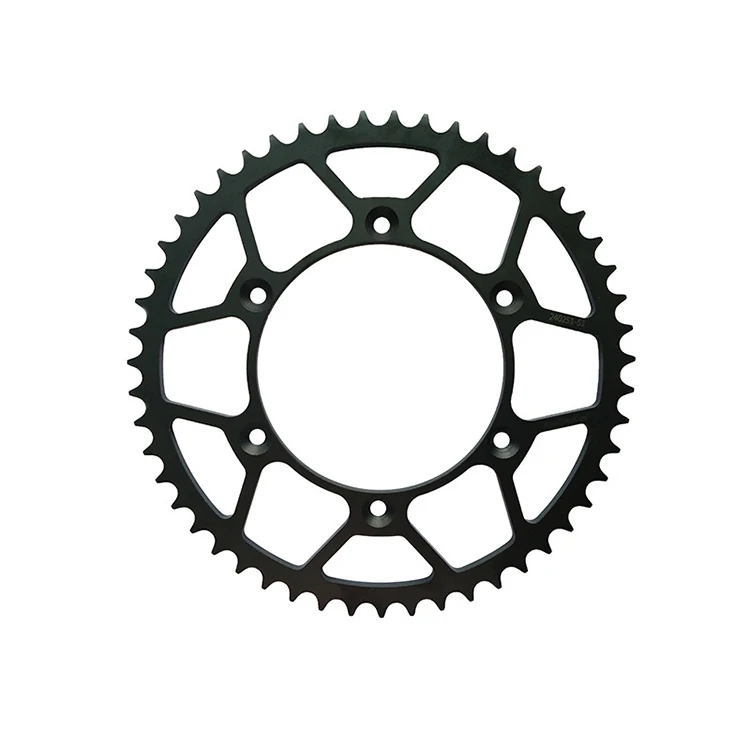
The first decision in a rear-sprocket order is not the colour. A motorcycle sprocket supplier needs to match the motorcycle, chain specification, tooth count and mounting geometry before discussing materials or finishes. HCC CHAIN offers CNC 1045 steel, 7075-T6 aluminium and model-specific sprockets, giving importers and distributors several genuine product routes without treating them as interchangeable parts.
Start with our motorcycle sprocket range. Published examples include XR125L 428 rear sprockets with 50T, 52T and 53T options, WAVE125 sprockets and a TITAN150 520 45T reference. The useful purchasing question is which defined configuration belongs in your range, not which material sounds universally superior.
A motorcycle sprocket supplier should separate material choice from fitment
HCC’s CNC 1045 steel rear sprocket and 7075-T6 aluminium rear sprocket are distinct material routes. Material selection can be relevant to a buyer’s intended product positioning, but it does not establish vehicle compatibility. The mounting interface and chain engagement still have to match the approved application, whichever material is selected.
A distributor might want a steel replacement line for one customer group and an aluminium option for another. That is a reasonable range discussion, provided both products are defined independently. Do not copy a vehicle-fitment statement from the steel product onto the aluminium product merely because the outer shape or tooth count appears similar.
Describe the 1045 steel sprocket as a complete part
The material designation 1045 is useful, but a complete purchase description also needs the chain specification, tooth count, mounting dimensions and required finish. HCC identifies its CNC 1045 steel rear sprocket separately within the range. Use that identity to begin the discussion, then confirm the actual drawing and configuration being quoted.
If a purchasing team receives two steel-sprocket offers, compare the defined parts before comparing prices. One offer may cover a different tooth count or mounting arrangement. Another may use a different finish. A low unit price is not a like-for-like comparison until the technical scope and supply requirements are aligned.
Give the 7075-T6 option its own commercial purpose
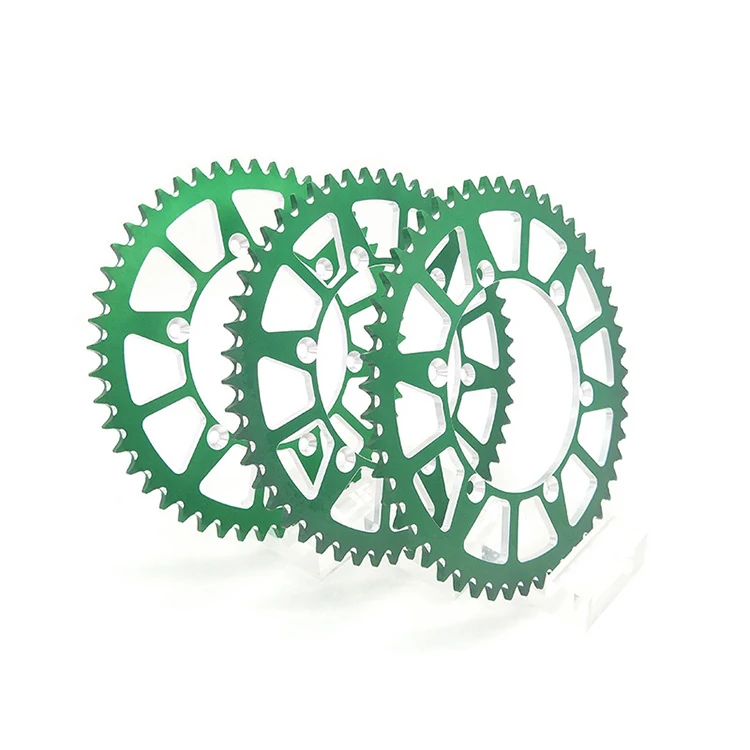
HCC’s aluminium range includes a named 7075-T6 rear sprocket and colour options. For a distributor, the purpose of offering these products should be clear: a documented alternative for an approved application, not an unsupported promise that one material will last longer or outperform every steel sprocket.
Material and construction distinctions are also visible in JT’s professional sprocket range, which separates steel, aluminium and carrier products. That is useful industry context for organising an assortment. JT’s proprietary durability, weight and manufacturing claims must not be read as test results for HCC products.
XR125L 428 sprocket options need separate tooth-count decisions
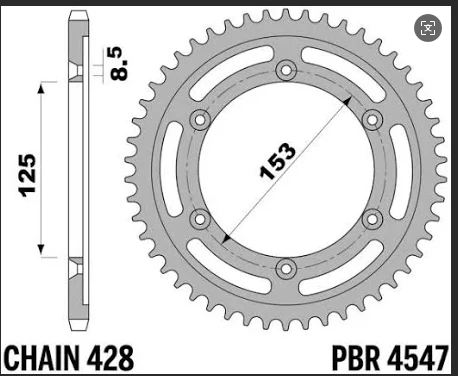
HCC lists XR125L 428 rear sprockets with 50-, 52- and 53-tooth options. Those are three identifiable choices, not three interchangeable labels for the same part. The correct choice depends on the intended vehicle configuration and the complete drive arrangement approved for it.
Suppose a dealer network has historically sold one replacement reference and now asks for all three tooth counts. The importer should establish which applications and customer requirements justify each addition. The product description should preserve the tooth count, chain specification and fitment record so dealers do not select a part solely from a motorcycle model name.
Changing XR125L rear teeth is not a cosmetic substitution
A different rear tooth count changes the relationship between the front and rear sprockets. It can also affect the chain-length and adjustment discussion. Procurement should therefore distinguish a like-for-like replacement from a deliberate drive-ratio change. The latter needs application review rather than being treated as an equivalent substitute in the warehouse.
The supplier can review the requested sprocket, but the motorcycle’s approved configuration remains the reference for fitment. Confirm the front sprocket, chain specification, link count and available adjustment information where relevant. Do not publish an unverified claim that every XR125L variant accepts every listed tooth-count option without further checks.
For chain sourcing alongside the sprocket, HCC also lists 428 motorcycle chain. Our motorcycle-chain distributor guide explains why chain size, construction and vehicle fitment belong in separate fields. Combining the purchasing discussion is useful; collapsing those distinctions is not.
Build WAVE125 and TITAN150 stock lines around their own references
HCC’s WAVE125 sprocket is presented as a fine-blanking product, while the TITAN150 reference specifies 520 chain and 45 teeth. These details create different identification routes. They help an importer ask precise questions instead of requesting a generic “125 or 150 motorcycle sprocket” assortment.
| Published HCC option | What the description establishes | What still needs confirmation |
|---|---|---|
| XR125L 428, 50T / 52T / 53T | Application reference, chain specification and tooth choices | Required variant, mounting geometry and complete drive fit |
| WAVE125 sprocket | Application reference and fine-blanking route | Exact part definition and approved installation |
| TITAN150 520 45T | Application reference, 520 chain and 45 teeth | Mounting dimensions and vehicle-specific agreement |
| 7075-T6 rear sprocket | Named aluminium material route | Vehicle, teeth, chain and drawing details |
A second distributor scenario involves two shipments labelled only “45T.” One is intended for an established TITAN150 520 requirement; the other belongs to a different rear-drive project. Equal tooth count does not establish the same bolt pattern, centre opening, offset or chain engagement. The warehouse label should retain enough information to keep the two parts apart.
HCC also shows a BROS steel sprocket and a separate heavy-duty 45T steel example. Those products broaden the catalogue, but their names should not be used as proof of compatibility with the TITAN150 reference. Use the actual part definition for each stock line and request clarification where a catalogue description does not resolve the application.
The useful sprocket assortment is the one dealers can identify correctly
A distributor does not have to introduce every material, finish and tooth count at once. Start with the applications for which the business has reliable fitment information and a clear customer requirement. HCC’s range allows a focused opening selection: for example, one documented steel replacement reference, a separately approved aluminium option and selected model-specific sprockets.
The commercial benefit comes from reducing ambiguity in the product line. A dealer should be able to distinguish an XR125L 428 52T item from its 50T alternative without comparing photographs. Likewise, the TITAN150 520 45T record should remain separate from another 45T steel sprocket. Clear records make price lists, replenishment requests and returns assessment easier to interpret.
When evaluating the cost of an additional variant, consider more than the purchase price. The distributor must also maintain the fitment information, identify the stock correctly and explain the product to dealers. A new colour for an already approved mechanical part creates a different information burden from a new mounting geometry or chain specification. Treat those expansions differently when planning the range.
A finish sample can help settle appearance, but the dealer’s sales description should still lead with the mechanical identity. If the most prominent label is merely “black rear sprocket,” the buyer has hidden the information that determines fit. Put the application reference, chain specification and tooth count where the receiving and sales teams can find them.
This approach also gives HCC a more useful supply forecast. Quantities can be discussed by defined product rather than as one total for miscellaneous sprockets. The manufacturer can review the requested mix, while the distributor retains responsibility for the fitment statements presented to its customers. Neither side needs to guess which visually similar item a dealer intended to reorder.
A motorcycle sprocket supplier can also help define the carrier boundary
HCC’s range includes a sprocket carrier assembly and a mounting bracket. These products are relevant when the purchasing requirement extends beyond the toothed component itself. A sprocket may have the requested teeth yet still fail to match the carrier or the rest of the rear-wheel assembly.
Before ordering, decide whether the scope is the sprocket alone, a carrier-related component or a defined assembly. Record which interfaces the supplier is being asked to review. Do not assume that a product called an assembly automatically includes every bearing, spacer, fastener or other component used on the motorcycle; the supplied contents need explicit confirmation.
For an importer coordinating several rear-drive products, HCC’s broader chain-and-sprocket portfolio is useful because related requirements can be discussed within one supply relationship. Our mixed chain and sprocket order guide keeps those interfaces visible while explaining the value of a coordinated order.
Approve the motorcycle sprocket before multiplying colours and quantities
For the dealer-facing catalogue, keep material and application statements separate. “7075-T6 aluminium” describes the named material route; it does not answer which motorcycle accepts the part. “XR125L 428 52T” describes a more specific application reference but still needs the agreed mounting definition. This separation makes the sales description easier to maintain when a finish or tooth-count option changes.
HCC’s measurement and inspection resources provide a basis for discussing dimensional evidence. For a sprocket programme, the buyer should identify which drawing features matter to fitment and how the agreed checks will be recorded. A finish sample and a dimensional approval answer different questions.
This sequence is particularly valuable for colour variants. First settle the mechanical part and the approved application. Then agree the finish requirements and how variants will be identified. Otherwise, a visually attractive sample can distract the buyer from an unresolved mounting dimension, or a colour name can become the only identifier on an order that contains several different mechanical parts.
HCC’s company background supports a manufacturing-led supply discussion, but order-specific details remain important. Confirm quantity by part, required documentation and delivery arrangements for the selected products. No single lead time or packaging format should be assumed from the breadth of the catalogue.
For packing, consider the receiving task. A distributor handling several tooth counts needs those counts distinguishable without opening every protective package. A finish-sensitive aluminium order needs protection agreed for the transport and storage route. Describe these practical requirements to HCC and confirm the proposed arrangement before the order is released.
The assortment can grow once its first references are clear. An approved 1045 steel replacement, a separately defined 7075-T6 option and a documented XR125L tooth-count choice are more useful than a long list of vaguely described sprockets. HCC’s range gives the buyer those starting points; a precise part record turns them into products that dealers can select and reorder with confidence.