

HUANGSHAN CHAIN TECHNOLOGYPart of SFR Group · Established 2011
A Motorcycle Sprocket Manufacturer for Drawing-Led Rear-Drive Projects

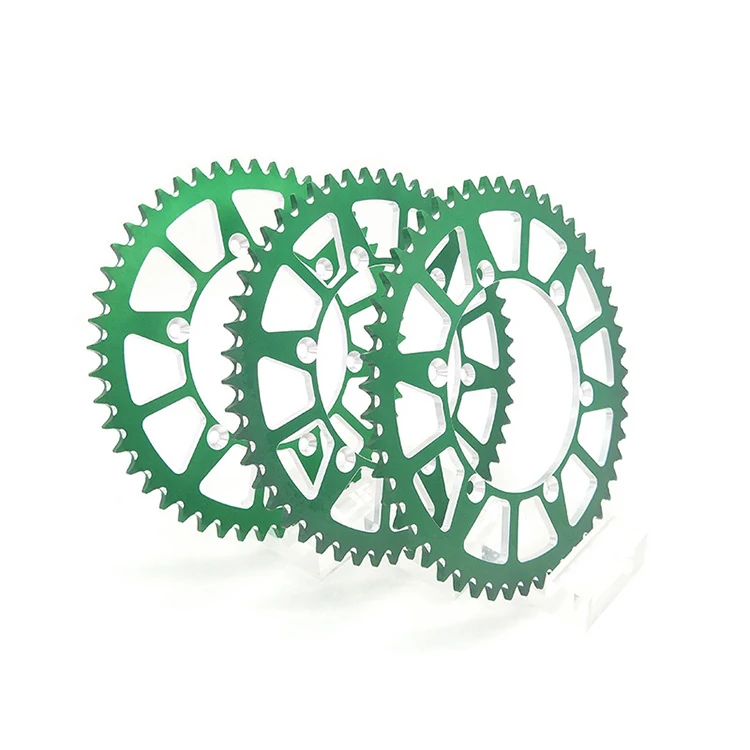
A rear-sprocket drawing can look complete while leaving its most important interface unresolved. The tooth count may be clear, yet the mounting face, centre opening or relationship to the carrier is missing. When choosing a motorcycle sprocket manufacturer for a drawing-led project, use HCC CHAIN’s published steel, aluminium, fine-blanking and carrier-related products as starting points, then define the actual part that must be approved.
HCC’s sprocket collection includes CNC 1045 steel rear sprockets, 7075-T6 aluminium options, WAVE125 fine-blanking sprockets and mounting components. For OEM teams and importers developing a defined replacement, the first priority is a consistent drawing, application reference and sample identity. A finish decision comes after those mechanical requirements are understood.
Give the motorcycle sprocket manufacturer a drawing that locates the part
The sprocket must both engage the chain and mount correctly in the rear-drive assembly. A drawing that shows only the outside profile does not describe that complete job. The engineering team should identify the mounting interface, relevant faces and dimensions that establish the sprocket’s position. The manufacturer can then review a defined part rather than infer hidden geometry from a photograph.
Consider a brand owner replacing a discontinued rear sprocket. The original sample is available, but the old drawing contains only tooth count and a few overall dimensions. The first development step is to reconcile the sample with the intended vehicle configuration. Wear, damage or an earlier modification should not quietly become the definition of a new production part.
The mounting face and chain line belong in the same sprocket review
A mounting pattern can appear correct while the working position of the teeth is not. The drawing should make the relevant relationship between the mounting interface and chain engagement clear. Any offset or clearance requirement must come from the approved application, not from an assumption that a similar-looking sprocket is equivalent.
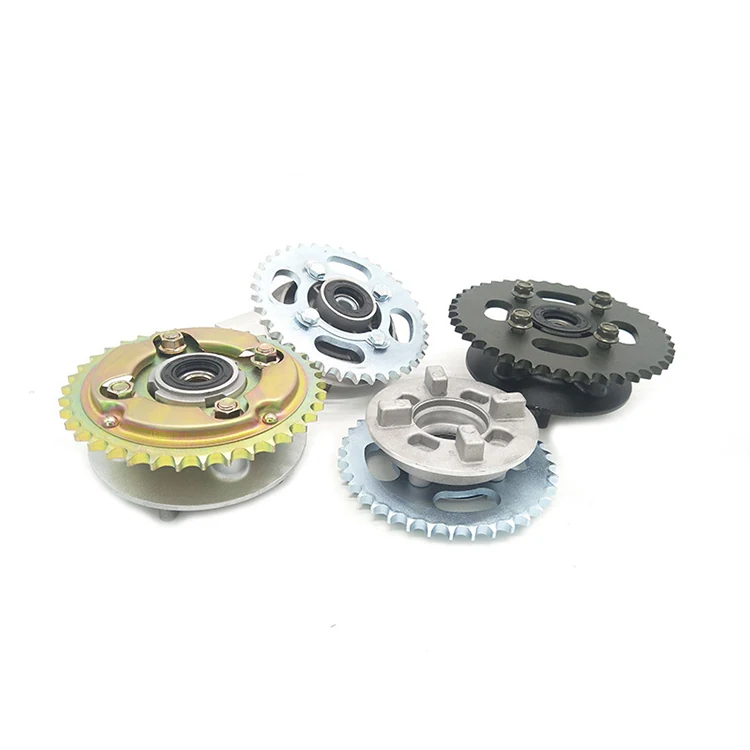
HCC’s mounting bracket and carrier assembly are useful reminders that the sprocket operates within a larger rear-drive arrangement. If the project covers only the sprocket, state which mating components remain unchanged. If the carrier is also under review, define that expanded scope separately so both parties know which interfaces require approval.
CNC and fine-blanking sprockets begin with different product discussions
HCC names CNC 1045 steel rear sprockets and fine-blanking motorcycle sprockets in its range. These descriptions identify product routes, but they do not by themselves establish the tolerance, material condition or acceptance requirements of a particular order. The buyer should ask how the proposed route relates to the drawing and intended application.
For a WAVE125-related requirement, the published fine-blanking reference is a useful place to begin. For a drawing-led steel rear sprocket, the CNC 1045 option may be relevant. Neither reference should be treated as permission to change a design feature without approval. Manufacturing feasibility and application suitability need to be considered together.
Separate 1045 steel identity from the finished sprocket specification
The material name does not describe every property of the finished part. A buyer may need material documentation, dimensional evidence or other agreed acceptance information. Define those needs for the selected sprocket instead of assuming that every part labelled 1045 follows an identical treatment or inspection arrangement.
HCC presents measurement, material examination and mechanical testing within its quality capabilities. Those resources can support a technical discussion, but the inspection record must relate to the ordered component. Do not turn a general laboratory image into a claim that a particular sprocket has passed an unpublished test.
Keep the 7075-T6 sprocket drawing distinct from its colour reference
HCC’s 7075-T6 aluminium rear sprocket and aluminium colour options introduce another development route. The mechanical drawing should remain identifiable independently of the finish sample. A colour approval cannot resolve a missing mounting dimension, and a dimensional approval does not necessarily settle the buyer’s appearance requirements.
For an importer developing several finishes, keep the common mechanical identity clear while distinguishing the agreed finish variants. This allows the receiving team to know whether a difference is intentional. It also prevents a later colour addition from being confused with a change to the sprocket’s geometry or intended vehicle fitment.
A motorcycle sprocket manufacturer needs the chain specification beside the teeth
Tooth count describes how many teeth the sprocket has, not the complete chain interface. HCC’s XR125L 428 examples and TITAN150 520 45T reference demonstrate why the chain specification belongs in the part description. An order that preserves only “45T” loses information that matters to matching the drive.
A project engineer should establish the required chain and sprocket combination before finalising the drawing. The design should not borrow a tooth profile from a visually similar part or assume that a chain size can be changed without reviewing the complete drive. HCC’s motorcycle-chain range provides related products for discussion, not automatic interchangeability between every catalogue item.
The broader industry also separates application and material routes. JT’s sprocket information distinguishes steel, aluminium and carrier products. Its catalogue structure is useful background for understanding why a manufacturer’s range contains several product types. Its own material-performance claims and production specifications are not evidence about HCC’s proposed part.
For HCC chain options, see the motorcycle chain assortment discussion. The important handoff is between the approved sprocket drawing and the actual chain configuration. Purchasing should carry both references into the order rather than relying on a broad motorcycle-family description.
Resolve sample differences before approving a sprocket production reference
A second project situation begins when two departments hold different samples. Engineering has the part fitted during a trial; purchasing has an earlier sample used for quotation. If the two differ, the production order needs an explicit decision about which version is approved. The supplier should not have to infer that decision from the most recent photograph in an email chain.
Identify the drawing revision, sample reference and application together. Record which features were reviewed and which remain open. A dimensional review, an appearance review and an installation assessment are distinct activities. If the buyer requires an operational evaluation, it should be arranged by qualified personnel using the relevant motorcycle and component instructions.
For a drawing-led sprocket, approval should identify the part, not merely record that “the sample is good.” State the drawing revision, material route, chain specification, tooth count and agreed finish. Keep any unresolved fitment question outside the production release.
The same discipline applies when the buyer changes tooth count. HCC’s XR125L 428 range lists 50T, 52T and 53T, but a new tooth choice is not simply a colour variant. Confirm the drive arrangement and application consequences before adding it to an approved production family.
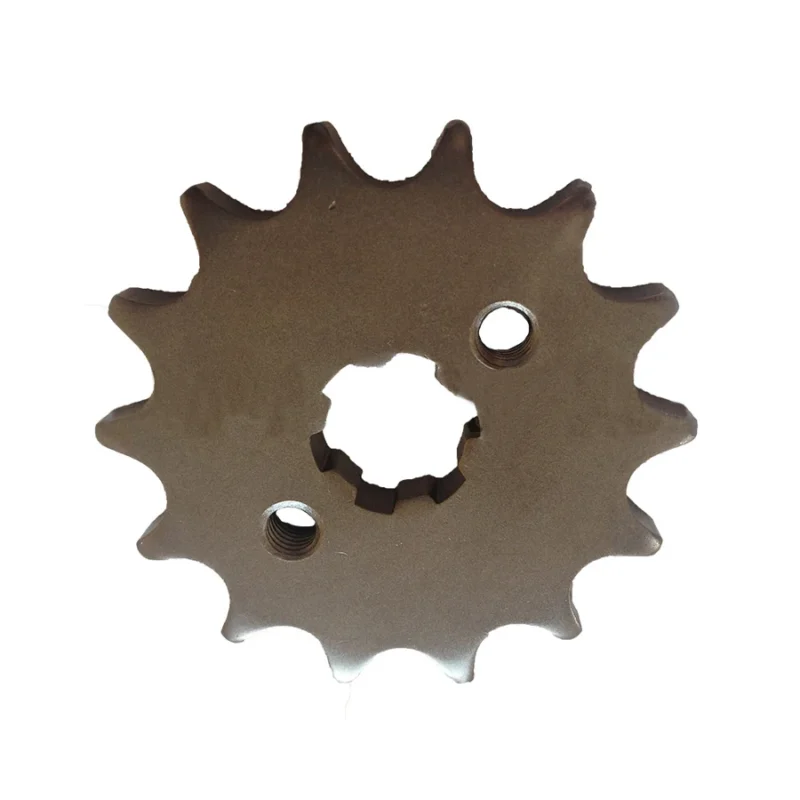
When a drawing and sample disagree, record the disagreement as a specific feature rather than a general comment. For example, the buyer may need to resolve whether the drawing or the sample defines a mounting-face relationship. The responsible engineer should make that decision before the manufacturer is asked to repeat the part. This avoids reproducing an accidental feature simply because it existed on the supplied sample.
For a family of sprockets, identify which features are shared and which vary. XR125L 428 tooth-count options may belong in a related commercial range, but each selected part still needs its own unambiguous definition. A 7075-T6 colour family may share a mechanical drawing while using separate finish references. Keeping those two kinds of variation distinct helps the manufacturer review changes without reopening unrelated decisions or overlooking a genuine mechanical difference.
Connect HCC’s factory capabilities to the sprocket project you are buying
HCC’s manufacturing presentation describes precision production and assembly resources across its chain business. Its company profile places that business in Huangshan and within SFR. These facts provide supplier context, but a drawing-led sprocket project still needs confirmation of the proposed product route and inspection arrangements.
Ask the manufacturer to connect its response to your actual drawing. Which version is being quoted? Which material and finish are included? What information is required before a sample or production order can be reviewed? These questions allow HCC to respond to a defined engineering need rather than to a general request for a “high-quality sprocket.”
Where a carrier assembly is included, specify the supplied contents and interfaces. Do not assume that the catalogue term includes every bearing, spacer or fastener in the rear wheel. A clear component boundary protects both the manufacturer and the buyer from approving different interpretations of the same assembly name.
Quantities and delivery requirements should follow the technical scope. A new drawing, an additional finish and a repeat order for an approved part may involve different review needs. HCC must confirm the schedule for the particular programme; its overall company capacity is not a fixed lead-time promise for each sprocket configuration.
Release sprocket variants with identification the receiving team can use
A practical release record can show the approved drawing beside a photograph of the accepted sample, with each serving a different purpose. The drawing defines the mechanical requirement; the photograph helps identify the reviewed item and appearance. Avoid using a photograph as the sole source for dimensions that the manufacturer must reproduce.
For a shipment containing several tooth counts or finishes, the receiving team needs a reliable way to distinguish parts. Agree the identification that will appear with each variant and relate it to the purchase order. This is especially important when two sprockets look nearly identical but belong to different mounting arrangements.
Protection should be discussed in relation to the selected finish and transport route. Describe whether the buyer will receive individual parts for dealer distribution or components for further assembly. The agreed packing arrangement should support that receiving process. Do not assume a particular protective material, carton quantity or retail package unless HCC has confirmed it for the order.
Our combined chain and sprocket supply article explains how related products can be coordinated without merging their technical identities. In a drawing-led project, that distinction is decisive: one supplier relationship can cover several components, while each approved component retains its own definition.
Return to the original drawing before release. If a qualified person can identify the mounting interface, chain engagement, material route and selected variant without guessing from a photograph, the project is ready for a much clearer manufacturing discussion. That is the basis on which HCC’s sprocket range becomes a useful production resource rather than simply a collection of similar-looking parts.