

HUANGSHAN CHAIN TECHNOLOGYPart of SFR Group · Established 2011
Choose a Harvester Chain Supplier Around the Actual Cutting System


A forestry buyer should not order a harvester cutting chain by borrowing the description of a handheld chainsaw chain. HCC CHAIN lists a .404-inch-pitch, .080-inch-gauge harvester-chain reference within its cutting-chain range. That combination is a useful starting point for an equipment-specific supply enquiry, especially for forestry parts distributors and buyers supporting mechanised harvesting equipment.
Start with the HCC cutting-chain range, then confirm the harvester head, guide bar, drive sprocket, required chain configuration and approved equipment reference. A harvester chain supplier needs those connected details before a product can be evaluated for the actual cutting system. The catalogue reference is not approval for every machine using .404 chain.
A harvester chain supplier must distinguish mechanised cutting from handheld saw requirements
The equipment context matters because the chain belongs to a complete cutting system. A harvester head has its own operating requirements, protective arrangements and component instructions. A familiar pitch marking cannot substitute for that equipment information. The buyer should retain the machine and head references instead of reducing the enquiry to a general forestry-chain request.
Imagine a parts distributor serving both handheld-saw dealers and contractors using mechanised harvesting equipment. Its purchasing team may see .404 in two product descriptions and try to combine them. HCC’s range makes the distinction concrete: it lists a .404 .080 harvester reference as well as a .404 .063 saw-chain reference. The gauge difference must remain visible in the stock and enquiry records.
The .404 .080 harvester-chain identity needs both pitch and gauge
Pitch and gauge describe different features. In saw-chain terminology, pitch identifies a spacing relationship in the chain, while gauge refers to the drive-link thickness that must match the guide-bar groove requirement. The two figures should travel together in the product description, with the actual equipment requirements remaining the authority for compatibility.
Oregon’s saw-chain terminology provides professional background on these identifiers. It helps explain why a pitch-only request is incomplete. It does not establish that an Oregon product and an HCC product are equivalent, or that a chain can be approved from two numbers without the remaining system information.
Keep .404 .063 saw-chain orders separate from .404 .080 harvester orders
HCC publishes the two combinations as different references. A warehouse description that retains .404 but drops the gauge loses an important distinction. Do not treat the narrower-gauge saw-chain reference as a substitute for the harvester item, and do not assume the harvester item is appropriate for a handheld saw simply because the pitch appears familiar.
For a distributor, the practical action is to preserve the full approved reference when goods are received and redistributed. A local nickname such as large forestry chain should not replace the supplier’s confirmed product identity. The equipment application should remain accessible in the stock record when a repeat order is placed.
Match the harvester chain to the bar, sprocket and head as one cutting system
A cutting chain operates with the guide bar and drive sprocket, so the buyer needs the approved combination rather than a chain-only assumption. Provide the relevant head and component references and the required finished chain information. If the machine has been modified, identify that change instead of assuming its current arrangement matches the original description.
A second buyer situation begins when a contractor replaces a guide bar and then asks the distributor for the chain normally supplied to that machine. The equipment name alone may no longer describe the complete requirement. Recover the approved information for the actual bar and cutting system before treating the enquiry as an unchanged repeat order.
The harvester chain’s drive-link count belongs with the approved bar arrangement
The required finished chain length or drive-link count should come from the approved equipment and component information. Do not infer it only from a bar’s general length description or from a removed chain of uncertain history. The supplier needs an unambiguous statement of what finished configuration the buyer is requesting.
Confirm the proposed supply form with HCC. The public product listing should not be expanded into an assumption that every order is supplied as a finished loop, reel or particular package. State the intended requirement and agree the actual product and contents. Any chain assembly or servicing should follow the applicable manufacturer instructions and be performed by trained personnel.
For a buyer supporting several harvester heads, maintain separate approved records where the cutting arrangements differ. Commercially combining quantities does not require merging unlike configurations. HCC can review the defined requirements within one supplier discussion, while the distributor retains the distinctions needed at each machine.
Harvester-chain selection includes a serious chain-shot safety boundary
A broken cutting chain can create dangerous projectiles, often described in forestry guidance as chain shot. This risk is one reason that harvester-chain selection, protective arrangements, operation and maintenance cannot be reduced to a generic purchasing recommendation. Follow the current machine, head, bar and chain manufacturer’s safety instructions and use qualified forestry-equipment personnel.
Oregon’s harvester handbook is a professional reference for understanding the safety context of mechanised cutting systems. Its product-specific procedures and limits should not be copied as universal instructions for an HCC chain. The applicable equipment documentation must govern the actual installation and operation.
This article does not set a safe operating distance, chain speed, tension value, repair procedure or replacement threshold. Those are not values that can be responsibly inferred from HCC’s short product listing. A distributor should obtain and preserve the relevant instructions rather than filling the gap with another manufacturer’s numerical settings.
For purchasing, the safety implication is clear: an incomplete identification should remain incomplete until it is resolved. Urgent demand does not justify a substitution based on pitch alone. Nor does a new chain remove the need to assess the condition and compatibility of the bar, sprocket and protective equipment through the appropriate technical process.
Evaluate HCC’s harvester-chain supply through product-specific manufacturing evidence
HCC’s manufacturing presentation describes precision forming, heat treatment and automated assembly resources. Its inspection facilities include measurement, material examination and mechanical testing. These provide a manufacturing organisation to evaluate behind the .404 .080 enquiry.
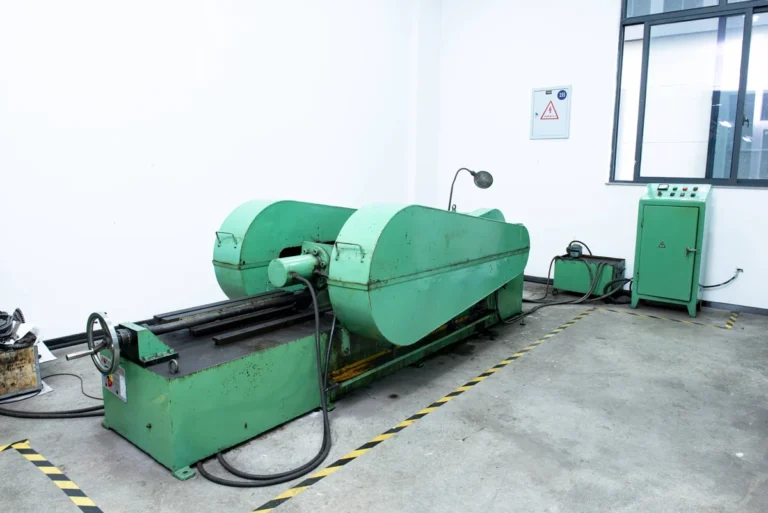
A buyer should connect that capability discussion to the actual proposed harvester-chain configuration. Confirm which specification defines the product and what evidence is available against the agreed requirements. General factory resources do not establish a particular chain’s approved operating speed, service life or compatibility with an unlisted harvester head.
If the programme requires inspection records or other documentation, identify the requirement before the commercial order is final. The request should state the product reference and the relevant acceptance criteria. Do not describe a generic mechanical-test photograph as proof that a particular shipment has passed a particular test.
The HCC company profile describes its Huangshan manufacturing background and relationship with SFR. Those facts help the buyer understand the organisation behind supply. They should not be converted into an unsupported claim about harvester-chain inventory, annual output for this specific product or immediate availability for every finished length.
Tie the .404 .080 enquiry to the current harvester-head configuration
A useful equipment file should distinguish the machine identity from the cutting components currently approved for it. The head reference, bar reference, drive sprocket and required chain configuration may all be needed to understand the enquiry. Where a contractor supplies an old invoice, confirm that it still describes the present arrangement rather than assuming the machine has remained unchanged.
This is particularly relevant when several service locations use similar equipment names. One location may be asking for an established replacement, while another is describing a new bar arrangement. The distributor should keep the second request as a separate review until its chain requirement is confirmed. Pooling purchasing quantities is possible later; pooling uncertain technical identities is not a sound shortcut.
Ask for the relevant equipment and component references in a form that can be retained with the approved HCC item. A photograph can supplement that information by showing what the buyer means, but it should not be treated as proof of drive-link gauge, finished length or compatibility. If the markings and documents conflict, refer the discrepancy to the appropriate qualified technical contact.
For receiving personnel, the resulting record should answer a narrow, useful question: does this delivered item correspond to the approved .404 .080 configuration ordered for this requirement? It should not ask the warehouse to assess the harvester’s safety or operating condition. Keeping those responsibilities distinct allows purchasing to control product identity while leaving equipment approval and return-to-service decisions with qualified personnel.
When the contractor’s requirement changes, retain the previous approved reference as history rather than overwriting it with an ambiguous new description. That makes it possible to distinguish a true repeat order from a fresh configuration and reduces the chance that an old invoice will be reused for a different cutting system.
A forestry distributor can source related saw chains without mixing their applications
HCC’s broader cutting-chain range includes 3/8 low-profile .043 and .050 references, .325 options, 3/8 options, .404 references and 1/4 products. That range may be useful to a distributor serving different forestry and saw-dealer channels. Each product still needs its own approved application and complete identification.
The commercial value is breadth within a manufacturing-backed supplier relationship, not interchangeability across cutting systems. A dealer line for handheld saws and a line supporting mechanised harvesters should retain different application records. The cutting-chain supply guide explains how pitch, gauge and finished configuration support that separation.
For a mixed shipment, agree how .404 .080 harvester items will remain distinguishable from .404 .063 saw-chain items after the outer carton is opened. If products are redistributed to several service locations, the relevant identification and instructions need to follow them. This is a receiving requirement to confirm with HCC, not a claim that a particular package is standard.
Demand planning should also distinguish a defined replenishment item from a new configuration awaiting confirmation. A contractor’s familiar machine name may conceal a changed cutting arrangement. Keep that unresolved request out of the approved repeat-order quantity until the component requirements have been checked.
HCC’s .404 .080 reference gives forestry buyers a concrete harvester-chain supply route to investigate. Make the next decision about the actual cutting system: the head, bar, sprocket, finished chain requirement and applicable instructions. When those are established, purchasing can discuss a defined product and delivery arrangement. When they are missing, the right commercial response is to resolve them, not to fill the gap with a similar-looking chain.