

HUANGSHAN CHAIN TECHNOLOGYPart of SFR Group · Established 2011
Give a 420 Motorcycle Chain Supplier More Than a Size Code

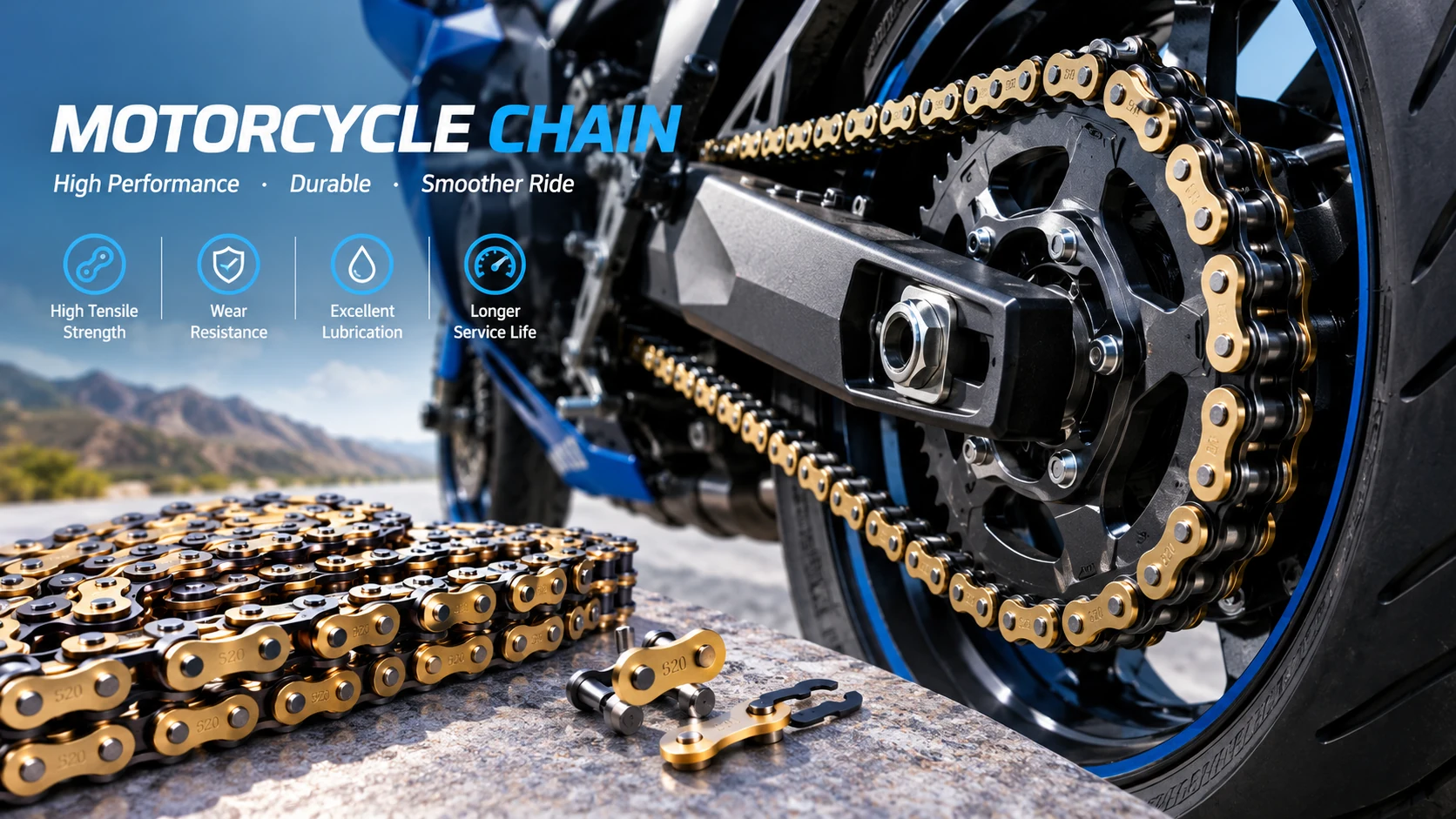
A request containing only “420 chain” is easy to quote and easy to misunderstand. It leaves the supplier without the complete motorcycle application, required length and construction. HCC CHAIN offers a published 420 motorcycle-chain reference, supported by a wider drive-chain range and manufacturing resources, for importers and dealers seeking a 420 motorcycle chain supplier with a clearly defined product discussion.
Start with the HCC 420 chain and motorcycle range. Confirm the vehicle requirement, chain configuration, link count or specified length and joining arrangement before approving an order. The 420 code is an important identifier, but it is not a complete fitment statement for every motorcycle described as small or lightweight.
A 420 motorcycle chain supplier needs the missing half of the order description
The size code narrows the chain family; the rest of the description establishes the actual product to be supplied. A dealer should preserve the motorcycle information and any original part reference alongside the required chain configuration. If the information is incomplete, identify the missing detail instead of assuming the supplier can infer it from the size alone.
Imagine a workshop requesting a repeat 420 chain from a distributor that serves several motorcycle models. The previous order may have been for a different finished configuration. Recover the approved record before treating the new request as identical. A familiar customer and a familiar size code do not establish the same replacement requirement.
The 420 chain’s link count belongs beside its size code
Length or link count is part of the finished chain requirement. The buyer should use the approved vehicle or component information to establish it, not derive it from a stretched or modified old chain without technical review. State the required supply configuration clearly in the enquiry.
If the buyer expects a particular finished assembly, confirm that scope with HCC. If another supply format is required, describe it explicitly. Do not assume that a general 420 quotation includes the same length, joining component or preparation that a previous dealer order used.
Keep the 420 joining arrangement tied to the selected chain
The connecting component and joining method should correspond to the actual chain product. A loose link should not be selected solely because it appears similar to another 420 component. Confirm the supplied contents and the applicable instructions for the proposed HCC configuration.
Installation belongs with qualified personnel using the motorcycle and chain requirements. This purchasing guide does not prescribe a joining procedure or approve a substitute link. The distributor’s responsibility is to keep the correct product information with the item rather than leaving the workshop to guess what was supplied.
Do not replace a 420 requirement with 428 because both serve motorcycle drives
HCC lists 420 and 428 as separate products. Their presence in the same motorcycle range should not lead a buyer to treat them as interchangeable. The chain and its mating sprockets need to satisfy the approved drive specification, and a different size is an application change rather than a casual warehouse substitution.
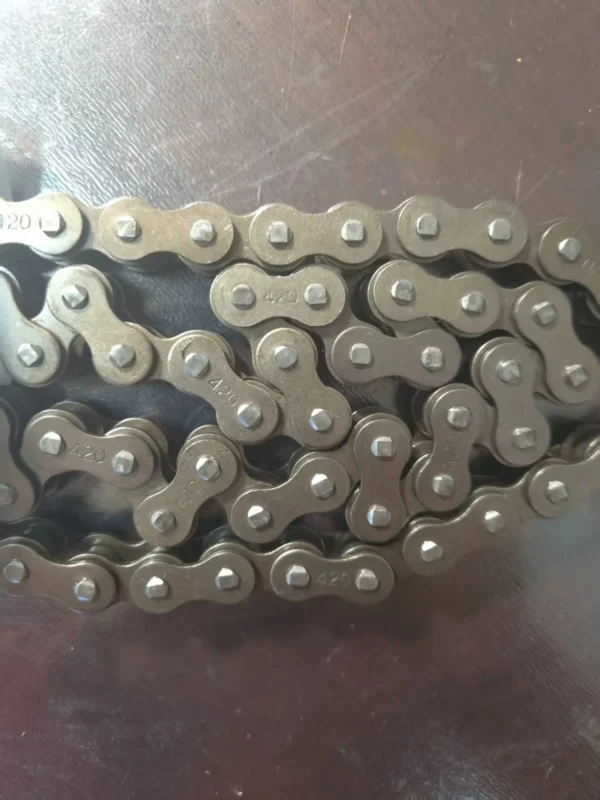
For a dealer receiving a vague request for “the small chain,” the correct response is to recover the actual reference. A photograph may help explain what the customer is looking at, but it should not replace the vehicle and part information. Keep an uncertain enquiry separate from an approved stock item until the identification is resolved.
The 420 sprocket requirement must match the approved chain drive
HCC’s sprocket range includes 1045 steel, 7075-T6 aluminium and model-specific products. Those offerings support a related supply discussion, but the buyer must confirm the actual sprocket required for the 420 application. Do not select a sprocket merely because its outside diameter or tooth count resembles the removed part.
The XR125L 428 and TITAN150 520 45T references illustrate the importance of preserving the chain specification in a sprocket description. They are not suggested substitutes for a 420 drive. Use them as examples of precise product identification, not as evidence that every HCC sprocket fits every HCC motorcycle chain.
If a customer proposes changing the chain size or sprocket arrangement, keep that project separate from a like-for-like replacement. The complete drive and vehicle requirements need qualified review. A distributor should not approve a conversion simply because it has another chain size available in stock.
Confirm the 420 construction before adding sealed-chain language
HCC also presents O-ring and X-ring motorcycle-chain options. That does not establish that every construction is available in every listed size. A 420 enquiry should identify the desired construction and obtain confirmation of the actual product before the distributor adds a sealed-chain claim to its catalogue.
The seal description and size code answer different questions. A buyer who wants a sealed alternative still needs the relevant dimensions, application and joining information. The selected construction should be reviewed for the motorcycle requirement rather than assumed to be a universal upgrade.
D.I.D’s explanation of sealed chains provides general background on seal types. Its own performance claims are not evidence for an HCC 420 product. The buyer should rely on confirmed HCC information when describing the proposed chain’s construction and capabilities.
A second distributor scenario involves a sales team that adds “O-ring” to every motorcycle-chain entry in a spreadsheet because sealed products are part of the supplier’s range. Correct that at the individual product level. The 420 item should carry only the construction that has actually been confirmed for its approved reference.
The same principle applies to colour or appearance. A finish may help distinguish a product visually, but it should not replace the technical identity. The dealer should be able to identify the approved 420 chain even when two products have similar colours or photographs.
HCC’s manufacturing background gives the 420 supply discussion a concrete basis
HCC’s production resources include precision forming, heat treatment and automated assembly. Its inspection capabilities include measurement, material examination and mechanical testing. These provide a manufacturing context for evaluating the actual 420 product.
For an importer, the useful question is which specification and evidence apply to the selected configuration. A general factory statement is not a substitute for the approved part record. If the programme requires particular documentation, identify the requirement and confirm what can be provided for the order.
The HCC company profile describes its Huangshan base, establishment in 2011 and relationship with SFR. That background helps a buyer understand the organisation behind repeat supply. It should not be converted into a promise that every 420 configuration is stocked or can be dispatched within one fixed lead time.
HCC’s wider motorcycle portfolio includes 428, 520 and 525 products. A distributor can discuss those adjacent lines within the same supplier relationship while keeping the 420 record distinct. Our motorcycle-chain assortment guide explains how a focused range can grow without losing the information that identifies each item.
For packing and receiving, define how the 420 item will be distinguished from neighbouring sizes and construction variants. A dealer network may need the approved reference retained when a bulk shipment is divided into smaller quantities. Confirm the packing and labelling arrangement with HCC for the actual order rather than assuming a particular retail package.
A useful stock record can hold the approved vehicle or part reference, 420 size identity, confirmed construction, required length or link count and joining arrangement. The distributor’s internal number then points to that record. It should not become a shorthand that discards the details needed to verify a later replenishment request.
Turn a workshop’s 420 shorthand into a repeatable dealer item
A workshop may use one familiar name for a chain it orders every month, but the distributor needs a record that another employee can understand. Attach the confirmed HCC reference to the workshop’s approved application and finished chain requirement. When the regular salesperson is absent, a colleague should not have to reconstruct the order from an old photograph or a customer’s recollection of the package colour.
For a dealer serving several nearby workshops, keep separate references where the finished 420 requirements differ. Combining demand for purchasing purposes does not require merging unlike finished items in the stock system. The distributor can discuss an overall order with HCC while retaining the individual configurations needed by each workshop. That distinction becomes especially useful when only one workshop changes its requirement.
Before replenishment, compare the new request with the approved 420 record rather than only the previous invoice total. Has the required length changed? Is the joining arrangement still the same? Is the customer asking for the established construction or proposing a sealed alternative? Each difference has a different meaning. A quantity increase is commercial; a construction change requires renewed product confirmation.
HCC’s manufacturing and inspection resources provide a practical point of contact for these product-specific questions. The buyer can discuss an identifiable 420 chain within a broader motorcycle supply relationship, then retain the agreed result for future orders. This makes the supplier’s range useful to the dealer network without asking the warehouse to make vehicle-fitment decisions.
A new 420 chain should enter a drive whose condition has been reviewed
If the chain is being replaced because of wear, noise or another problem, the motorcycle drive should be assessed by qualified personnel. Sprocket condition, alignment and the applicable adjustment or maintenance requirements remain relevant. A new chain is not a guaranteed cure for an unresolved problem elsewhere in the system.
D.I.D’s maintenance guidance is a professional background reference for chain care and drive condition. Its numerical service intervals and replacement limits should not be copied into an HCC 420 description. Use the actual chain and motorcycle instructions for the selected product and application.
For the dealer, distinguish the sale of an identified component from diagnosis of the motorcycle. The supplier can review the product requirement, but a remote photograph cannot establish every cause of a drive problem. Keep the repair decision with the qualified person who can assess the equipment.
Where a repeat order follows an earlier problem, retain the relevant application information rather than simply requesting a stronger-looking chain. If the duty or configuration has changed, review that change explicitly. The 420 size code should remain a starting identifier, not a way to bypass the new technical question.
The best 420 order is the one that leaves little for the next person to infer. HCC supplies a real 420 reference within a manufacturing-backed motorcycle range. Pair that reference with the confirmed construction, length, joining arrangement and application record, and a short workshop request becomes a product that purchasing, receiving and the dealer can all identify consistently.