

HUANGSHAN CHAIN TECHNOLOGYPart of SFR Group · Established 2011
Evaluate an X-ring Motorcycle Chain Supplier Beyond the Upgrade Label

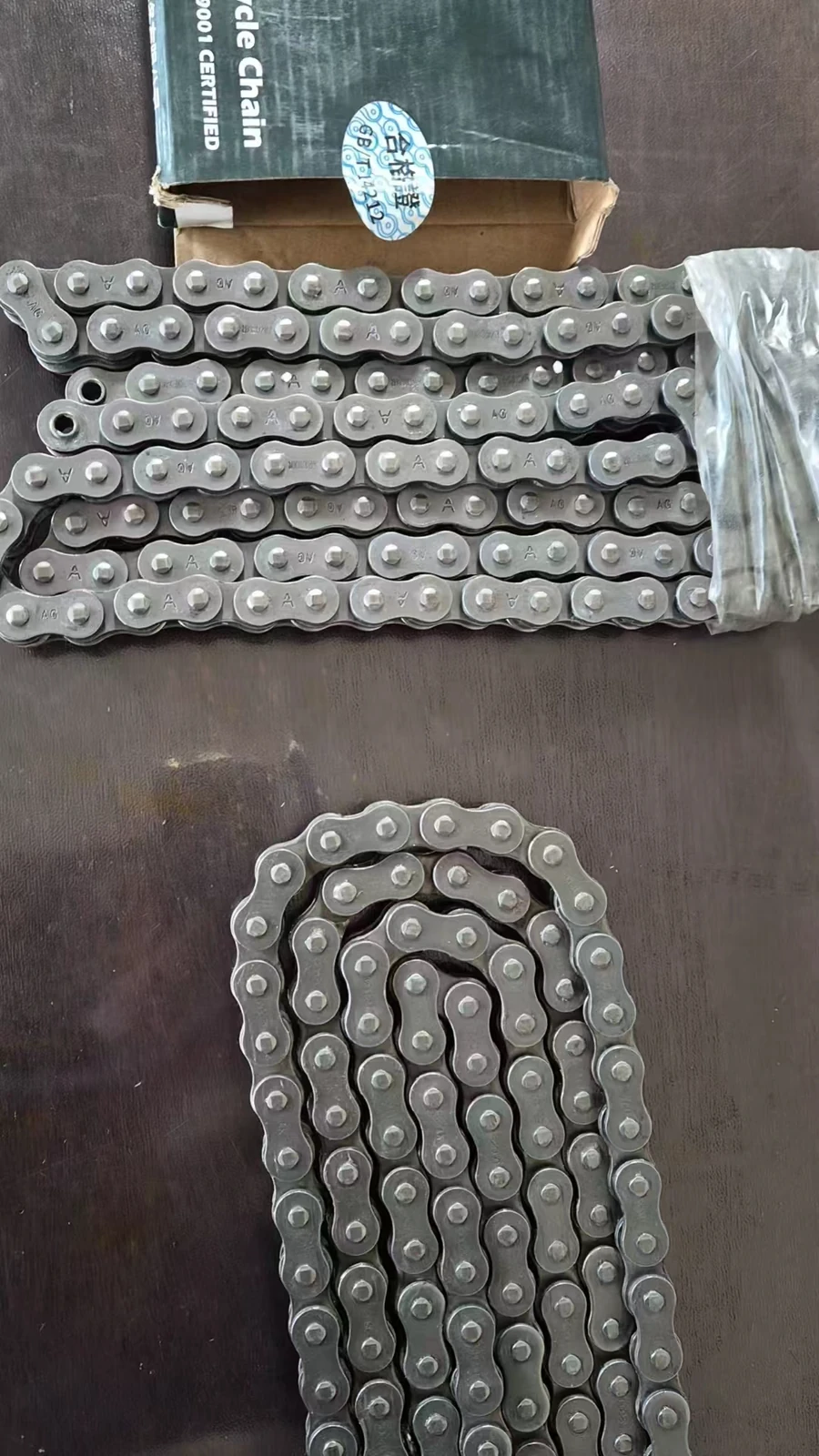
An X-shaped seal is not a vehicle-fitment certificate. A buyer can prefer a sealed-chain construction and still order the wrong size, length or application. HCC CHAIN lists X-ring and O-ring options alongside its motorcycle-chain range, giving distributors and OEM buyers a real X-ring motorcycle chain supplier to evaluate through a defined product rather than an assumed universal upgrade.
Start with the HCC motorcycle-chain options. Identify the motorcycle requirement, chain size, construction, length or link count and joining arrangement. Confirm the actual X-ring configuration available for the request; the public range does not prove that every listed size can be combined with every seal option.
An X-ring motorcycle chain supplier should separate seal design from fitment
The seal describes part of the chain’s joint construction. It does not determine the motorcycle application, chain dimensions or complete drive arrangement. A purchasing enquiry should therefore contain both the requested seal type and the information needed to identify the actual chain.
D.I.D’s sealed-chain explanation distinguishes the cross-sectional forms of O-ring and X-ring seals. That is useful terminology background. D.I.D’s own performance comparisons, product technology and life claims should not be presented as measured advantages of an HCC chain.
Keep 520 and 525 identities intact when requesting X-ring construction
HCC publishes both 520 and 525 motorcycle-chain references. A request for an X-ring version should preserve the exact required size and configuration rather than using the seal name to group unlike products. The proposed chain must be checked against the vehicle and drive requirements.
For a dealer, this means a product cannot be described simply as “X-ring chain for larger motorcycles.” Such a label omits the information needed to select a replacement. The approved stock record should identify the actual HCC product, size, length and application relationship.
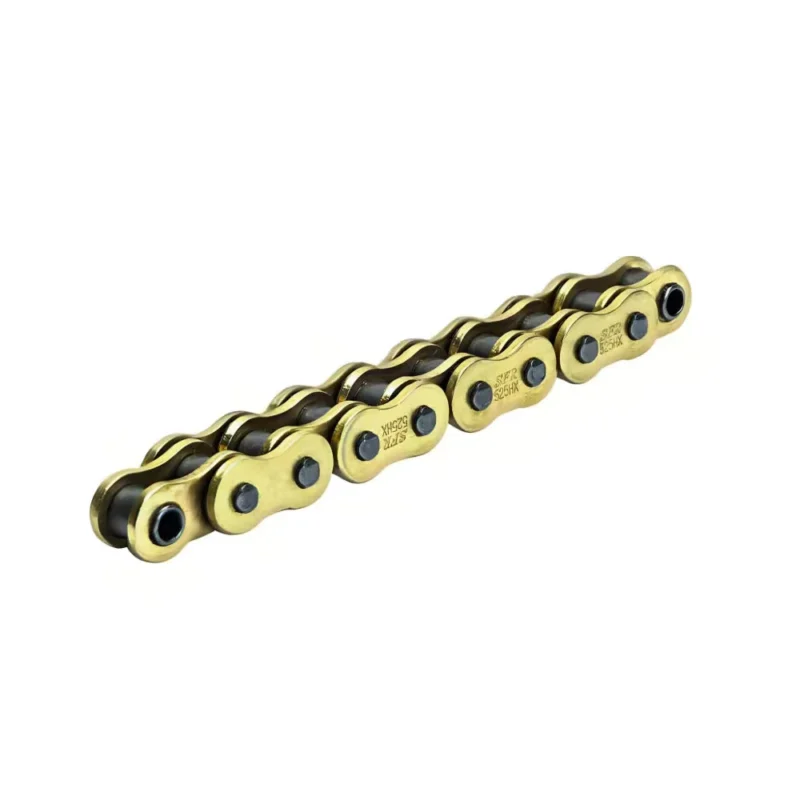
Translate an X-ring upgrade request into a specific motorcycle decision
Imagine a distributor receiving repeated requests to replace a standard chain with an X-ring product. The request expresses a preference, but the distributor still needs the motorcycle identity and approved drive information. The proposed construction should be reviewed as a candidate, not treated as suitable because it sounds more advanced.
HCC’s range includes 420, 428, 520 and 525 products as well as sealed-chain choices. That breadth allows the supplier conversation to begin with the actual requirement. It does not justify inventing a complete size-by-seal availability matrix or publishing fitment claims that HCC has not confirmed.
The sealed-chain envelope must fit the motorcycle’s available space
The chain’s complete dimensions and the surrounding drive components need to be considered, not only the engagement pitch. A buyer moving from one construction to another should confirm the relevant clearances and joining arrangement against the approved application. A visually similar chain can still require a different review.
Provide the motorcycle and existing chain information rather than asking the supplier to infer clearance from a loose sample. Where the proposed change affects the drive, qualified personnel should assess it using the relevant vehicle and component instructions. This article does not approve a conversion or provide an installation procedure.
Use the joining component specified for the selected X-ring chain
A connecting component belongs to a particular chain construction and approved joining method. Do not assume that a link from another 520 or 525 chain is suitable because the size marking is familiar. The actual product and installation instructions should govern the joining arrangement.
For a distributor, keep that information attached to the stock item. A dealer should not have to select a joining component from an unlabelled tray or guess which part was intended to accompany the chain. Confirm the supplied contents and documentation with HCC for the selected configuration.
Compare X-ring motorcycle chains with evidence, not borrowed performance figures
A seal construction can be described accurately without promising a specific percentage improvement in friction, life or power delivery. Those claims require evidence for the actual product and comparison conditions. HCC’s public product information should not be expanded with another manufacturer’s test results.
A second buyer scenario involves an importer preparing a premium-chain brochure before the product definition is final. The marketing team wants a service-life figure, but the available material shows only the chain family and seal options. The correct response is to obtain relevant evidence or omit the number, not to copy a figure from a familiar competing brand.
| Statement under review | What supports an accurate description | What the seal name does not prove |
|---|---|---|
| X-ring construction | Confirmed HCC product definition | Fitment on every motorcycle using a similar size |
| 520 or 525 replacement | Approved vehicle, size and configuration | Compatibility based only on appearance |
| Longer service life | Relevant product-specific comparative evidence | A universal mileage promise |
| Reduced maintenance | Applicable instructions and supported claims | Permission to omit care or inspection |
This approach does not weaken the product presentation. It makes the offer more useful to a serious buyer. A defined HCC X-ring chain with accurate fitment and supply information is easier to evaluate than a broad premium claim whose supporting product is unclear.
Where the buyer wants to compare O-ring and X-ring choices, establish the actual candidates first. Confirm their availability, dimensions, construction and intended application. Only then compare the documented differences relevant to that order. The words O-ring and X-ring alone do not provide a complete commercial or technical comparison.
Review the X-ring chain with the sprockets it will actually use
The motorcycle drive includes the chain and its sprockets. HCC’s related range includes CNC 1045 steel and 7075-T6 aluminium rear sprockets, XR125L 428 tooth-count options and a TITAN150 520 45T reference. These give buyers concrete products to discuss, while the actual combination must remain application-specific.
A 520 chain enquiry should not automatically be paired with the TITAN150 sprocket simply because both descriptions contain 520. Likewise, an XR125L 428 sprocket reference does not establish availability or suitability of every sealed 428 construction. Keep the chain and sprocket approvals connected but separately identifiable.
Our chain-and-sprocket supply guide explains how one supplier relationship can coordinate related components. The motorcycle-chain assortment article provides a distributor-focused view of the same identification problem.
If the existing drive shows wear or another problem, have it assessed by qualified personnel. A new X-ring chain should not be sold as a guaranteed solution to worn sprockets, misalignment or an unsuitable setup. The condition of the system matters alongside the construction of the replacement chain.
A 520 X-ring comparison should name the products on both sides
When two quotations both say 520 X-ring, the importer should be able to identify what is actually being compared. The proposed construction, finished configuration, supplied joining component and application record belong with each quotation. An unexplained price difference cannot be attributed to seal performance alone. It may reflect different order scope, different documentation or a different product, and those possibilities should be resolved before the buyer chooses a range position.
This is particularly important when the sales team wants a standard, O-ring and X-ring ladder in its catalogue. That commercial structure is useful only where the individual products are confirmed and the comparison is meaningful for the intended motorcycles. It should not require the buyer to invent a performance gap between HCC items. Where there is no product-specific comparative evidence, present the confirmed construction and fitment information instead of a numerical hierarchy.
The importer can make the comparison practical by choosing a small set of real dealer requirements first. A 520 request with a known motorcycle reference and required link count is a stronger starting point than a request for the most durable chain. It gives HCC something concrete to review and gives the dealer a product that can be explained without relying on broad superlatives.
A different issue arises when a dealer asks for a 525 X-ring chain while the importer has an approved 520 item. The stock position should not turn into a technical recommendation. Confirm the required 525 construction and supply arrangement separately. The commercial benefit of HCC’s broader motorcycle portfolio is access to a related product discussion, not permission to replace the specified chain with whichever sealed item is available.
Keep the sample decision equally precise. If an importer reviews one proposed X-ring configuration, record which item was assessed and what was established. A favourable response to packaging or appearance is not the same as confirmation of motorcycle fitment or a durability result. Separating those observations lets the buyer advance the order without describing a limited sample review as a comprehensive performance approval.
X-ring chain care still needs the actual product instructions
Seals help protect the joint, but they do not remove every maintenance requirement. A distributor should obtain the applicable care information for the selected HCC product and avoid describing it as maintenance-free without support. The motorcycle’s inspection and adjustment requirements also remain relevant.
D.I.D’s maintenance guidance highlights seal-compatible care as an important consideration. Use that as general background, not as a source of universal HCC service intervals or replacement thresholds. Numerical requirements should come from the actual product and equipment information.
For dealer communication, distinguish a supported construction statement from a service promise. The former identifies what the chain is; the latter tells a customer what to expect in use and therefore needs an appropriate basis. A careful supplier programme keeps both accurate rather than allowing a seal name to carry an unsupported durability claim.
Build the HCC X-ring order around a confirmed product record
HCC’s manufacturing resources include precision forming, heat treatment and automated assembly. Its inspection facilities provide a basis for discussing dimensional, material and mechanical evidence. Relate those resources to the actual X-ring chain under review.
The company background gives buyers a manufacturing organisation to evaluate behind the product. The order still needs its own confirmed configuration, quantity and delivery arrangement. Overall factory capacity does not establish stock availability for every sealed-chain size.
For a mixed shipment, keep X-ring items distinguishable from O-ring and standard-chain products. The receiving team should be able to connect each item to its approved record without relying on colour or a broad premium label. Confirm the packing, identification and supplied joining components for the actual order.
Once that record is clear, the distributor can explain the product without overpromising: this is the confirmed HCC construction for this approved requirement, with these supplied contents and applicable instructions. The buyer is no longer purchasing the idea of an upgrade. It is selecting an identifiable chain whose fitment and evidence have been reviewed for the motorcycle drive.