

HUANGSHAN CHAIN TECHNOLOGYPart of SFR Group · Established 2011
A Stainless Steel Chain Supplier for Corrosion-Sensitive Machinery

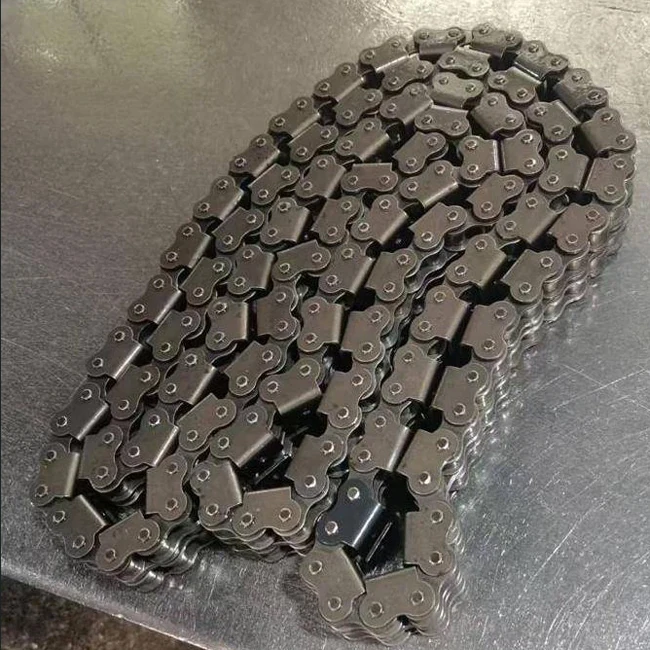
A chain that works in a dry part of a factory may need a different review when the same machine is exposed to moisture or cleaning chemicals. The useful question for a stainless steel chain supplier is not whether the chain looks resistant to rust, but whether its confirmed material and construction suit the actual exposure and mechanical duty. HCC CHAIN includes stainless-steel chains in its industrial portfolio for buyers developing that specification.
Start with HCC’s stainless-steel and specialist chain options. Provide the chain dimensions, application, exposure and load information. The public listing does not specify a universal 304 or 316 offering, so the material grade and product configuration must be confirmed before they appear in the purchase order or customer description.
A stainless steel chain supplier needs the exposure described precisely
“Wet environment” can describe very different conditions. A chain exposed to occasional water is not necessarily facing the same requirement as one exposed to a cleaning solution, outdoor weather or a process chemical. Identify the substance and the conditions of contact rather than using moisture as a complete material specification.
For a machinery buyer, the most useful description comes from the actual process. Record the substance, concentration where relevant, temperature and frequency of exposure. Include cleaning conditions separately if they differ from normal operation. This gives HCC a more meaningful material enquiry than a request for a chain that “will never rust.”
Tsubaki’s corrosion-resistance guidance organises selection around substance, concentration and ambient temperature. These are useful general inputs for describing an environment. Its proprietary material combinations and ratings must not be assigned to HCC products.
A change in cleaning practice can change the chain requirement
Imagine a machine that previously operated in a dry area but is now included in a more demanding cleaning routine. The installed chain reference may be unchanged while the exposure has changed. The buyer should describe the new conditions before assuming that the existing carbon-steel chain or an unspecified stainless alternative is suitable.
This is a practical reason to keep the process owner involved in the enquiry. Purchasing may know the chain size but not the cleaning substance or temperature. Combining those inputs allows the supplier and responsible engineering team to review the actual requirement rather than solve only the visible corrosion symptom.
Stainless-steel chain selection must retain the mechanical duty
Changing a material description does not automatically preserve a drive’s capacity or operating behaviour. The proposed chain still needs to satisfy the machine’s dimensional and mechanical requirements. Review the load, speed, operating cycle and interfaces alongside the exposure, not as a separate afterthought.
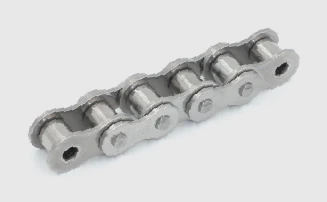
HCC also offers carbon-steel bushed roller chain and standard roller-chain references such as 08A / 40 and 08B. These products provide useful comparison points when describing the existing installation. They do not establish that a stainless chain with a similar appearance has the same rating or can replace the original without approval.
An 08A / 40 machine record does not define every stainless replacement
If the existing machine uses an approved 08A / 40 configuration, retain that information in the enquiry. Then identify the proposed material change as a separate question. The buyer needs confirmation of the stainless product’s actual construction, dimensions and application suitability rather than an assumption based on a familiar series name.
Likewise, do not shorten an 08B requirement into a generic “08 stainless chain.” The original series identity remains relevant. HCC’s A-series and B-series identification guide explains why those references should stay distinct during purchasing.
A stainless attachment chain has more than one exposed interface
Where the chain carries attachments, the buyer should describe the complete assembly and its interfaces. HCC lists K1 / K2 attachment chains and non-standard chains as well as stainless-steel products. The availability of those separate families does not prove that every combination is offered in every material; confirm the required configuration.
A fixture, fastener or mating component can introduce additional requirements beyond the chain itself. Show how the assembly is used and identify which parts are inside the supplier’s scope. The responsible machine designer should assess the complete arrangement instead of treating the chain’s material label as approval of every adjoining component.
Confirm the stainless chain grade rather than writing it into the order by habit
Many buyers are accustomed to seeing familiar stainless designations in purchasing documents. That familiarity is not evidence that a particular HCC chain uses that grade. Request the applicable material information for the proposed product and relate it to the actual environment and duty.
The public HCC catalogue shows stainless-steel chain examples but does not provide a complete grade-by-grade performance table. A precise enquiry should therefore state the required conditions and ask for confirmation of the proposed material route. It should not convert a generic product listing into an unsupported 304, 316 or food-contact claim.
A second buyer scenario involves a distributor who wants to add stainless chain to an existing industrial range. The distributor should obtain the confirmed product definition before preparing sales literature. Otherwise, a convenient material assumption can spread from an internal spreadsheet into quotations and customer expectations without ever being verified.
Where documentation is required, specify what the buyer needs to establish. A material record should identify the relevant product and information, not simply display the word stainless. HCC’s material examination and inspection resources provide a basis for discussing the evidence required for the order.
Corrosion resistance does not make stainless chain maintenance-free
Material selection and maintenance solve different parts of the application. The chain’s articulating joints, contamination exposure and lubrication requirements still need attention. Do not describe an HCC stainless chain as maintenance-free unless that specific product and claim have been supported and agreed.
For a machine already in service, use the equipment manufacturer’s maintenance instructions and the confirmed chain requirements. If the existing maintenance method is incompatible with the new process conditions, the responsible technical team should review it. Purchasing should not choose an oil or cleaning method solely because the chain is described as stainless steel.
Renold’s lubrication explanation provides general background on reaching the chain joint. The appropriate method for an HCC application still depends on the actual chain and operating environment. A general industrial lubrication principle is not a universal recommendation for every corrosive or cleanliness-sensitive process.
If the application has hygiene or regulated-contact requirements, identify them explicitly. A stainless material description alone does not establish compliance for the complete assembly, lubricant or process. Obtain the relevant documentation and qualified application review before making a compliance claim.
Use HCC’s wider chain range to explain the problem, not to assume a substitute
HCC’s carbon-steel bushed roller chain, bush chain, standard roller chains and non-standard products help buyers describe the construction they currently use. The stainless offering creates an additional material discussion. Keeping construction and material as separate questions makes the enquiry clearer and reduces the risk of changing more than the buyer intended.
For example, a conveyor buyer may need both a particular attachment arrangement and a corrosion-sensitive material review. A transmission buyer may instead need a defined roller-chain configuration for an exposed drive. These are different requirements even though both enquiries contain the words stainless steel chain.
Our industrial machinery chain overview separates drive, conveyor and lifting functions. Use that functional description alongside the exposure information. A chain’s job should remain visible throughout the material discussion so an attractive material option does not distract from an incompatible construction.
HCC’s manufacturing capabilities and company background support a manufacturing-led supplier relationship. The value is being able to discuss a defined requirement across a genuine chain portfolio, while confirming the exact product and evidence needed for the application.
Prepare a stainless-chain enquiry that distinguishes environment from appearance
For a distributor, it is useful to separate the approved application statement from the broader material description. A chain reviewed for one customer’s exposed drive should not automatically be promoted for another customer’s chemical process. The second enquiry may involve a different substance, temperature or duty even when the requested dimensions are similar.
The product record can preserve this distinction without becoming complicated. Keep the confirmed HCC construction and material information together, then identify the application conditions used for approval. If a new customer asks for a different environment, use the existing record as a starting point for review rather than as a universal compatibility certificate.
Where the buyer is replacing a carbon-steel bushed roller chain, state whether the existing construction is to remain unchanged or whether a different assembly may be considered. A supplier cannot reliably answer a material question if the buyer also expects an unspoken change in the chain’s structure. Defining that boundary helps HCC respond to the actual machine requirement.
Bring the existing chain reference or drawing, the required construction, the operating duty and the exposure description into one enquiry. If a material grade is mandatory, state that requirement and ask HCC to confirm whether the proposed product meets it. If the grade is not yet selected, describe the application without guessing a designation.
Separate confirmed information from observations. Surface discolouration on an old chain may prompt investigation, but it does not independently identify the cause or the correct replacement material. Qualified engineering personnel should review the process conditions and any relevant failure evidence rather than treating appearance as a complete diagnosis.
For an approved order, keep the confirmed material and construction connected in the stock record. A distributor should not retain only “stainless chain” after the original drawing is filed away. The next purchaser needs to know which product was approved and for which application, especially if several similar chains are stored together.
Discuss protection, identification and storage requirements for the actual supply. A chain destined for a cleanliness-sensitive assembly process may have different receiving needs from a general maintenance spare. Confirm the packing arrangement with HCC rather than assuming that the material itself eliminates every handling concern.
The right outcome is not a chain selected by shine. It is an HCC product whose confirmed material, dimensions and construction have been reviewed against the environment and the machine’s duty. That gives the buyer a defensible supply decision and a clear basis for the next order, without promising that one stainless chain can solve every corrosion or maintenance problem.