

HUANGSHAN CHAIN TECHNOLOGYPart of SFR Group · Established 2011
An Industrial Roller Chain Supplier for Mixed A-Series and B-Series Drives

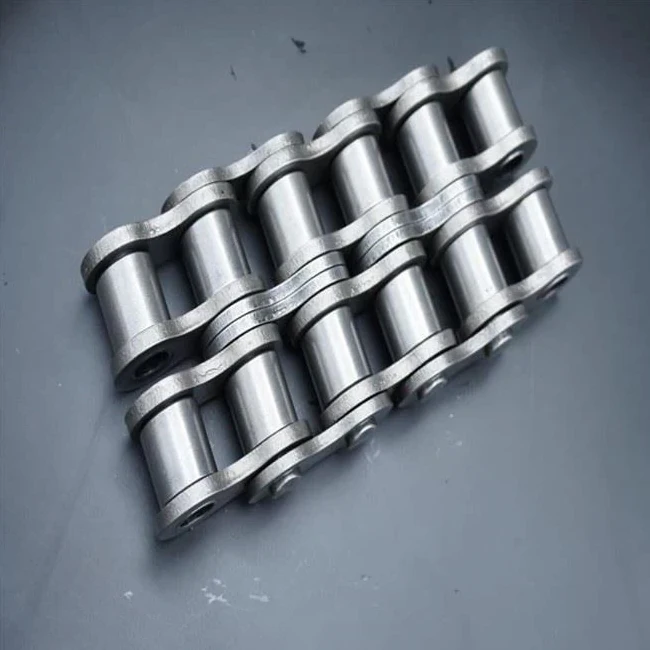
Two stores bins marked “08 chain” can conceal two different replacement requirements. For a plant buying from an industrial roller chain supplier, the useful starting point is the complete chain designation, not the nearest-looking sample. HCC CHAIN offers A-series and B-series roller-chain references, including 08A / 40, 16A / 80, 06B and 08B, for machinery buyers who need an identifiable range backed by manufacturing and inspection resources.
Our industrial roller-chain selection helps maintenance teams separate those references before discussing quantity. Confirm the installed series, strand arrangement, sprocket dimensions and operating duty first. This article follows the practical problem of consolidating a mixed machinery store without turning similar descriptions into unsupported substitutions.
An industrial roller chain supplier must preserve A-series and B-series identity
HCC presents 08A / 40 as an A-series reference and 08B as a B-series reference. Keeping the letter and the complete designation matters because a pitch description alone does not establish all the dimensions that govern meshing. Roller diameter, internal width, plate geometry and the connecting arrangement still need to agree with the approved chain and sprocket combination.
A purchasing database that abbreviates both references to “08” loses information before an order even reaches the supplier. Correcting that database is often more valuable than requesting a broader assortment. The buyer can retain the machine reference beside the full chain designation, then add the dimensions used to verify it. This makes an eventual quotation comparable to the installed requirement rather than to an incomplete description.
08A / 40 belongs in a separate stock record from 08B
Imagine a maintenance buyer supporting an older imported packaging machine alongside a locally assembled drive. Both technicians bring a short chain sample to the store. The storekeeper should not combine them because the links appear close in size. Separate records for 08A / 40 and 08B allow each maintenance team to recover its approved reference and associated sprocket information.
HCC’s published range makes this distinction visible rather than burying it in a general industrial-chain label. A buyer can submit the two requirements together while keeping them technically separate. The same principle applies to connecting links: each link should remain associated with its chain construction and approved joining method, not treated as a universal spare for a similar-looking chain.
Roller-chain strand count changes the replacement description
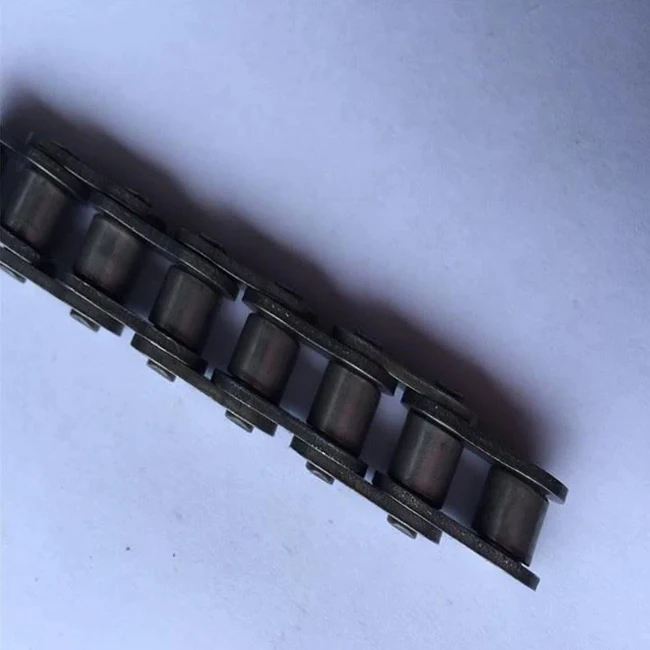
Single-, double- and triple-strand arrangements cannot be reduced to a choice of how much chain to order. Their transverse geometry and corresponding sprockets form part of the drive. HCC shows strand configurations within its roller-chain range; the required arrangement must be carried through the drawing, quotation, order and stores label.
A second buyer situation occurs when the purchasing team has the correct series but only a cropped photograph of the installed chain. The image may hide the second row behind the first. Before requesting a sample, obtain a view across the chain width and the sprocket face, together with the machine record. This avoids making a price comparison between unlike assemblies.
16A / 80 needs its own drive-duty review
HCC’s 16A / 80 reference provides a different starting point from 08A / 40. A larger-looking chain is not, by itself, proof that a proposed drive is correctly designed. The designer still needs the transmitted load, speed, sprocket arrangement and operating cycle. Do not transfer a rating from another manufacturer’s chain merely because the series designation looks familiar.
For an existing machine, the safest procurement scope is an accurately identified replacement approved for that equipment. For a new drive, selection includes engineering calculations and the supplier’s applicable product data. A purchasing article cannot establish the working capacity of a particular HCC configuration where that rating has not been published.
06B orders should include the available installation space
HCC also lists 06B roller chain. Where a compact drive sits inside a guard, overall width and the joining arrangement may be as important to identification as the chain’s visible link shape. Recording the available clearance helps the technical team assess a proposal without assuming that all components carrying a similar description occupy the same space.
This is especially relevant when the buyer sends only the removed chain. The sample shows the chain, but not the guard, adjacent fasteners or alignment of the original machine. Photographs and drawings of the installed drive complement the sample. They are procurement evidence, not permission to run the machine with its guarding removed.
Compare industrial roller-chain quotations on the same dimensions
A useful comparison sheet should separate what has been identified from what remains unresolved. The following examples use HCC references without inventing numerical tolerances or load ratings. Dimensions should come from the approved machine documentation and the supplier’s confirmed drawing, not from a product photograph scaled on a screen.
| HCC reference | Information to retain | Question to settle before approval |
|---|---|---|
| 08A / 40 | A-series designation and strand arrangement | Does the proposed chain agree with the installed sprocket geometry? |
| 08B | B-series identity and matching link details | Has an abbreviated stores description confused it with 08A? |
| 06B | Chain dimensions and installation envelope | Are joining details and surrounding clearances documented? |
| 16A / 80 | Approved configuration and machine duty | Is the quoted product supported by the required application data? |
Renold’s chain identification and selection resources illustrate the wider industry’s distinction between identifying a chain and selecting it for a duty. That distinction is useful here: measurements may identify a candidate family, while suitability requires the operating context. Renold’s proprietary ratings are not HCC ratings.
Once the technical comparison is complete, commercial differences become easier to interpret. An order for cut lengths with specified connecting components is not identical to an order for another supply format. State the required lengths, quantity by designation and any labelling needs before comparing totals. HCC should confirm the available supply arrangement for the particular order.
Connecting links should not lose their roller-chain identity in the store
Small-part identification is part of the roller-chain supply requirement, particularly when several different series arrive together.
HCC shows clip connecting links and roller-chain crank links alongside its chain products. These small components deserve accurate identification because they are easy to separate from the original package. Record the chain family and the approved link reference together. The presence of a link in the wider catalogue does not establish that it is suitable for every 06B, 08B or A-series configuration.
For a maintenance store, one useful improvement is to associate each approved connecting component with the machine record rather than placing all loose links in a common tray. If the technician requests a replacement link without the chain reference, recover the reference first. A link that can be assembled physically is not necessarily an approved component for that chain or duty.
A crank-link request also needs to preserve the intended chain arrangement. The buyer should not use an additional link as an informal solution to an unresolved drive-length problem. Confirm the machine’s specified length and joining arrangement with the responsible technical personnel. This keeps an urgent maintenance purchase from becoming an undocumented alteration to the drive.
When the shipment contains separate chains and links, ask HCC to confirm how those components will be identified. The receiving team can then check the supplied items against the approved pairings before distributing them to maintenance personnel. Clear identification is particularly useful in a mixed A-series and B-series store, where a shortened description can otherwise travel through several handoffs without being corrected.
What HCC brings to a documented roller-chain supply programme
HCC’s manufacturing capabilities include precision forming, heat treatment and automated assembly. Its inspection resources include dimensional measurement, material examination and mechanical testing. These are relevant capabilities for a buyer who wants more than a catalogue description.
The practical next step is to relate those resources to the selected roller chain. For an 08B approval, ask which drawing defines the chain, which dimensions will be checked and what evidence accompanies the agreed inspection arrangement. For a 16A / 80 programme, establish the applicable specification and any required mechanical evidence. A factory photograph shows a capability; it is not an order-specific test report.
HCC’s company profile describes its manufacturing base in Huangshan and its position within SFR. That company context can help an importer assess the relationship behind repeat supply. Overall production figures should not be interpreted as stock availability or a fixed lead time for a particular roller-chain size.
For a mixed shipment, separate 06B, 08B and 08A / 40 identification on the agreed packing information. If connecting links are supplied separately, identify their intended chain rather than placing unlabelled small parts together. Confirm the protection and packing method for the route and storage conditions. These are requirements to agree, not a claim that one standard packaging format applies to every HCC order.
The replacement roller chain cannot correct an unresolved drive problem
A technically correct chain can still enter an unsuitable drive if worn sprockets, misalignment or inadequate lubrication are ignored. Procurement should therefore distinguish an identified replacement from a diagnosis of why the previous chain required replacement. Have qualified maintenance personnel evaluate the drive using the equipment manufacturer’s procedures before approving a change of product.
For lubrication, the important issue is reaching the articulating joint with a method appropriate to the operating conditions. Renold’s chain lubrication guidance provides general background on this point. It should not be converted into a universal oil grade or interval for every HCC chain, temperature and contamination environment.
If the machine carries fixtures rather than simply transmitting power between shafts, reconsider whether a standard roller-chain description captures the whole requirement. HCC’s K1 / K2 attachment chains and C2052 conveyor chain belong to a different selection discussion. The distinction between drive, conveying and lifting is developed in our industrial machinery chain guide.
Likewise, a corrosive environment may justify reviewing HCC’s stainless-steel chain offering, but the material grade, mechanical suitability and lubrication arrangements still need confirmation. Changing a material description does not automatically preserve an existing drive’s capacity. Record the exposure and duty before asking whether a different construction is appropriate.
The best result for the mixed machinery store is not one bin labelled “industrial chain.” It is a compact set of accurate records: 08A / 40 where that reference is approved, 08B where the B-series requirement applies, and separate 06B and 16A / 80 configurations where the machines require them. With those distinctions intact, HCC can review a consolidated supply request without sacrificing the identity of each drive.