

HUANGSHAN CHAIN TECHNOLOGYPart of SFR Group · Established 2011
HCC as a Chain and Sprocket Supplier for Mixed Product Orders


A mixed chain order can look convenient on a purchasing spreadsheet and still create separate engineering problems. A motorcycle replacement chain, a conveyor attachment and a rear sprocket do different jobs. As a chain and sprocket supplier, HCC CHAIN brings several of those product requirements into one manufacturing conversation while keeping their specifications separate. Our range is relevant to importers, motorcycle parts distributors and machinery buyers who need a manufacturer to review actual parts, drawings and operating conditions.
Start with the application and the existing part reference, then identify the chain construction, dimensions and matching components. You can explore our chain and sprocket range before building the order. The commercial advantage is a clearer discussion across related products; compatibility still has to be confirmed for each line.
Two useful starting points: a motorcycle distributor can discuss drive chains together with model-specific sprockets; an industrial buyer can compare transmission, conveyor and custom chain requirements without treating those chain types as interchangeable.
What our chain and sprocket supply brings together
HCC CHAIN is the trading identity of HUANGSHAN CHAIN TECHNOLOGY, based in Huangshan, China. Established in 2011 and wholly owned by SFR, the company combines product development, manufacturing and inspection. Our company profile introduces that operation and its product focus. For a buyer assessing a new supplier, the useful distinction is between a list of available products and an organisation able to discuss the specifications behind them.
Motorcycle chains, chainsaw chains and industrial chains form different parts of the portfolio. Motorcycle sprockets and carrier assemblies extend the discussion into the rear-drive system. This breadth gives a purchasing team several starting points, but it should not encourage a single generic specification for every chain. The chain that transmits power between shafts is not selected in the same way as a cutting chain that runs around a guide bar.
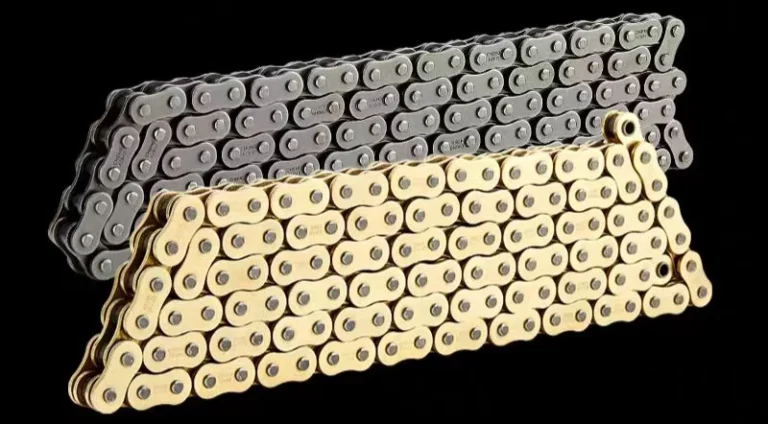
Motorcycle chains in 420, 428, 520 and 525 sizes
Our motorcycle range includes 420, 428, 520 and 525 chains, with O-ring and X-ring options available for specification review. For a distributor, those names help organise the assortment. They do not replace the motorcycle reference, required length or construction details. A request describing only a colour or a photograph leaves important fitment questions unanswered.
A practical order separates each size and link count, identifies whether a sealed construction is required and records the intended motorcycle application. If a customer wants to move from an existing chain to a different construction, clearance and the vehicle requirements need checking before the change is approved. The benefit of a manufacturing discussion is being able to resolve that distinction before several visually similar items enter the same shipment.
Motorcycle sprockets with material and mounting choices
The sprocket selection includes CNC 1045 steel rear sprockets, 7075-T6 aluminium rear sprockets, fine-blanking designs and model-specific options. Tooth count matters, but so do chain pitch, mounting dimensions and the relationship to the carrier. Choosing a material is a separate decision from confirming whether the part fits the motorcycle.
For example, our published XR125L 428 rear sprocket has 50-, 52- and 53-tooth options. That is a useful set of references for a drawing review, not permission to substitute one tooth count for another on every vehicle. A buyer should retain the approved drive configuration and identify any proposed change explicitly. Our motorcycle sprockets and carrier assemblies provide the starting product references.
Industrial roller chains with identifiable series
Machinery buyers can begin with the A-series precision roller chain range, including 08A / 40 and 16A / 80, alongside B-series examples such as 06B and 08B. The catalogue includes single-, double- and triple-strand configurations for several products. A chain’s series and strand arrangement should be recorded together, because a familiar-looking loop does not establish the correct sprocket interface.
When a maintenance department is replacing an installed chain, the existing designation, sprocket details and operating conditions are more valuable than an approximate overall length alone. When the drive is new, the machine designer should establish the required duty before a chain is selected. Our role begins with a defined application, rather than an assumption that the largest-looking chain must be the most appropriate.
Manufacturing behind HCC’s chain and sprocket supply
Our published manufacturing information describes high-speed precision presses, mesh-belt heat treatment equipment, automated assembly and inspection facilities. Those capabilities matter because a chain is an assembly of interacting parts. A dimensional question about a component and a performance question about the completed chain need a connected technical review, not two unrelated sales answers.
The company profile reports annual production capacity above 20 million pieces and deliveries of 18.87 million pieces in 2025. These figures describe the scale of the business. For an individual buyer, their practical use is to frame an order-planning discussion around product mix and forecast volumes. They do not establish a delivery date for a particular custom part or guarantee that every catalogue item is held in stock.
Our manufacturing and inspection capabilities include dimensional measurement, material examination and mechanical testing. The company profile records IATF 16949 quality management certification. A purchasing team can request the current certificate and relevant inspection documents to review the applicable scope. Product acceptance should still be tied to the approved specification and agreed evidence for that order.
Where a combined motorcycle order can simplify sourcing
Consider a distributor expanding an established motorcycle chain range into rear sprockets. The buyer may already know demand by chain size but have incomplete vehicle fitment information for the sprockets. Combining the commercial discussion can be useful: the chain schedule provides one reference, while the sprocket drawing and motorcycle model provide another. The order becomes easier to review when those references are connected without being collapsed into a single description.
For a 428 chain line, the distributor can identify the intended motorcycle, approved link count and associated rear sprocket reference. For a separate 520 line, the buyer should repeat that identification using the appropriate vehicle and sprocket details. The same supplier relationship can support both, while each specification remains independently clear. That is more useful than purchasing an unspecified chain-and-sprocket bundle and leaving the dealer to resolve the fit.
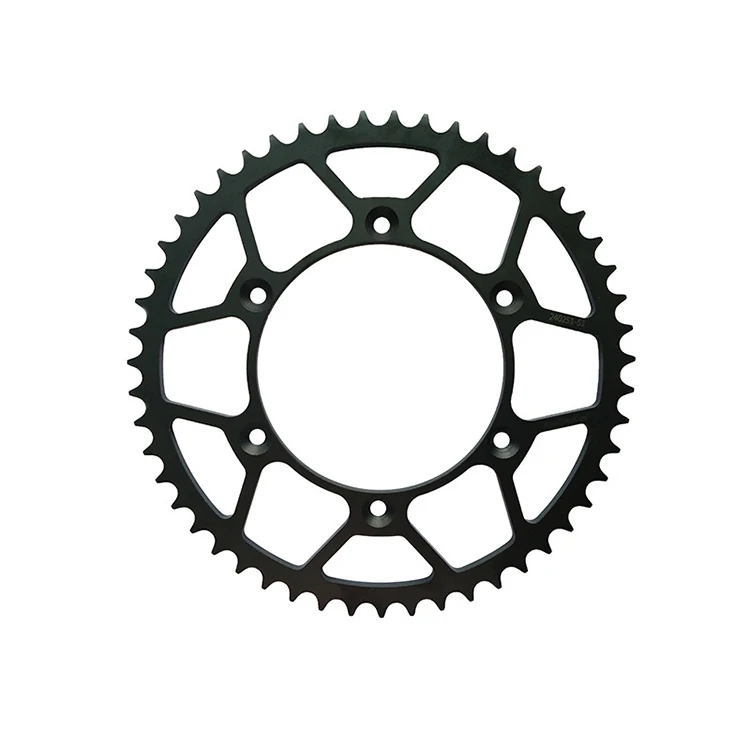
A carrier assembly adds another interface. Its bearing and mounting requirements must match the rear-wheel arrangement, so a correct sprocket tooth count alone cannot confirm the complete assembly. If the existing vehicle part reference is available, it should travel with the drawing or sample details. Otherwise the technical team needs enough dimensions to understand the part before discussing the proposed supply.
Material choice can be handled without losing that fitment information. HCC’s CNC 1045 steel and 7075-T6 aluminium rear sprockets give buyers two published material routes to discuss. Record the selected material alongside the drawing reference, rather than letting the material name stand in for the whole part. A distributor introducing an aluminium option should still identify the approved tooth count, mounting geometry and chain requirement. The useful breadth of the HCC range is that these discussions can take place together: the buyer can compare a proposed material route while retaining the specific rear-drive arrangement that its customer needs.
As an independent technical reference, D.I.D’s maintenance guidance treats chain condition, sprocket condition and alignment as connected issues. That principle supports reviewing the drive system together. Its brand-specific maintenance intervals and limits should not be presented as specifications for HCC products.
Keep cutting-chain and machinery orders distinct
A second buyer situation involves an importer handling motorcycle parts and forestry consumables through different dealer networks. Both lines contain chains, but their identification systems differ. HCC’s saw-chain range is described by pitch, gauge and other cutting-system details; the motorcycle range uses drive-chain size and vehicle fitment. Separate order descriptions prevent the word “chain” from hiding those differences.
For instance, 3/8-inch low-profile saw chain in .043-inch gauge and the same nominal pitch in .050-inch gauge are separate references in our range. A drive-link count is also needed for a finished loop. The Oregon terminology guide explains gauge as the thickness of the drive link that fits the bar groove. It is a compatibility dimension, not a general quality grade.
Industrial orders need their own separation too. A transmission roller chain, a conveyor chain with attachments and a leaf chain for a lifting mechanism are selected around different functions. The purchasing department may group them commercially, but engineering should retain the dimensions, operating loads and machine references for each application. Our wider range is most useful when it helps identify the correct product family early.
Make a mixed shipment readable to the people receiving it
Packaging discussions should follow the product mix. If an order contains several motorcycle chain lengths, the buyer can specify how size and link count should be identified on the agreed packaging. If it includes rear sprockets with similar appearance but different mounting patterns, the item reference should make that distinction visible to receiving staff. These are requirements to agree for the order, not assumptions about a standard packing service.
A distributor receiving both .043-inch and .050-inch saw chains should likewise keep the full specification in the item description. A carton description that says only “3/8 saw chain” discards information the dealer needs. The same reasoning applies to industrial roller chains: the series, strand arrangement and ordered length should remain connected through the commercial documents and the buyer’s own stock system.
Order quantity and target timing belong at product-line level. A repeat 428 chain order and a new carrier assembly with unresolved mounting dimensions may be at different stages of approval. Discussing the schedule in those terms lets the buyer decide whether to consolidate shipment or plan separate releases. HCC reviews quantities, specifications and preferred delivery requirements before confirming supply arrangements.
Begin with the HCC product families your business can define
The strongest first order is not necessarily the widest one. It is the order in which your team can identify the application, approve the part and recognise it when it arrives. For a motorcycle distributor, that may mean a focused chain-size assortment with a small set of documented rear sprockets. For a machinery buyer, it may mean the roller chains already identified in the plant before adding a drawing-led custom chain.
For a dealer-led order, our discussion of building a motorcycle chain assortment follows the range from vehicle reference to stock identification. Machinery buyers can instead explore roller, conveyor and leaf chains by machine function before combining their requirements commercially.
HCC’s combination of chain production, inspection resources and a wider component range gives buyers a practical route from those first references to a broader supply relationship. Keep the commercial opportunity and the engineering approval connected: explore the available products, preserve the specifications that distinguish them and build the order around parts your customers can use with confidence.