

HUANGSHAN CHAIN TECHNOLOGYPart of SFR Group · Established 2011
How a Roller Chain Manufacturer Connects Component Accuracy with Drive Requirements

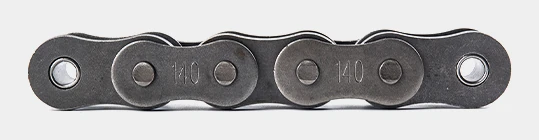
A roller chain leaves the factory as an assembly, but its behaviour begins with the fit between individual components. For machinery builders evaluating a roller chain manufacturer, HCC CHAIN offers both a published industrial range and visible manufacturing resources. Our A-series precision chains, 08A / 40, 16A / 80, 06B and 08B references give the engineering discussion a concrete starting point.
The buyer’s first task is to connect the required chain configuration to the machine’s duty and an agreed drawing. HCC’s forming, treatment, assembly and inspection capabilities then become relevant to an actual approval programme. This is more useful than judging manufacturing quality from the shine of a finished chain or from one general factory claim.
A roller chain manufacturer works with more than the outside plate
The visible plates are only part of a roller chain. Pins, bushes and rollers form the joints and the surfaces that interact as the chain articulates and meets the sprocket. The buyer therefore needs a specification that identifies the complete construction. A photograph of an outer plate cannot establish the internal fit, treatment condition or suitability for a particular drive.
HCC publishes A-series short-pitch precision roller chains as well as named A- and B-series examples. These references help narrow the family, but they do not replace an approved technical description. Dimensions, strand arrangement, joining details and any special features should be settled before the factory and purchaser agree what constitutes an acceptable sample.
Use 08A / 40 to connect the sample with its drawing
Consider an equipment builder introducing a new source for an existing 08A / 40 drive. The purchasing team may already know the designation and annual requirement. Engineering still needs to establish which drawing and configuration the new sample must meet. That prevents the sample from becoming an informal reference whose important details are remembered differently by different departments.
The receiving team should be able to identify the approved chain without reconstructing the original discussion. A drawing reference, sample identification and agreed checks create that connection. They also distinguish a change to the chain from a change to the machine. A supplier’s alternative should not quietly become an engineering redesign simply because it arrived under the same broad size description.
Precision forming gives roller-chain geometry a repeatable starting point
HCC shows high-speed precision presses among its production resources. Forming capability matters because chain components need controlled geometry before the final assembly is made. For a buyer, the useful question is which features of the selected chain are controlled and how the factory relates those features to the approved specification.
Do not infer a numerical tolerance from the equipment photograph. An 08B order and a 16A / 80 order may need different drawings and inspection arrangements. The manufacturer’s role is to confirm the applicable requirements, while the machine builder identifies the interfaces and performance expectations that matter to the application. Both sides need the same revision of the technical information.
A second engineering situation illustrates the point. A buyer has approved a chain sample, but the surrounding guard is later redesigned. The chain itself may be unchanged, yet the available clearance is different. The approval record should make clear whether the revised machine still accepts the same chain envelope and joining arrangement. Component consistency cannot solve an uncommunicated installation change.
Keep 06B and 08B geometry tied to the B-series requirement
HCC lists both 06B and 08B, and those designations should remain intact throughout approval. A buyer comparing A- and B-series offers should not assume that a shared pitch description proves dimensional interchangeability. The geometry of the chain and its sprockets must be checked together against the actual requirement.
Renold’s identification and selection tools are useful general references for the difference between measuring a component and selecting a drive. They reinforce the need for dimensions and application information, but their product ratings belong to Renold. HCC’s proposed chain must be evaluated using the applicable HCC data and the machine designer’s requirements.
Heat treatment needs an approved roller-chain requirement, not an adjective
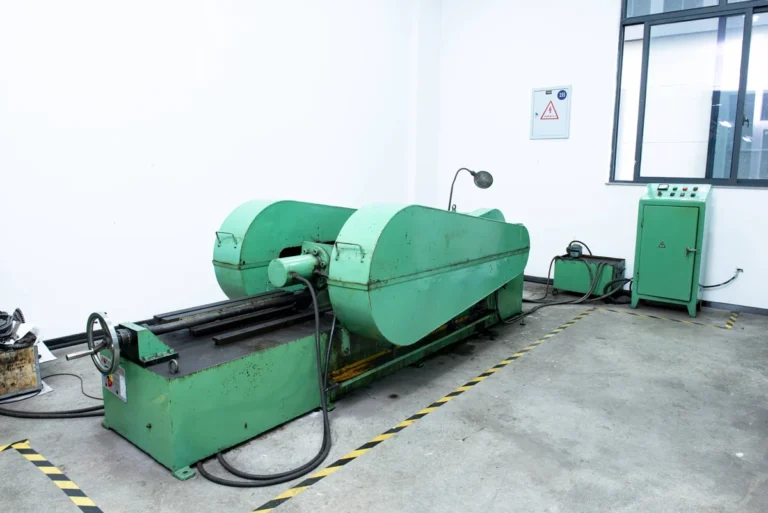
HCC’s manufacturing presentation includes mesh-belt heat treatment. That capability is relevant to chain production, but “heat treated” is not a complete acceptance requirement. A buyer should establish which material and treatment-related evidence is needed for the selected product, rather than translating a general factory capability into an unverified promise about wear life.
For example, the technical file for a repeat 16A / 80 programme may call for specific material documentation or agreed mechanical evidence. The file should describe what is required and how the results will be associated with the supplied product. It should not borrow a hardness value, breaking load or fatigue figure from a different manufacturer’s catalogue.
Separate 16A / 80 mechanical evidence from drive capacity
A mechanical test result and an allowable operating duty answer different questions. A test may characterize the chain under stated conditions; the machine’s suitability also depends on speed, load variation, sprocket arrangement, lubrication and other application factors. Treating a single test value as a universal working-load approval removes that essential context.
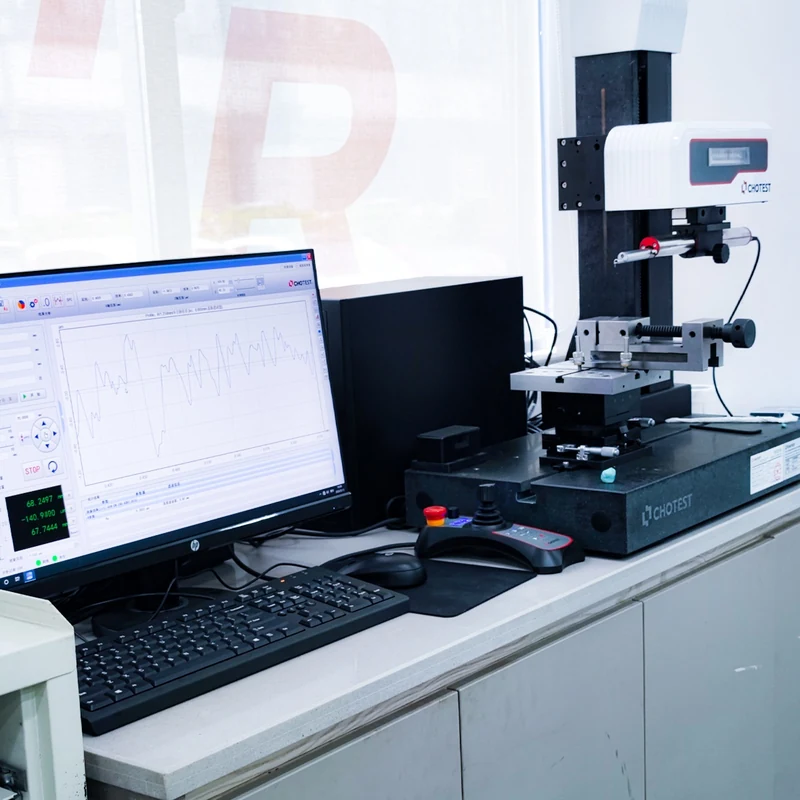
HCC shows mechanical testing and material examination within its inspection facilities. Buyers can use that capability as the basis for an evidence discussion. The test method, specimen identity and acceptance criteria should be agreed for the order. This article does not assign unpublished strength ratings to HCC’s industrial chains.
Automated assembly should end in an identifiable, articulating chain
HCC also presents automated chain assembly. An engineering buyer can connect this stage to practical acceptance questions: does the supplied assembly match the agreed configuration, are its joints and joining components appropriate, and can the chain be identified against the approved record? The questions should be specific to the chain being purchased rather than a generic factory questionnaire.
For a multi-strand reference, the complete assembly matters. A buyer cannot approve only one visible row and assume that the transverse arrangement follows. For a chain supplied with separate connecting components, those components need their own clear association with the chain. The approved joining method should remain consistent with the equipment’s maintenance requirements.
Where a sample is reviewed, distinguish dimensional checks from an application trial. A sample that matches the drawing has passed one important gate. It has not automatically demonstrated long-term performance in every machine using the same series. If an operational trial is required, the machine owner should define the conditions and acceptance process with qualified personnel.
This distinction allows the buyer to describe HCC’s manufacturing strengths accurately. Precision forming, heat treatment, assembly and inspection offer a coherent production route. Their value is greatest when the route is connected to the agreed product, rather than presented as a substitute for product-specific evidence.
There is also a useful distinction between checking a chain’s overall dimensions and checking its movement. A dimensional record may confirm the specified geometry, while an agreed assessment of articulation addresses whether the assembled joints move as required. The buyer should define the relevant checks with HCC rather than treating one observation as evidence for both questions.
For an equipment builder, this separation can make a sample review more informative. If the proposed 08A / 40 chain matches the drawing but a trial reveals an installation issue, the team can investigate the machine interface without immediately changing the material requirement. If the sample differs dimensionally, the discrepancy can be addressed before an application trial begins. A clear review sequence reduces the chance that unrelated findings become one vague rejection of “chain quality.”
Carry the approved roller-chain configuration into the supply order
Once a sample has been accepted, the commercial order must preserve the configuration that was reviewed. For 08A / 40, retain the series and strand arrangement. For 06B or 08B, retain the full designation rather than shortening it. For 16A / 80, keep the relevant technical document references beside the quantity and supply format.
HCC’s company information describes a manufacturing business established in 2011 and wholly owned by SFR. This provides context for supplier evaluation. It does not establish a universal lead time, a guaranteed stock position or a specific inspection plan for every industrial-chain order; those details need agreement for the actual programme.
When several configurations share a shipment, specify how the buyer needs them distinguished. A service department receiving cut lengths may need different identification from an OEM receiving components for an assembly line. Describe the receiving process and required protection, then confirm the available packing arrangement. Do not leave the factory to guess which information the purchaser’s operators will need.
Changes deserve the same discipline. If a drawing revision alters an attachment, joining detail or other feature, identify the affected part and decide whether the existing approval still applies. HCC’s custom and attachment-chain options make it possible to discuss requirements beyond a basic transmission chain, but custom work must remain tied to its own approved definition.
Manufactured accuracy still needs a suitable roller-chain installation
Drive performance also depends on conditions outside the factory. Alignment, sprocket condition and lubrication should be assessed by the equipment owner using the relevant operating instructions. A new chain should not be expected to compensate for a worn or incorrectly arranged drive. This boundary is particularly important when a replacement supplier is being evaluated after a previous chain problem.
Renold’s lubrication discussion explains the importance of lubricant reaching the chain joint. For an HCC order, the appropriate method and lubricant still depend on the selected chain and service conditions. A photograph of a lubricated sample does not prove that the installed machine will deliver lubrication effectively throughout operation.
Maintenance buyers who first need to untangle mixed references can use our drive, conveyor and lifting-chain overview. It separates the machine’s function before detailed supplier evaluation begins. A roller chain for transmitting motion should not be substituted for a leaf chain or an attachment conveyor simply because all three are sourced through one company.
For the machinery builder, a strong manufacturing relationship ends with fewer ambiguities: the approved chain is identifiable, the evidence belongs to that configuration, and the order preserves the engineering decision. HCC’s production resources are most valuable within that clear relationship. Start with one defined drive, establish its approval record, and use the same clarity when extending the programme to the next roller-chain reference.