

HUANGSHAN CHAIN TECHNOLOGYPart of SFR Group · Established 2011
What an OEM Chain Manufacturer Can Review from Your Drawing and Sample

Place an old chain sample beside an incomplete drawing and the development problem becomes clear: the sample shows what exists, while the drawing may not yet define what should be manufactured. HCC CHAIN offers an OEM chain manufacturer to evaluate for this kind of requirement, with standard and non-standard products supported by forming, treatment, assembly and inspection resources.
For equipment brands and engineering purchasers, the useful first step is to separate the sample’s role from the intended specification. Start with HCC’s published chain families, identify the application and describe what must be reproduced or changed. A clear brief lets the manufacturer review a defined component rather than guess which features of an old sample are intentional.
Tell the OEM chain manufacturer what the sample represents
A sample may be a current approved part, a worn replacement, a development concept or a competitor component used only to explain the general construction. Those roles are not interchangeable. State the sample’s origin and purpose so it is not automatically treated as the final production authority.
Imagine an equipment brand that has purchased a chain for years under a short commercial description. The original drawing is unavailable, and the current sample has been removed from service. Before changing manufacturers, the brand needs to recover the intended specification. The sample can support that work, but wear or an undocumented modification should not become a feature of the new part by default.
Resolve the chain features where the sample and drawing disagree
If the drawing and sample show different details, identify the conflict precisely. The responsible engineer should decide which requirement governs. A note such as “follow sample” may conceal an unresolved dimension, attachment orientation or joining detail that the manufacturer cannot safely infer.
For HCC’s non-standard chain route, show the required deviation from the sample. For a standard reference such as 08A / 40 or 08B, confirm the complete construction and configuration before assuming the sample is an authoritative example. The objective is a part definition that can stand on its own after the sample is returned or stored.
Where the project uses another company’s sample as a reference, the buyer should also ensure it has the appropriate rights to the design and intended use. HCC’s ability to discuss a custom component should not be interpreted as permission to copy protected features or branding. Keep the technical requirement focused on the buyer’s legitimate application.
Choose the OEM chain family before refining the missing details
The information needed to define a chain depends on its function. HCC’s motorcycle, saw, timing, roller, agricultural and conveyor products use different identifiers. The first development decision is therefore to place the requirement in the correct family, not to force every sample into one generic chain specification.
A 520 motorcycle-chain sample needs its vehicle and construction context
HCC lists 520 motorcycle chain alongside 420, 428, 525 and sealed-chain options. If a project starts from a 520 sample, identify the intended application, construction, length or link count and joining arrangement. Do not assume that the size code establishes every detail or that every seal option is available for every requested configuration.
The related sprocket requirement should remain visible. HCC’s TITAN150 520 45T reference is one published example, not a universal fitment statement for every 520 chain. The manufacturer and buyer need the actual approved drive relationship rather than a connection inferred from a shared number.
A saw-chain sample must retain pitch, gauge and profile information
For saw chain, HCC’s range includes 3/8-inch low-profile .043- and .050-inch options and several .325-inch gauges. The sample’s pitch alone does not define the replacement. Keep the gauge, profile, required configuration and cutting-system identity in the development record.
Oregon’s terminology guide is useful background for those identifiers. It should not be used to import Oregon’s models, performance claims or safety certifications into an HCC specification. The actual proposed HCC chain and equipment requirement need their own review.
An attachment-chain sample needs a sequence as well as a bracket shape
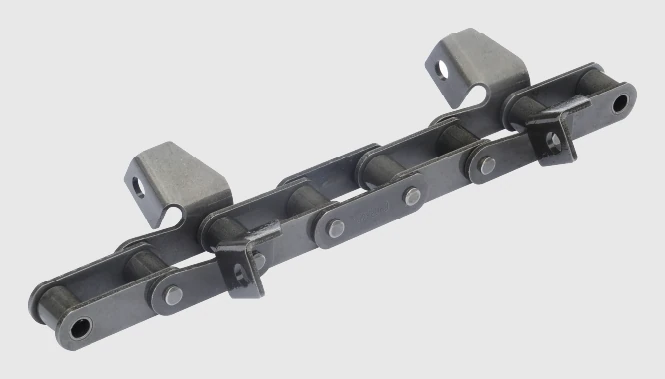
HCC’s K1 / K2, S55 and other attachment products provide starting concepts for industrial and agricultural assemblies. A short sample may reveal the attachment form but not its spacing over the finished chain. The drawing should define the sequence, orientation and relationship to the machine’s fixture or carried component.
If the machine uses related chains, describe the relationship required by the design. A pair of similar samples does not explain whether any matching or directional requirement applies. Keep those application details explicit so the manufacturer can review the requested assembly rather than supply two independently interpreted lengths.
HCC’s manufacturing resources turn a defined brief into a reviewable proposal
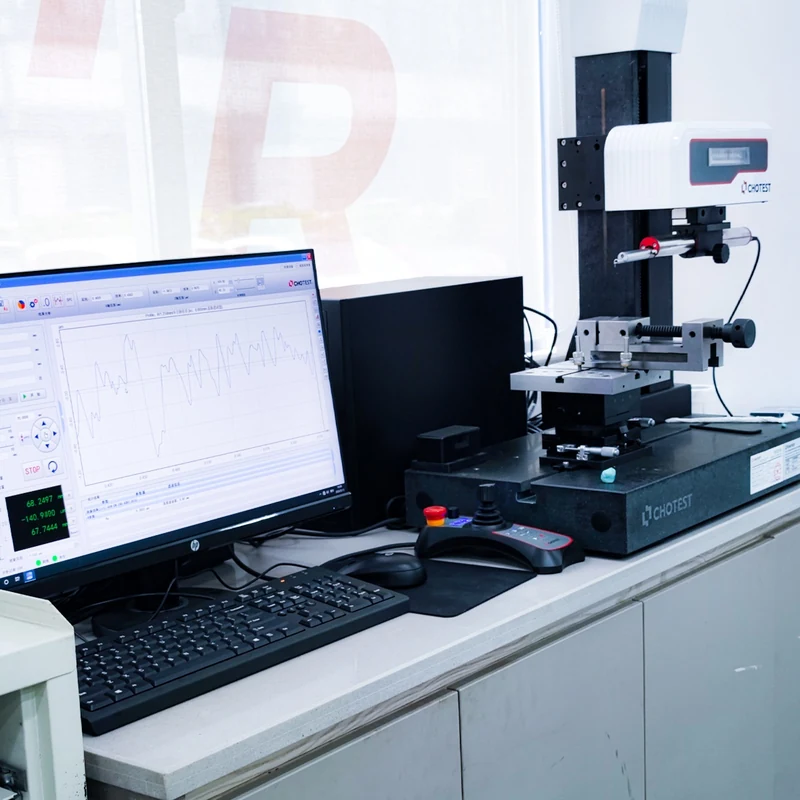
HCC presents precision presses, mesh-belt heat treatment and automated assembly within its production capabilities. Its inspection resources include measurement, material examination and mechanical testing. These are relevant resources for an OEM chain programme once the product requirement is clear.
The useful manufacturing response should identify the proposed configuration and the information still needed. A catalogue reference may cover part of the requirement, while a drawing defines an attachment or other deviation. The buyer should be able to see which features are standard, which are proposed changes and which have not yet been confirmed.
This is where HCC’s range breadth has practical value. A buyer can discuss standard roller-chain construction, a non-standard attachment and related chain families within one manufacturing relationship. The breadth does not mean every combination is automatically feasible or approved; it gives the technical discussion more relevant starting points.
The company profile identifies HCC’s Huangshan base and SFR ownership. That company context supports supplier evaluation, while the specific development proposal still needs its own scope, documentation and schedule. Overall factory capacity is not a promised turnaround for an undefined new component.

Discuss any required material or test evidence in relation to the actual part. A chain’s dimensional agreement, mechanical evidence and application suitability answer different questions. If the programme needs a quantified performance target, agree the evidence and assessment method rather than borrowing another manufacturer’s value to fill a gap.
A second development scenario involves a sample that matches the drawing but reveals an issue in the surrounding machine. The team should identify whether the problem belongs to the chain definition, the machine interface or the operating requirement. A clear diagnosis prevents the next sample request from making an unrelated change that complicates the project further.
An OEM chain sample review should end with decisions, not a vague approval
Before reviewing a sample, identify the questions it is supposed to answer. The buyer may need to confirm fit, appearance, dimensions or suitability for a defined application trial. Record the result of each relevant review and any unresolved condition. A single “approved” stamp can be misleading if different departments understand it differently.
For a dimensional review, connect the observations to the current drawing. For a finish review, identify the accepted appearance reference. For an application evaluation, use the responsible engineering team and the relevant equipment procedures. Do not convert one kind of approval into another without the required evidence.
A useful sample decision reads as a part identity plus a review result: which chain, which revision, what was assessed and what remains open. The result should still make sense to someone who did not attend the sample discussion.
Changes should be controlled in the same way. If an attachment position is revised after the first sample, update the drawing and identify whether earlier evidence still applies. If a motorcycle-chain construction changes, review the affected fitment and supply requirements. The old sample should not continue to govern by accident after a new decision has been made.
Renold’s attachment product information provides general context for distinguishing attachment forms. In an HCC OEM project, the buyer’s approved drawing and the confirmed HCC proposal remain the actual production references, not an unrelated catalogue illustration.
Give the OEM chain order the same identity as the approved development part
One final review can compare the original enquiry with the approved definition. For a 520 motorcycle-chain project, identify which construction and fitment questions were resolved. For a saw-chain project, confirm that the chosen gauge and profile survived the handoff. For an attachment chain, check that the approved sequence appears in the current drawing. This comparison makes the development work visible rather than allowing the initial shorthand to remain the purchasing authority.
The buyer should also identify any questions deliberately left outside the project. A chain-only approval does not imply approval of all surrounding components, and a dimensional sample review does not create a service-life promise. Those boundaries help the next person using the file understand what the development programme actually established.
The final purchase order should preserve the approved product reference, drawing revision, configuration and required documentation. Do not revert to the short description that started the enquiry if the development work has established a more precise definition. That would discard the most valuable result of the review.
If the programme includes packaging or branding requirements, state them separately and obtain confirmation of the available arrangement. A clear component approval does not automatically establish a private-label package, retail kit or fixed shipping format. HCC should be asked to review the actual commercial requirement rather than an implied service promise.
For receiving, identify how the approved chain will be distinguished from development samples and other similar items. This matters when an OEM holds several versions during a project. The production item should not be selected by resemblance to whichever sample happens to be closest to the assembly line.
Our combined supply guide explains how related products can be coordinated while retaining their own identities. The same principle applies inside an OEM development programme: one manufacturer relationship can support several parts, but each approved part needs a clear definition.
The old sample has done its job when the programme no longer depends on guessing from it. HCC’s manufacturing resources and real product families provide a basis for turning that starting evidence into a reviewable proposal. Finish with an approved definition that engineering, purchasing and receiving can all recognise, and the next order becomes a repeat of a known component rather than a fresh interpretation of the same worn chain.