

HUANGSHAN CHAIN TECHNOLOGYPart of SFR Group · Established 2011
How to Evaluate a Leaf Chain Manufacturer When the Load Path Matters

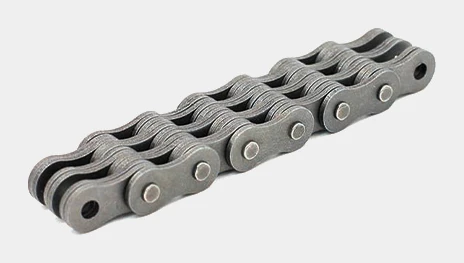
For a leaf chain, the load travels through an assembly of plates and pins rather than through the roller-and-sprocket relationship familiar from transmission chains. An OEM evaluating a leaf chain manufacturer needs to understand how that assembly is defined, manufactured and verified for the intended equipment. HCC CHAIN offers leaf-chain products and a manufacturing base with forming, treatment, assembly and inspection resources.
Begin with the HCC leaf and specialist chain offering and the equipment’s approved technical requirements. The first discussion should identify the plate arrangement, pin and end geometry, applicable drawing and evidence needed for approval. A manufacturer can review that defined component; a catalogue photograph cannot establish the load capacity of the complete machine.
A leaf chain manufacturer needs a component definition that follows the load path
The interlaced plates and pins form the leaf-chain assembly. The engineering definition should describe the arrangement and the relevant dimensions, including the interfaces at the ends. This allows the proposed chain to be reviewed as a complete component rather than as a collection of individually plausible dimensions.
For an equipment manufacturer, the drawing should also identify the application requirements that govern acceptance. The chain supplier does not automatically own the design of the entire lifting or tension-linkage system. Establishing that boundary early helps both organisations understand which evidence belongs to component manufacturing and which belongs to equipment validation.
Leaf-chain plates need an agreed arrangement, not just a thickness note
A plate thickness alone does not describe a leaf chain. The plate geometry, interlacing arrangement and relationship to the pins all contribute to the component identity. The buyer should provide the approved chain reference or drawing and make clear which configuration is being evaluated.
HCC’s public range does not publish every available leaf-chain series or a complete dimensional table. If the equipment requirement names a particular series, submit it for confirmation. Do not infer a model designation or working capacity from the appearance of the HCC product image, and do not assign a competitor’s specification to the proposed HCC chain.
Pin and end-interface details belong in the leaf-chain drawing
The pins and end configuration should be defined with the same care as the plate arrangement. Their relationship to the equipment’s connection points needs to be understood before a sample is approved. A correct overall length does not settle those interfaces.
Where the order covers the chain but not the mating hardware, identify that scope. HCC’s leaf-chain listing does not establish a complete lifting assembly with every anchor or fitting included. The machine builder should retain the system drawing that shows how the supplied component relates to the parts outside the manufacturer’s supply boundary.
Connect HCC’s forming capability to the leaf-chain geometry being reviewed
HCC shows precision presses within its manufacturing capabilities. For a leaf-chain buyer, the useful discussion is how the selected component’s geometry is defined and checked. Equipment capability is relevant, but the actual drawing establishes what the manufacturer is being asked to reproduce.
Imagine an OEM with an old sample and an incomplete drawing. The sample may be useful for identifying the construction, but it can also contain wear or undocumented changes. The OEM should reconcile the sample with the intended design before asking the manufacturer to reproduce it. Otherwise, the manufacturing brief may preserve an accidental feature rather than the approved requirement.
HCC’s broader chain experience can support a coherent discussion of component production. The buyer should nevertheless keep the leaf-chain specification distinct from roller-chain or conveyor-chain requirements. Similar factory operations do not make the finished products interchangeable or give them the same application approval.
Material and treatment evidence must identify the proposed leaf chain
HCC presents material examination and heat-treatment resources as part of its manufacturing and inspection capability. For an OEM programme, determine which material and treatment-related evidence is required by the component specification. The requirement should be agreed for the proposed chain, not copied from an unrelated product brochure.
A general claim that a component is treated or tested does not describe the acceptance basis. Ask which document identifies the chain, what requirement is being assessed and how the result relates to the supplied product. Avoid introducing an unsupported hardness, strength or fatigue value simply to make the supplier comparison look more quantitative.
Leaf-chain mechanical results are not a complete lifting-system rating
Mechanical evidence can characterize a component under a stated method. It does not, by itself, establish the allowable duty of every machine using a similar chain. The equipment designer must review the component within the system and the applicable requirements.
Renold’s lifting-chain documentation distinguishes leaf-chain construction and its system context. It is a professional background reference, not a source of HCC ratings. Use confirmed HCC product information and the equipment’s engineering requirements for the actual approval decision.
A second OEM situation occurs when a programme changes its required operating duty after the chain drawing has been agreed. The component may be dimensionally unchanged, but the validation basis may no longer be the same. Keep that change visible so an earlier component review is not incorrectly treated as approval for the revised equipment duty.
Review the assembled leaf chain, not only its individual components
Even when the component details are defined, the assembled chain has its own identity. The lacing arrangement, end configuration and finished assembly should agree with the approved record. A buyer should not assume that correct individual parts automatically establish the correct complete chain.
HCC’s production presentation includes automated assembly resources, while its quality presentation includes dimensional and mechanical inspection. Relate the requested checks to the leaf-chain assembly under review. The public capability statement does not specify one mandatory inspection plan for every customer or configuration.
If samples are supplied, define the purpose of the review. One sample may support dimensional confirmation, while equipment validation requires a separate process. Record the limits of the approval so the purchasing team does not interpret a component check as permission to put the chain into service.
Qualified engineering and maintenance personnel should govern installation, inspection and return-to-service decisions according to the equipment instructions and applicable requirements. This manufacturing discussion does not provide a lifting-system design calculation, an inspection interval or an installation procedure.
| Leaf-chain evidence | What the OEM can establish | Responsibility that remains separate |
|---|---|---|
| Approved component drawing | The intended plate, pin and end configuration | Suitability of the complete equipment design |
| Dimensional record | Agreement with the checked features | Long-term application performance |
| Material or mechanical documentation | Results for the identified component and method | A universal machine working-load rating |
| Assembly identification | Connection between supplied chain and approved reference | Authorisation for an undocumented substitution |
Assess HCC’s leaf-chain manufacturing relationship at the company and part levels
The HCC company profile identifies a Huangshan manufacturer established in 2011 and wholly owned by SFR. This gives the buyer a company background to examine alongside the product. The part-level discussion still needs the actual leaf-chain configuration and approval evidence.
Keeping those levels separate makes the evaluation more useful. Company scale and manufacturing resources can support confidence in the organisation’s ability to discuss a programme. They do not establish immediate stock, a fixed lead time or a rated capacity for every leaf-chain request. Confirm those order-specific matters where relevant.
HCC also lists custom chains, stainless-steel chains and carbon-steel bushed roller chains. Their availability broadens the possible manufacturing relationship, but they should not be presented as alternatives to a specified leaf chain without an engineering review. A different construction or material can change the component’s role and approval basis.
Our industrial-chain application article helps separate the roles of transmission, conveying and lifting. An OEM sourcing several chain families can use one supplier relationship while keeping the evidence and acceptance requirements distinct for each assembly.
Make the approved leaf-chain file usable for the next production order
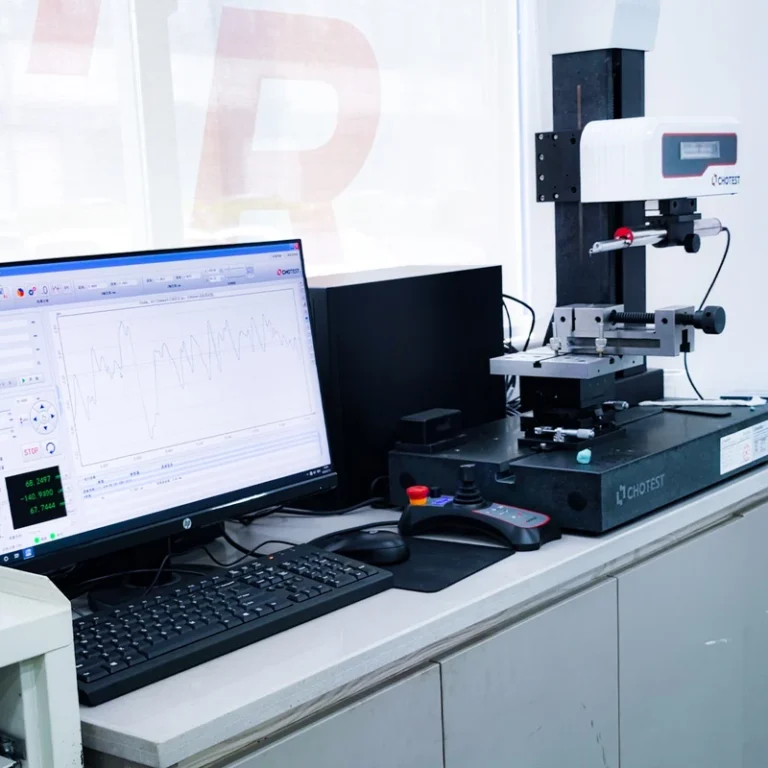
When the OEM evaluates a manufacturing response, separate a statement of capability from a record for the proposed component. A photograph of measurement equipment supports the existence of a resource; a dimensional record identifies what was checked on a particular part. Both can be useful, but they answer different questions. The supplier review should make that distinction visible instead of rewarding whichever quotation includes the largest collection of general documents.
A drawing revision should receive the same attention. If the plate arrangement or end configuration changes, identify whether the existing evidence still applies. The new document should not inherit an approval merely because its commercial name is unchanged. For leaf-chain components, preserving the connection between revision and evidence is a practical way to keep engineering decisions from being lost during repeat purchasing.
HCC can review a clearer brief when the buyer states which features are fixed by the equipment design and which may be discussed as manufacturing proposals. That allows alternatives to be evaluated deliberately. It does not authorise the manufacturer or purchasing department to change a load-path component without the responsible engineering approval. A well-defined programme makes the decision route clear before an alternative is needed.
The final release should identify the agreed drawing, chain configuration, supplied scope and required documentation. If a proposed alternative is reviewed, record the decision explicitly rather than allowing it to enter the next order under the original part description. The buyer should be able to tell which chain is approved without comparing old email photographs.
For an OEM receiving several visually similar assemblies, identification is part of the supply requirement. Discuss how the approved references will be distinguished through shipment and receiving. The packing and protection method should be agreed for the actual product and route, not assumed from another chain family.
Where the equipment uses related chains, retain the relationship required by the design in the order information. The manufacturer needs to understand the requested supply configuration, while the OEM retains responsibility for the system-level approval. This is more precise than asking for several lengths and expecting the receiving team to reconstruct the intended arrangement.
A strong leaf-chain manufacturing programme makes its boundaries clear: HCC supplies an identifiable component supported by agreed evidence, and the equipment authority confirms its use in the machine. The buyer should finish the review with a drawing and approval record that remain useful after the first sample. That clarity is a more meaningful manufacturing advantage than an unsupported claim that one leaf chain is suitable for every lifting duty.