

HUANGSHAN CHAIN TECHNOLOGYPart of SFR Group · Established 2011
A Conveyor Chain Supplier for Small-Roller, Large-Roller and Attachment Choices

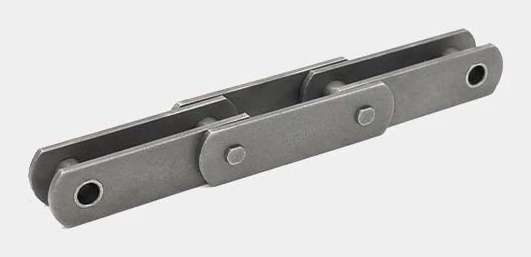
A conveyor chain can pull an assembly, support it on rollers or carry it through attachments, and those jobs lead to different product choices. HCC CHAIN is a conveyor chain supplier with M-series, K1 / K2 attachment, C2040–C2080 small-roller, C2052 large-roller and C2042 large-roller attachment references. For machinery builders and maintenance buyers, that range is most useful when the chain’s job on the conveyor is defined first.
Browse the HCC conveyor-chain options with the layout, supporting track and attachment requirements beside you. Confirm the load path, roller arrangement and interfaces before selecting a catalogue family. A chain that looks substantial in a photograph is not automatically the correct product for the conveyor’s support and movement requirements.
Ask the conveyor chain supplier what the roller is expected to do
The roller’s function depends on the conveyor design. It may interact with the sprocket, a supporting path or both within the intended arrangement. The buyer should explain that role instead of choosing between small-roller and large-roller products from appearance alone. The track and the chain need to be reviewed as parts of the same system.
HCC distinguishes C2040–C2080 small-roller conveyor chains from the C2052 large-roller reference. That distinction gives the buyer a useful first branch in the discussion. It does not establish a universal rule that one roller type is stronger, faster or suitable for every heavier load. The actual layout and applicable product data determine suitability.
C2040–C2080 small-roller chains need a defined supporting arrangement
When reviewing HCC’s small-roller range, describe how the moving assembly is supported and where the chain runs. A purchaser replacing only the chain may overlook wear or changes in the surrounding support. Recover the conveyor’s approved configuration before assuming that a similar chain will fit the existing path.
For a new machine, the designer should specify the chain’s relationship to the load and track. The supplier can then review a meaningful requirement. A catalogue family is a candidate for selection; it is not a substitute for the design inputs that establish whether the chain is appropriate for the conveyor.
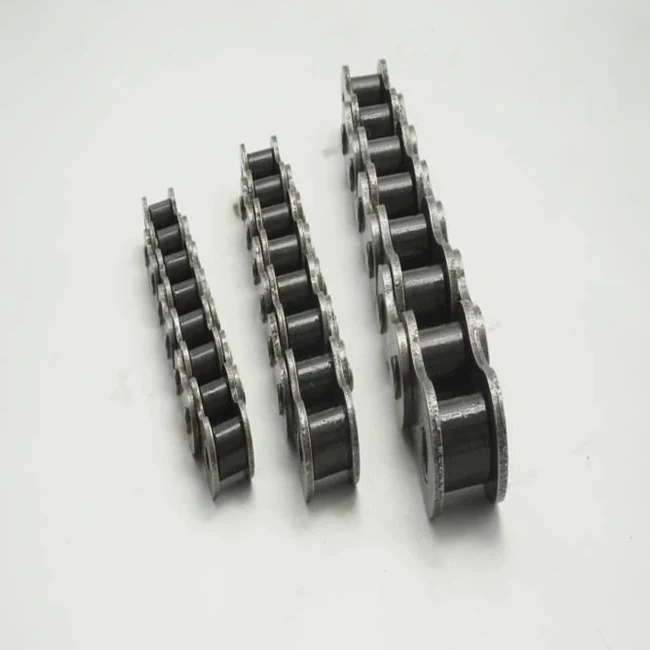
C2052 large rollers should be reviewed with the track geometry
HCC’s C2052 large-roller conveyor chain provides a different starting configuration. Where the roller interacts with a supporting track, the track geometry and operating conditions should be included in the enquiry. The supplier needs to understand that interface rather than see only a photograph of a loose chain.
Imagine a maintenance team replacing a conveyor chain after the track has also been repaired. The team should verify the intended chain and track relationship, not assume that the new support surface leaves every dimension unchanged. A chain purchase and a track repair can be separate work orders while still affecting the same mechanical interface.
K1 / K2 conveyor attachments define how the carried part connects
An attachment-chain enquiry needs to describe the connection between the chain and the carried fixture or component. HCC’s K1 / K2 range makes that route visible. The actual attachment dimensions, orientation and spacing should be confirmed for the requirement rather than inferred from the short catalogue designation.
A machinery builder may have a fixture drawing but no complete chain drawing. In that case, show how the fixture is intended to connect and identify the base-chain requirement. The manufacturer should not be asked to guess the attachment arrangement from a photograph of the fixture alone. The connection is part of the product definition.
C2042 combines a large-roller discussion with an attachment discussion
HCC identifies C2042 as a large-roller attachment chain. The buyer therefore needs to resolve both the supporting arrangement and the attachment interface. Approving one does not settle the other. A roller may fit the track while the attachment pattern still fails to match the carried assembly.
A second buyer situation involves a conveyor whose fixture spacing is changed while the basic path remains the same. Reordering the old attachment chain without communicating that change can reproduce a configuration that no longer matches the fixtures. The new spacing and its relationship to the chain should be reviewed before the order is treated as a repeat.
Tsubaki’s attachment-chain explanation provides useful industry background on chains assembled with attachments for conveying. It supports the distinction between the base chain and the working attachment. Its proprietary application limits and performance statements do not define the HCC products discussed here.
Use the M-series conveyor reference without guessing its working capacity
HCC’s M-series conveyor chain adds another family to the selection. A buyer should use the appropriate reference and request the applicable dimensional and application information. The family name alone does not provide the load, speed or environmental suitability needed to approve a conveyor design.
Describe what the conveyor carries, how the load is supported and how the operating cycle behaves. Include starts, stops or other duty features where they matter to the design. The responsible engineering team should establish the required selection basis and review the supplier’s proposed chain against it.
Do not compare M-series, C2052 and K1 / K2 products as if the only difference were purchase price. They describe different construction or application features. A meaningful commercial comparison starts after the candidates have been shown to satisfy the same conveyor requirement, including the relevant attachments and supporting interfaces.
| HCC product route | Question that opens the review | Information to bring |
|---|---|---|
| C2040–C2080 small roller | How is the moving assembly supported? | Conveyor layout and approved chain arrangement |
| C2052 large roller | How does the roller interact with the path? | Track geometry and operating conditions |
| K1 / K2 attachment | What connects the chain to the fixture? | Attachment dimensions, orientation and spacing |
| C2042 attachment | Are roller support and fixture connection both defined? | Track and attachment information together |
| M-series | Which configuration suits the intended conveyor duty? | Required dimensions, load context and application data |
HCC’s conveyor chain supplier range supports a wider machinery conversation
A conveyor project may contain more than one chain function. The chain carrying fixtures can be different from the transmission chain driving another shaft. HCC also lists 08A / 40, 16A / 80, 06B and 08B roller chains. These can be discussed within the same supplier relationship while remaining separate items in the technical file.
That breadth is useful for an importer consolidating machinery components, but it should not blur their roles. A transmission-chain designation does not automatically define a conveyor attachment. Likewise, a conveyor-chain photograph does not establish a lifting-chain requirement. Our industrial chain application overview explains these functional boundaries.
HCC’s manufacturing resources and inspection capabilities provide a basis for reviewing defined chain products. Connect the requested evidence to the chosen conveyor configuration, particularly where attachments or a non-standard arrangement are involved.
The company background helps buyers understand the business behind the range. Company-wide capacity figures should remain company context, not a promise that every M-series or C2042 configuration is stocked or available on a fixed dispatch schedule.
Describe the conveyor environment before changing chain material
A chain operating around moisture, cleaning agents, heat or abrasive material may require a more specific review than a dry indoor example. Describe the actual exposure and maintenance arrangement. HCC’s stainless-steel and custom chain offerings can be starting points for discussion, but the material grade and application suitability must be confirmed.
Tsubaki’s conveyor-chain overview notes that transport direction, environment and transported material affect the chain requirement. These are useful general design inputs. They do not provide a universal material choice or working-load value for an HCC chain, and the buyer should not transfer another manufacturer’s ratings into the order.
For a replacement conveyor, also describe what changed before the chain problem appeared. A new carried product, altered fixture or revised operating cycle may affect the selection basis. The purchasing team should obtain that information from the responsible engineering or maintenance personnel instead of treating every replacement as an unchanged repeat.
Installation and maintenance remain equipment-specific. Use the conveyor manufacturer’s procedures and qualified personnel for inspection, adjustment and replacement work. A supplier comparison should not become an improvised instruction for changing a loaded conveyor or bypassing its safety provisions.
Order the conveyor-chain configuration the machine actually uses
A useful final comparison separates the chain body, supporting roller and attachment requirements rather than combining them into one price column. For example, the C2052 discussion should show the relevant roller and track relationship, while a K1 / K2 discussion should show the attachment definition. C2042 needs both. This makes it easier to see whether a quotation leaves out a feature that the conveyor requires.
For a replacement purchase, keep the existing approved configuration visible even when an alternative is proposed. State why the alternative is being considered and which differences require review. The supplier can then address a specific issue instead of treating the request as an invitation to choose any chain with a similar overall appearance. Do not change the product simply because a different family is more familiar to the purchasing team.
A conveyor builder can also separate development quantities from later production requirements. The initial order may be intended to establish fit and assembly details, while subsequent quantities depend on the machine’s release. Describe that purpose to HCC so sample discussion, identification and documentation are aligned with the actual stage of the project. This does not assume a particular sampling service or lead time; it makes the buyer’s required outcome explicit before commercial arrangements are agreed.
Before release, bring the chosen chain family, attachment arrangement, assembled length and relevant drawing together in one order definition. Where the conveyor uses related chains as a set, state the relationship that the design requires. Confirm any matching or identification needs with HCC rather than assuming that separate lengths automatically form an approved set.
For shipment, discuss how projecting attachments and finished chain configurations will be protected and identified. A maintenance team receiving a direct replacement may need different information from a machine builder receiving components for assembly. The packing arrangement should support the actual receiving task and be confirmed for the order.
Return to the initial question: what does the chain do on this conveyor? If it supports through a roller, define the track relationship. If it carries through an attachment, define the connection. If it performs both jobs, preserve both requirements. HCC’s small-roller, large-roller, attachment and M-series choices become far easier to evaluate once those mechanical roles are explicit.