

HUANGSHAN CHAIN TECHNOLOGYPart of SFR Group · Established 2011
Questions a Stainless Steel Chain Manufacturer Should Resolve Before Material Approval

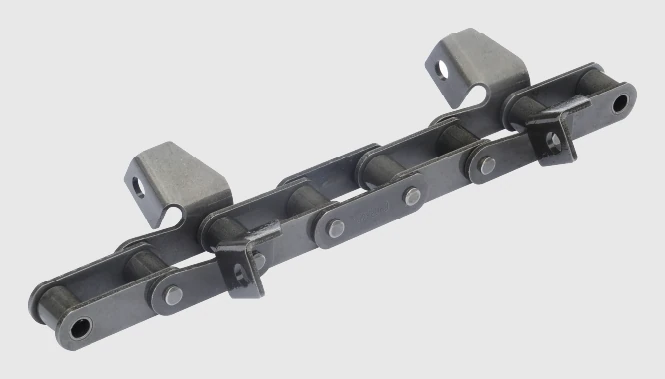
Material approval for a stainless chain should begin with a question the manufacturer can actually answer: which confirmed construction and material are being proposed for this environment and duty? HCC CHAIN’s stainless-steel offering, supported by its manufacturing and inspection resources, gives engineering buyers a starting point for that discussion. Evaluating a stainless steel chain manufacturer means connecting the material decision to the component, not accepting a generic corrosion-resistance slogan.
Use the HCC stainless and custom-chain range alongside the machine drawing and exposure information. Confirm the required dimensions, material documentation, load context and acceptance basis. The public listing does not name a universal grade or provide a complete performance table, so those details must be established for the proposed product.
A stainless steel chain manufacturer needs a defined material question
“Please supply stainless” can mean that the buyer has a mandatory material specification, or that the buyer wants help reviewing a corrosion-sensitive application. Those are different enquiries. In the first, provide the required grade and supporting specification. In the second, describe the exposure and duty without pretending the material decision has already been made.
HCC can review a clearer requirement when the buyer identifies which conditions are fixed and which options remain open. A confirmed construction with an unresolved material choice is different from an entirely new chain assembly. The manufacturer should not have to infer the project’s status from a photograph and a broad request for improved corrosion resistance.
Clarify which stainless-chain components the material requirement covers
A chain is an assembly of components, not a single block of material. The buyer should establish what the proposed material description covers and which documents define the complete construction. Do not assume that a generic stainless label independently describes every pin, plate, bush, roller or attachment in the supplied assembly.
This is particularly relevant when a custom attachment is included. HCC lists stainless-steel chains and non-standard chains, but the availability of those families does not establish every possible combination. State the required assembly and ask the manufacturer to confirm its proposed material and construction route.
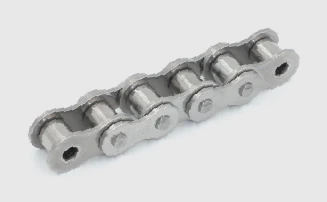
Translate the process environment into evidence the manufacturer can review
The exposure file should describe the actual substance, concentration where relevant, temperature and contact conditions. Include the cleaning process if it differs from normal operation. A material selected for one environment should not be assumed suitable for another simply because both are described as wet.
Tsubaki’s anti-corrosion chain guidance uses substance, concentration and ambient temperature as selection inputs. That provides a useful general way to organise the enquiry. It does not make Tsubaki’s proprietary chains, ratings or material combinations part of HCC’s product offering.
Separate cleaning exposure from the chain’s normal operating environment
Consider a machine builder whose equipment operates at one temperature but is cleaned under different conditions. Reporting only the normal operating environment leaves part of the material requirement undefined. The enquiry should make both conditions visible so the proposed chain can be reviewed against the complete exposure.
The same distinction matters for storage or intermittent operation where relevant to the application. Do not invent a universal corrosion allowance or service interval from the environmental description. The responsible engineering team should determine the required assessment and evidence for the actual chain and process.
A material document should identify the stainless-chain requirement it supports
If the buyer needs material documentation, specify its purpose and the component relationship it must establish. A document is useful when it answers the agreed question about the proposed product. A general statement that a supplier handles stainless steel does not prove that a particular chain configuration meets the buyer’s material requirement.
HCC’s inspection capabilities include material examination and dimensional measurement. These resources provide a basis for discussing evidence. The buyer and manufacturer should agree what is required for the order rather than assume that one standard document covers every stainless-chain application.
Keep the stainless-chain mechanical file beside the material file
A material decision does not remove the need to define the chain’s dimensions and operating duty. The proposed assembly still needs to suit the machine’s interfaces and loading conditions. Confirm the construction, speed, load pattern and other relevant design inputs before approving a material change.
HCC’s portfolio includes standard roller chains such as 08A / 40 and 08B, carbon-steel bushed roller chains, bush chains and attachment products. These references can help identify the existing construction. They should not be used to assume that a stainless version has the same mechanical rating or that every catalogue configuration is available in the selected material.
A second engineering scenario involves a project that changes both the chain material and the attachment geometry at once. If the new assembly behaves differently, it can be difficult to separate the two changes. Define each change in the approval record so the review addresses both material suitability and mechanical fit rather than treating the entire project as a single stainless upgrade.
| Approval question | Required connection | Assumption to avoid |
|---|---|---|
| What material is proposed? | Confirmed product and material description | Every stainless chain uses the same grade |
| What exposure must it withstand? | Process and cleaning conditions | Wet service is one uniform environment |
| Will it fit the machine? | Drawing, construction and interfaces | A material change preserves every dimension |
| Is the duty appropriate? | Applicable chain data and engineering review | Corrosion resistance proves working capacity |
Use HCC’s manufacturing resources to make the stainless-chain review specific
HCC presents precision production, heat treatment and assembly resources across its chain business. The manufacturing presentation gives buyers a real process context. For stainless-chain procurement, confirm which route and checks apply to the proposed construction rather than assuming every general factory process applies identically to every material.
This distinction supports a more credible manufacturer evaluation. The buyer can ask how the agreed dimensions will be checked, what material information is available and which product-specific evidence can be provided. The discussion stays connected to the chain that will enter the machine instead of becoming a collection of unrelated factory photographs.
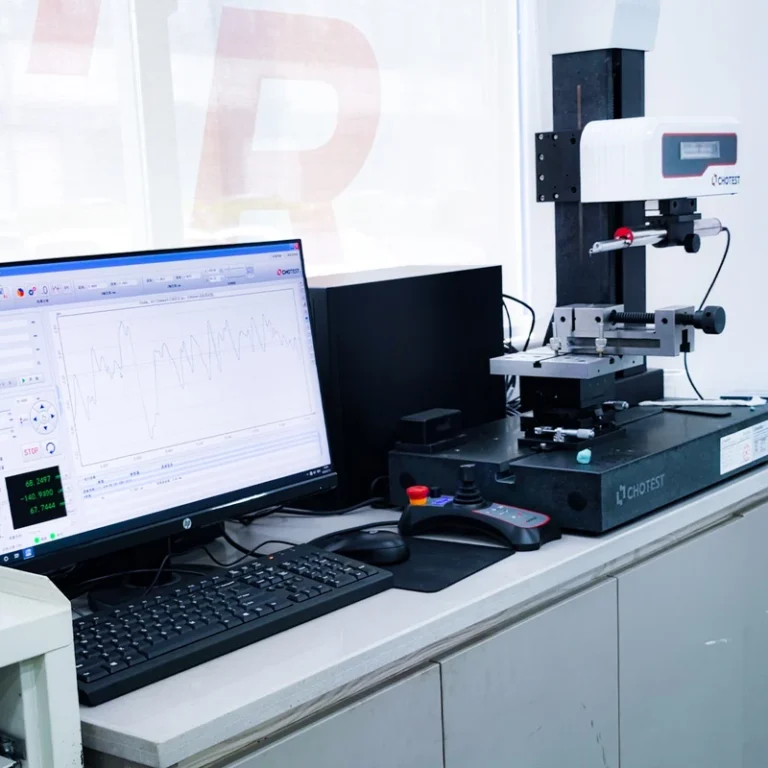
HCC’s company profile describes its Huangshan manufacturing base and relationship with SFR. That background is useful when assessing a long-term supplier. Company-wide production figures should not be presented as stainless-chain-only capacity or a fixed lead time for a new material configuration.
For an order containing several constructions, keep the material and drawing references separate by item. A standard roller-chain line and a custom attachment-chain line may require different evidence. One approved stainless sample should not automatically authorise every other chain in the purchase programme.
Stainless-chain manufacturing does not automatically establish hygiene compliance
A stainless material name is not a complete statement about food contact, hygiene, cleaning compatibility or a regulated process. If the application has those requirements, identify them explicitly and obtain the appropriate evidence for the complete assembly and its use. Do not add a compliance claim because the product photograph looks clean or polished.
Lubrication and maintenance also remain application-specific. A stainless chain may still require a suitable maintenance arrangement for its joints and operating conditions. The equipment’s instructions and confirmed chain requirements should govern that decision; this article does not prescribe a universal lubricant, cleaning method or service interval.
For the purchasing team, the practical benefit is a more accurate customer promise. A distributor can describe the confirmed material and approved application without expanding that statement into unsupported claims about every chemical, temperature or hygiene regime. HCC’s product should be represented by its actual agreed specification.
Our industrial-chain selection article helps distinguish chain functions before material questions are added. Retaining the function is important: a stainless transmission chain, an attachment conveyor chain and a lifting-related component are not one interchangeable category.
Release the stainless-chain material decision with its limits intact
For a multi-part assembly, the approval record should identify which components are supplied with the chain and which are added by the machine builder. A stainless-chain requirement may be undermined by an unreviewed change elsewhere in the assembly, or simply misunderstood because the two parties assumed different supplied contents. The interface drawing helps make that scope visible without claiming that the chain manufacturer controls the entire process.
When a buyer requests a material alternative, ask for the proposed difference to be described explicitly. The alternative may require a new review of mechanical data, exposure suitability or dimensional details. It should not enter the order under the old description merely because both materials are called stainless. A controlled comparison gives the buyer a reasoned choice rather than a substitution that is discovered only at receiving.
The same discipline supports repeat orders. Retain the confirmed specification rather than rebuilding it from a product photograph each time. If the application has not changed, that record helps both parties recognise the intended repeat. If it has changed, the record shows which assumptions need to be revisited before the new chain is approved.
The approved record should identify the proposed assembly, confirmed material information, applicable drawing and operating conditions used in the review. If an exposure or duty remains unresolved, keep that question visible instead of describing the chain as universally suitable. A clear limitation is more useful than an unsupported promise that later becomes difficult to interpret.
When a process condition changes, review whether the original material decision still applies. A new cleaning chemical, temperature or attachment arrangement can create a different requirement even when the commercial stock name remains unchanged. The buyer should preserve the reason for the original selection so the change can be assessed deliberately.
For delivery, agree identification and protection that suit the actual receiving process. A machine builder needs to distinguish the approved material configuration from similar development samples or other chain families. Confirm the packing and documentation arrangement with HCC; do not assume a particular cleanliness or preservation standard unless it has been specified and accepted.
A successful stainless-chain manufacturing discussion ends with a decision that can be explained: this construction, this confirmed material, these conditions and this evidence. HCC brings a real chain portfolio and manufacturing resources to that process. The buyer’s task is to keep the environmental and mechanical requirements together so the final product is selected for the machine, not for the reassuring sound of the word stainless.