

HUANGSHAN CHAIN TECHNOLOGYPart of SFR Group · Established 2011
Give a Conveyor Chain Manufacturer the Layout That Determines the Chain

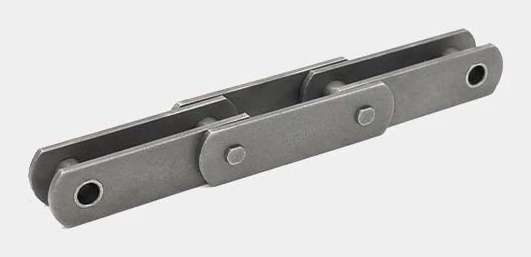
The most useful document to send a conveyor chain manufacturer is often the machine layout, not the chain photograph. The layout reveals where the chain is supported, what it carries, how it returns and which attachments connect it to the load. HCC CHAIN offers M-series, K1 / K2, C2052 and C2042 conveyor-chain references that can be reviewed against those real design requirements.
For machinery builders, integrators and engineering purchasers, our conveyor and specialist chain range is a starting selection. Supply the intended path, load information, attachment interfaces and operating conditions before treating a product name as a finished specification. This article follows the engineering handoff that allows a manufacturer to review the right chain rather than guess at the missing machine.
A conveyor chain manufacturer needs to see the complete chain path
The working run may be only one part of the chain’s journey. The return path, changes in direction and the positions of supporting or driving components can affect the required configuration. A layout helps the supplier understand which interfaces belong to the chain and which remain part of the machine builder’s design.
Start by identifying the conveyor function and the product being moved. Show where the load acts and how it is supported. Then identify the chain family being considered, if known. HCC’s M-series and double-pitch conveyor references can be discussed more meaningfully when the supplier sees the application rather than a disconnected chain image.
Consider a machine builder who has approved a fixture but not the conveyor return arrangement. The fixture may look correct on the working run while its attachment needs additional clearance elsewhere. The project should resolve that path before approving the chain assembly, because the manufacturer cannot infer hidden interference from the fixture drawing alone.
Show attachment clearance around the conveyor return
A projecting attachment has a swept path as the chain travels through the machine. The engineering package should identify the relevant clearance requirements and surrounding components. The responsible designer should assess that relationship rather than assume the attachment remains in the same orientation throughout its travel.
For HCC’s K1 / K2 or C2042 attachment-chain routes, include the attachment drawing and its relationship to the conveyor. If a custom feature is proposed, mark it clearly. This makes the difference between a catalogue illustration and the actual required assembly visible to the manufacturer.
C2052 and C2042 require the support interface in the drawing package
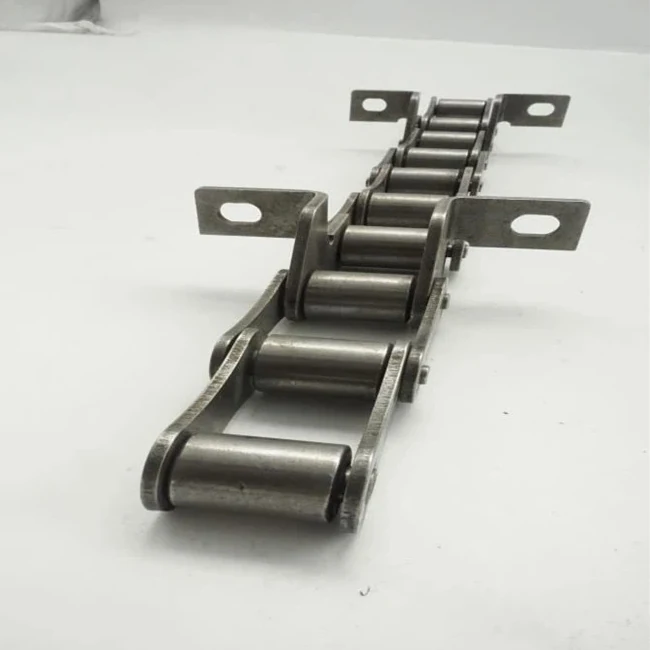
HCC identifies C2052 as a large-roller conveyor chain and C2042 as a large-roller attachment chain. These descriptions make the roller and support relationship important topics for the enquiry. Provide the track information that governs how the selected chain is intended to run.
The C2042 route also introduces an attachment interface. That means the project has at least two relationships to resolve: the chain’s support and the connection to the carried assembly. A drawing package that covers only one can leave a substantial part of the requirement undefined.
A repaired conveyor track can change the replacement-chain review
A maintenance-led project may appear simpler than a new conveyor, but modifications deserve attention. If the track, guides or supporting surfaces have changed, establish whether the original chain configuration remains appropriate. The supplier should receive the current machine information, not only a drawing that predates the repair.
A buyer might otherwise compare a new C2052 candidate with an old sample while overlooking the altered support geometry. The sample helps identify the chain, but the current layout defines the installation. Keep those two sources of information connected and identify any disagreement before the replacement is approved.
Do not treat C2040–C2080 small rollers as a drawing shortcut
HCC’s C2040–C2080 small-roller range is another genuine conveyor option. It should not be selected simply because the track information is incomplete or because a smaller roller appears easier to fit. The machine designer still needs to establish the intended support and drive arrangement.
When reviewing alternatives, describe which requirement prompts the change. Is the proposed chain addressing an interface constraint, a different fixture or another operating need? A clearly stated reason helps HCC review candidates without assuming that all conveyor-chain families can replace each other in an unchanged machine.
Write the attachment sequence so the conveyor assembly can be reproduced
A single attachment drawing describes a component, while the chain assembly also needs its pattern. Show where attachments occur, their orientation and how the sequence relates to the assembled chain length. If the machine uses paired chains, describe the required relationship between them as part of the engineering requirement.
A second project scenario involves increasing the spacing between carried fixtures. The old chain may still have the same general family designation, but its attachment pattern no longer describes the new conveyor. The revised pattern should be reviewed explicitly rather than hidden inside a request for “the same chain, longer.”
HCC’s non-standard chain offering can support discussion of an arrangement beyond a catalogue example. The buyer should provide the proposed geometry and application context before expecting a manufacturing or delivery commitment. A custom label alone does not define the product.
Tsubaki’s attachment-chain material explains the general concept of a base chain assembled with attachments for conveying. It is useful background for the engineering handoff, but its specific application recommendations belong to Tsubaki. The HCC assembly must be reviewed against its own confirmed information and the machine design.
Give the conveyor chain manufacturer the duty behind the geometry
The layout answers where the chain runs; the duty information explains what it must do. The engineering enquiry should identify the conveyed load, speed, operating cycle and relevant environmental conditions. These inputs should be provided by the responsible design team, not guessed from a photograph or from the size of the chain plates.
For an M-series discussion, the family name is only the beginning. Request the applicable dimensional and product information for the proposed configuration. Do not assign a working capacity from another manufacturer’s catalogue or treat a breaking-load figure as the whole conveyor selection calculation.
A useful conveyor handoff answers four connected questions: what moves, how the load reaches the chain, where the chain travels, and what conditions it experiences. The product reference belongs beside those answers, not in place of them.
The environment can introduce another decision. HCC lists stainless-steel and custom chain products, but the required material and suitability depend on the actual exposure and duty. Describe the substance, cleaning conditions or contamination involved rather than assuming that a generic material name resolves the application.
Tsubaki’s conveyor overview similarly distinguishes applications by transport direction, environment and conveyed material. These are general engineering inputs, not evidence that every HCC product suits every environment. Keep any material or performance claim tied to the proposed chain and its confirmed documentation.
HCC’s production and inspection resources support a defined conveyor project
HCC presents precision production, heat treatment and assembly resources, together with measurement, material examination and mechanical testing. Buyers can review these manufacturing and inspection capabilities in relation to the chosen chain assembly. The useful discussion identifies which features and evidence matter to the actual conveyor.
For a K1 / K2 attachment requirement, the review might focus on the agreed attachment geometry and arrangement. For C2052, the roller and support interface must be clear. For a custom C2042-related assembly, both the supporting path and the fixture connection need attention. The details differ, so the same generic acceptance statement should not be copied across every line.
A sample review should identify what was checked and what remains for the machine builder to validate. Dimensional agreement is valuable but does not automatically prove performance in the complete conveyor. If an application trial is needed, define it through the responsible engineering team and the relevant equipment procedures.
HCC’s company information provides background for supplier evaluation. Its production scale is useful context for a manufacturing relationship, but a new conveyor configuration still requires a confirmed technical scope and order-specific schedule.
Release the conveyor chain only after the drawing and order tell the same story
One useful engineering handoff is a marked layout that points each chain reference to its position in the machine. An M-series requirement should not be confused with the transmission chain driving a separate shaft, and a C2042 attachment arrangement should be linked to the fixture it carries. These references make a mixed-component order easier to review without requiring the supplier to infer the bill of materials from unrelated images.
The handoff should also distinguish fixed design requirements from options still being considered. If the team is comparing small-roller and large-roller routes, label both as candidates until the support arrangement is resolved. A provisional catalogue selection should not appear as an approved production reference simply because it was copied into an early purchasing spreadsheet. The final release should show the chosen route and remove contradictory provisional descriptions.
Before production release, compare the layout, attachment drawing, selected chain reference and purchase description. If one shows a new fixture spacing while another still names the old arrangement, resolve the conflict. The manufacturer should not be asked to choose between contradictory documents.
Identify which revision governs the order and how subsequent changes will be communicated. A modification to the conveyor may affect a chain that was previously approved. Keeping the change visible is especially important when the purchasing team handles repeat orders while engineering continues to develop the machine.
For delivery, agree how the assembled configurations or related chains will be identified and protected. A chain with projecting attachments presents different handling considerations from an unadorned transmission chain. Explain the receiving and assembly process to HCC so the packing discussion relates to the actual product rather than to a generic carton count.
Where the conveyor project also includes transmission chains, our industrial-chain function guide can help keep those requirements separate. One supplier relationship can cover several machine components without reducing them to one interchangeable chain description.
The drawing-led approach gives HCC a clearer manufacturing brief and gives the machine builder a more useful approval record. The final file should make the path, support, attachment pattern and operating duty understandable together. When those relationships are explicit, choosing among M-series, K1 / K2, C2052 and C2042 becomes a technical decision supported by the machine, not a guess made from the catalogue image.